
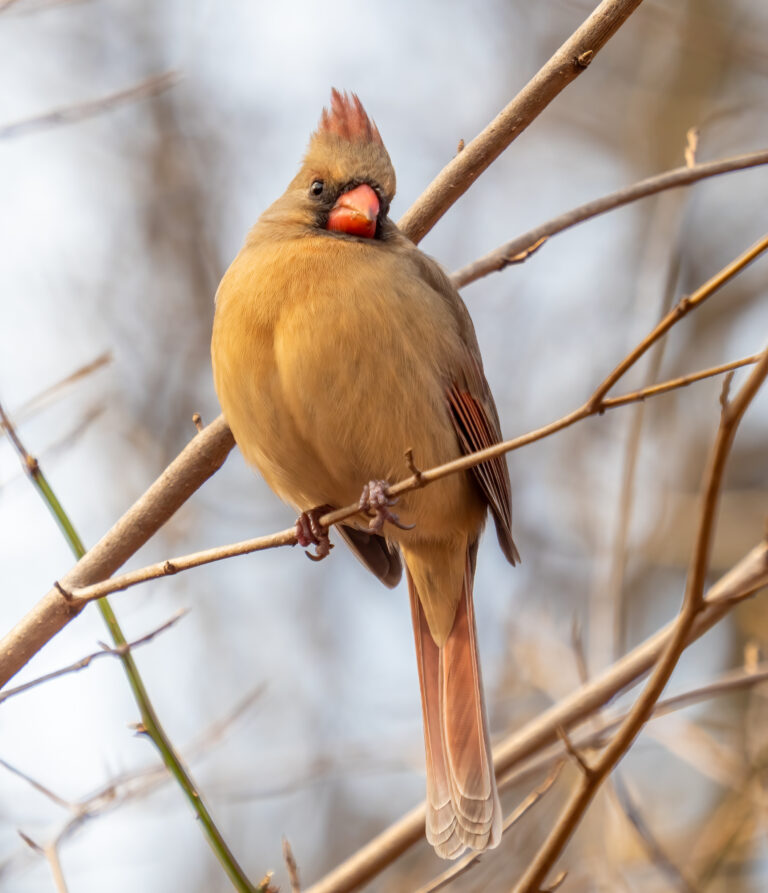
Introduction: The Art and Science of Bird Identification
Bird identification is a rewarding pursuit that blends careful observation with scientific understanding. For many, it begins as a simple curiosity about the feathered creatures in their backyard and evolves into a lifelong passion. While it can seem daunting at first, especially with the sheer diversity of avian species, a structured approach can demystify the process.
This guide provides a comprehensive template for observing and recording key features, helping you systematically identify birds and deepen your connection to the natural world. By focusing on five core pillars—size, shape, color, habitat, and behavior—you’ll develop a robust methodology to distinguish species, even those that appear strikingly similar.
This template is designed to be beginner-friendly, offering practical examples and field observation tips that can be applied immediately. It also serves as a valuable refresher for more experienced birders, encouraging a disciplined approach to note-taking that can prevent misidentifications and enhance the learning process. Remember, every bird sighting is an opportunity to learn, and detailed notes are your best allies in this journey.
Understanding the Core Features for Identification: The Five Pillars
Accurate bird identification is rarely based on a single feature. Instead, it’s a synthesis of multiple observations. Think of it like a puzzle where each piece—size, shape, color, habitat, and behavior—contributes to the complete picture. Over-reliance on one aspect, especially color, can lead to errors, as plumage can vary greatly due to light, age, sex, or even individual variation. A holistic approach, integrating all five pillars, is key to confident identification.
1. Size: The Foundation of Comparison
Size is often the first feature we notice, but it’s also one of the most challenging to estimate accurately in the field without a direct comparison. Birds rarely sit next to a ruler! Instead, we rely on relative size. The most effective way to gauge a bird’s size is to compare it to a familiar species that you know well and can visualize clearly.
For instance, is the bird you’re observing smaller than a European Starling, about the size of an American Robin, or larger than a crow?
Practical Example: You spot a small, active bird in a shrub. Is it sparrow-sized, or even smaller, like a chickadee? If it’s noticeably smaller than a House Sparrow, you might be looking at a wren or a warbler. If it’s roughly robin-sized, it could be a thrush or a jay. Always try to find a mental reference point.
Be cautious of distance distortion; a bird far away will always appear smaller than it is, and one close up can seem larger. Also, remember that juveniles can be smaller than adults, and males and females of some species can differ in size. Use size as an initial filter, not a definitive identifier.
2. Shape and Silhouette: The Bird’s Blueprint
The overall shape, or silhouette, of a bird is an incredibly powerful identification tool, especially when lighting conditions are poor or the bird is far away. This encompasses the proportions of the body, head, neck, bill, wings, and tail. Think of it as the bird’s unique architectural design. Even without color, a bird’s silhouette can often tell you its family or even its species.
Key elements to observe:
- Body shape: Is it plump and round (e.g., a quail), sleek and slender (e.g., a cuckoo), or compact (e.g., a kingfisher)?
- Head and neck: Is the head large or small relative to the body? Is the neck long and thin (e.g., a heron) or short and thick (e.g., a finch)?
- Bill shape: This is crucial! Is it long and thin (e.g., a hummingbird), short and stout (e.g., a grosbeak), hooked (e.g., a raptor), or chisel-shaped (e.g., a woodpecker)? The bill’s shape is directly related to the bird’s diet and foraging strategy.
- Wing shape: Are the wings long and pointed (e.g., a swallow, a falcon), broad and rounded (e.g., a hawk, a grouse), or short and stubby (e.g., a wren)? Observe them both at rest and in flight.
- Tail shape and length: Is the tail long and forked (e.g., a barn swallow), short and square (e.g., a starling), long and graduated (e.g., a magpie), or fan-shaped (e.g., a robin)?
- Leg length and posture: Are the legs long (e.g., a sandpiper) or short (e.g., a perching bird)? Does the bird stand upright, crouch, or perch horizontally?
Practical Example: Imagine you see a bird flying high overhead. You can’t discern its colors, but its long, pointed wings and deeply forked tail immediately suggest a swallow. If you see a bird perched with a large head, a short, stout body, and a very long, dagger-like bill, you’re likely looking at a kingfisher, even before you see its iridescent blue plumage.
Similarly, a small bird with a very long, thin, downcurved bill probing flowers is almost certainly a hummingbird. Paying attention to these structural details can narrow down possibilities dramatically.
3. Color and Pattern: The Bird’s Plumage Palette
Color is often the most captivating feature, but it’s also the most prone to misinterpretation. Lighting conditions can drastically alter how colors appear. A bird that looks dull brown in shadow might reveal vibrant reds or blues in direct sunlight. Always try to observe birds in good, natural light. Rather than just noting ‘brown’ or ‘blue,’ try to be specific about the shades and locations of colors.
Key elements to observe:
- Primary colors: What are the dominant colors?
- Specific markings: Look for streaks, spots, bars, patches, or stripes. Where are they located? (e.g., breast streaks, wing bars, eye-stripe, crown patch).
- Color distribution: Is the bird uniformly colored, or are different parts distinctly colored (e.g., dark back, light belly)? Note the color of the crown, nape, back, rump, wings (primaries, secondaries, coverts), tail, throat, breast, flanks, and belly.
- Bill and leg color: These can be important identification marks, especially for shorebirds and waterfowl.
- Eye color and eye-ring: A distinct eye-ring or a particular eye color can be a key field mark.
Practical Example: You see a small, yellow bird. Is it uniformly yellow, or does it have black streaks on its back? Does it have a black cap or a black mask? Does it have white wing bars? A ‘yellow bird’ could be an American Goldfinch, a Yellow Warbler, a Common Yellowthroat, or even a Western Tanager. Each of these has distinct patterns beyond just the color yellow.
For instance, a male American Goldfinch is bright yellow with black wings and a black cap, while a male Yellow Warbler is entirely yellow with subtle reddish streaks on its breast. Documenting these specific patterns is far more useful than a general color description.
Identification Caution: Plumage can vary significantly by age (juvenile, immature, adult), sex (male, female), season (breeding, non-breeding), and even geographic location (subspecies). What you see in a field guide might represent the breeding male, while you’re observing a female or a juvenile in winter plumage. Be prepared for variation.
4. Habitat: The Bird’s Address
Where you find a bird is often as important as what it looks like. Birds are not randomly distributed; they occupy specific ecological niches. Understanding a bird’s preferred habitat can immediately narrow down the possibilities from hundreds to a handful. Some species are habitat generalists, found in many environments, while others are highly specialized.
Key habitat types to consider:
- Forests: Deciduous, coniferous, mixed, old-growth, young growth.
- Wetlands: Marshes, swamps, bogs, fens, estuaries, mangroves.
- Water bodies: Lakes, rivers, ponds, oceans, coastal areas.
- Grasslands: Prairies, meadows, agricultural fields.
- Shrublands/Scrub: Areas dominated by bushes and small trees.
- Urban/Suburban: Parks, gardens, residential areas, city centers.
- Mountains/Alpine: High-altitude environments.
- Deserts: Arid regions.
Practical Example: If you see a small, brown bird foraging on the ground in a dense forest, it’s highly unlikely to be a shorebird or a seabird. If you’re observing a large, long-legged bird wading in a shallow marsh, you can rule out most forest songbirds. A bird with a short, stout bill cracking seeds at a backyard feeder is probably a finch or a sparrow, not a raptor.
Always note the specific type of vegetation, water presence, and human disturbance level. Cross-referencing your location with a regional field guide or an online resource like eBird can provide expected species lists for that particular habitat.
5. Behavior: The Bird’s Actions and Personality
How a bird acts—how it moves, feeds, flies, and vocalizes—provides invaluable clues to its identity. Behavior can often distinguish between two visually similar species, or confirm an identification when visual cues are ambiguous. This pillar requires patience and sustained observation.
Key behaviors to observe:
- Foraging style: Does it glean insects from leaves (e.g., warblers), probe mud with its bill (e.g., sandpipers), hawk insects in mid-air (e.g., flycatchers), or dive for fish (e.g., kingfishers)? Does it forage on the ground, in trees, or in water?
- Movement: Does it hop, walk, run, or creep up tree trunks (e.g., nuthatches, creepers)? Is it constantly flicking its tail (e.g., phoebes) or bobbing its head?
- Flight pattern: Is its flight direct and strong (e.g., a duck), undulating (e.g., a finch, a woodpecker), soaring (e.g., a hawk, an eagle), or erratic and darting (e.g., a swallow)? Does it flap constantly or glide frequently?
- Vocalizations: What does its song sound like? What about its calls? Is it a short chip, a harsh scold, a melodic whistle, or a complex series of notes? Learning bird calls and songs is one of the most effective ways to identify birds, often before you even see them.
- Social behavior: Is it solitary, in a small group, or part of a large flock? Does it interact with other species?
- Perching habits: Does it prefer high, exposed perches, or does it stay hidden in dense foliage?
Practical Example: You see a small, brown bird. If it’s constantly flicking its tail up and down while perched, it’s highly suggestive of a phoebe. If it’s creeping head-first down a tree trunk, it’s almost certainly a nuthatch. If it’s rapidly darting out from a perch to catch an insect in mid-air and then returning to the same perch, you’re likely looking at a flycatcher.
Two sparrows might look very similar, but their songs can be distinctly different, immediately identifying them. For instance, a Chipping Sparrow has a dry, trilling song, while a Song Sparrow has a more complex, varied song often starting with three clear notes.
Practical Field Observation Tips for Better Identification
Developing strong identification skills comes with practice and adopting good field habits. Here are some tips to maximize your chances of accurate identification:
- Invest in good optics: High-quality binoculars (8×42 or 10×42 are popular choices) are essential. A spotting scope can be invaluable for distant birds, especially waterfowl or raptors.
- Carry a field guide: Choose a regional guide that covers the birds in your area. Digital apps are also excellent, often including sounds and multiple photos.
- Take detailed notes immediately: Don’t rely on memory. Jot down observations as they happen, even if it’s just a few keywords. Use the five pillars as your framework.
- Sketch the bird: Even if you’re not an artist, a quick sketch can help you remember proportions, bill shape, and the placement of key markings.
- Photograph the bird: If possible, take photos or videos. These can be reviewed later, revealing details you missed in the moment. However, prioritize observation over photography; don’t let the camera distract you from careful note-taking.
- Observe from different angles: Move slowly and quietly to get different views. A bird’s back may look very different from its front or side.
- Listen actively: Train your ear to recognize common bird calls and songs. Many birds are heard more often than seen. Use apps like Merlin Bird ID to help identify sounds in real-time.
- Be patient and still: Rushing or making sudden movements will often scare birds away. Find a comfortable spot and wait. Birds often become more active and less wary if you remain still.
- Consider the time of day and season: Bird activity varies. Early mornings are often best. Migration seasons bring different species through. Winter plumage can be quite different from breeding plumage.
- Look for companions: If a bird is with others, are they the same species? Mixed flocks can be confusing but also offer opportunities to see different species together.
Recording and Comparing Observations: Building Your Birding Database
The true power of this template lies in its application. After observing a bird, use your notes to compare with field guides, online databases like eBird, or reputable websites like All About Birds from the Cornell Lab of Ornithology. Don’t be discouraged if you can’t identify every bird immediately. It’s part of the learning process.
Example of detailed field notes:
- Date/Time: May 15, 2024, 7:30 AM
- Location: Local park, edge of deciduous woods near a small stream.
- Weather: Sunny, calm, 60°F.
- Size: Smaller than a robin, slightly larger than a chickadee.
- Shape: Compact body, relatively large head, short neck. Bill short, conical, dark. Tail medium length, slightly notched.
- Color/Pattern: Overall dull olive-green back and wings. Underparts pale yellow, brightest on throat and belly. Two faint white wing bars. No eye-ring. Dark eye. Legs dark.
- Habitat: Foraging in mid-story of oak tree, also briefly in a low shrub.
- Behavior: Very active, constantly moving through foliage, gleaning insects from leaves. Occasional short, buzzy call, ‘zee-zee-zee‘. Flew with a quick, direct flight.
- Initial thought: Warbler species.
By comparing these detailed notes with a field guide, focusing on warblers, the combination of small size, olive-green back, yellow underparts, faint wing bars, and buzzy call strongly points to a Yellow-rumped Warbler (Myrtle subspecies in this region, given the location and season). Without the detailed notes, ‘small yellow-green bird’ would be too vague.
Supporting All Identification Guides: A Universal Framework
This template is not meant to replace your favorite field guide or birding app; rather, it’s designed to enhance their utility. Whether you prefer a traditional printed guide, a digital app, or community platforms, consistent note-taking provides the raw data needed for accurate identification. The more precise your observations, the more effectively you can utilize these resources.
Remember, real or properly licensed photographs are invaluable for confirming species, especially when dealing with similar-looking birds or documenting rare sightings.
Ethical Birding Practices: Respecting Wildlife
As you hone your identification skills, it’s crucial to practice ethical birding. Always prioritize the well-being of the birds and their habitat. This includes:
- Maintaining a respectful distance: Use your binoculars and scope to observe without disturbing birds. If a bird changes its behavior due to your presence, you’re too close.
- Avoiding playback: Using recorded bird calls to lure birds closer can stress them, disrupt their natural behaviors, and potentially expose them to predators. Use it sparingly, if at all, and only for specific scientific purposes.
- Staying on designated paths: Protect sensitive habitats by not trampling vegetation or disturbing nesting sites.
- Not baiting or feeding inappropriately: While feeders can be beneficial, avoid offering foods that are harmful or attracting birds to unsafe areas.
- Minimizing disturbance to nests and young: Never approach or disturb active nests.
Your observations contribute to a greater understanding of avian populations, especially when submitted to citizen science projects like eBird. By birding ethically, you ensure that your passion contributes positively to conservation efforts.
Conclusion: The Journey of a Birder
Bird identification is a journey of continuous learning and discovery. By adopting a structured approach centered on size, shape, color, habitat, and behavior, you equip yourself with the tools to confidently identify the diverse array of birds around you. This template provides a robust framework, but your greatest assets will be patience, curiosity, and a commitment to careful observation.
Each bird you identify, each note you take, and each behavior you witness adds to your personal knowledge base and deepens your appreciation for the intricate lives of birds. So grab your binoculars, your notebook, and embark on this endlessly fascinating adventure.
Featured image: licensed image via Wikimedia Commons. Credit: Rhododendrites. License: CC BY-SA 4.0. Used with attribution.
