
Introduction: Unraveling the Blue Mystery in Your Backyard
For bird enthusiasts and beginners alike, distinguishing between similar-looking bird species is a common and rewarding challenge. The terms “jay” and “bluebird” frequently cause confusion due to their shared vibrant blue hues and sometimes comparable sizes. This article clarifies the distinctions between these fascinating birds, focusing on their scientific classifications, common names, plumage colors, and distinctive field marks.
The allure of blue birds is undeniable. Their striking coloration stands out against natural landscapes, making them immediate focal points. But this beauty can be a source of misidentification: is that flash of azure a boisterous Blue Jay or a more demure Eastern Bluebird? This guide equips you to answer such questions definitively.
Understanding the Names: More Than Just a Shade of Blue
The names “jay” and “bluebird” refer to distinct avian families, each with a unique evolutionary history, behaviors, and ecological roles. This fundamental taxonomic difference is the first and most crucial step in understanding their separation.
Jays: The Intelligent Corvids
Jays belong to the family Corvidae, a highly intelligent group that also includes crows, ravens, and magpies. They are generally medium-sized, often brightly colored, and possess strong bills suited for their omnivorous diets. Their intelligence is seen in their caching behavior, hiding food for later, and their ability to mimic sounds.
In North America, the term “jay” often brings to mind the iconic Blue Jay (Cyanocitta cristata) in the east, with its bold patterns and boisterous calls. The west is home to the Steller’s Jay (Cyanocitta stelleri), with its dark crest and deeper blue, and the more subdued Scrub-Jays (genus Aphelocoma), which lack crests but are equally intelligent. Across Europe and Asia, the Eurasian Jay (Garrulus glandarius) is known for its pinkish-brown body and blue wing patches.
Bluebirds: The Melodious Thrushes
Bluebirds belong to the family Turdidae, which encompasses thrushes, celebrated for their melodious songs, slender builds, and diets heavy in insects and berries. The term “bluebird” almost exclusively refers to the genus Sialia, comprising three North American species: the Eastern Bluebird (Sialia sialis), the Western Bluebird (Sialia mexicana), and the Mountain Bluebird (Sialia currucoides).
Bluebirds are typically smaller than jays, lack prominent crests, and have a more delicate, streamlined body. Their songs, described as soft, warbling, and bell-like, contrast sharply with the harsh calls of most jays.
Coloration and Plumage: A Detailed Look at Blue Hues and Patterns
While both jays and bluebirds feature blue in their plumage, the specific shades, patterns, and distribution of these colors are crucial for accurate identification.
The Blue Jay: A Masterpiece of Contrast
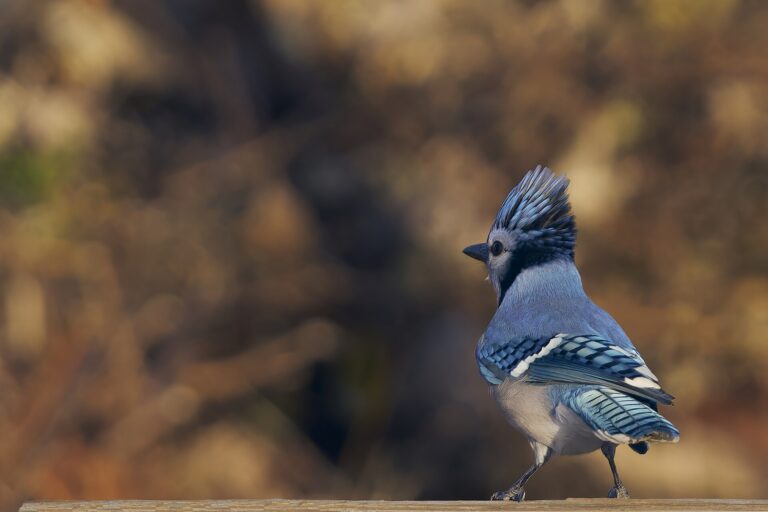
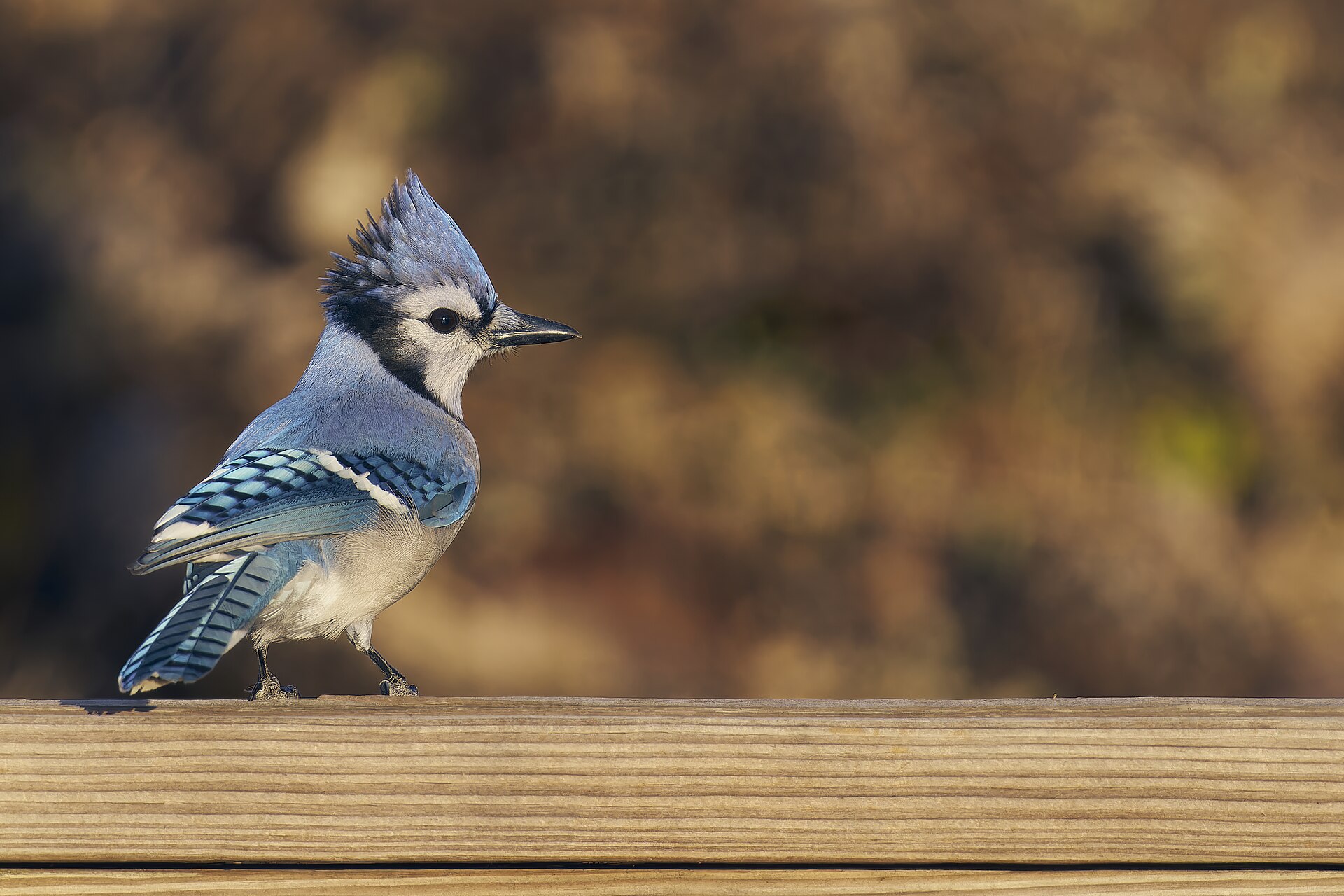
The Blue Jay (Cyanocitta cristata) is one of North America’s most recognizable birds. Its plumage is a complex tapestry of bright blue, white, and black. Key features include:
- Crest: A prominent, erectile crest on its head is perhaps its most distinguishing feature, often appearing more erect when alarmed or excited.
- Body Color: The back, wings, and tail are a brilliant, often iridescent azure blue that shifts shade with the angle of light.
- Facial Markings: A white face sharply contrasted by a black necklace across the throat, plus black markings around the eyes that give a masked appearance.
- Wing and Tail Patterns: Intricate black barring on the flight feathers and tail, with white patches visible in flight.
- Underparts: Generally grayish-white, sometimes with a faint bluish wash.
- Bill: Stout, conical, and black, adapted for cracking nuts and seeds.
Practical Example: At a feeder, a bird with a noticeable spike of feathers on its head, vivid blue body, black wing stripes, and a bold black ‘necklace’ immediately points to a Blue Jay.
Bluebirds: Subtle Elegance and Regional Variations
Bluebirds exhibit a more uniform, often softer coloration, lacking the bold black-and-white contrasts of the Blue Jay. Let’s look at the three North American species:
Eastern Bluebird (Sialia sialis)
- Male: The male has a rich, deep sky-blue head, back, wings, and tail, with a warm rusty-orange breast and flanks and a white belly.
- Female: Duller than the male, with a grayer head and back and a paler orange breast, but retaining significant blue on the wings and tail.
- Bill: A slender, pointed black bill suited for snatching insects.
Western Bluebird (Sialia mexicana)
- Male: Similar to the Eastern, but with more extensive rusty-orange that often extends onto the back, creating a ‘rusty vest,’ and a deeper, purplish-blue on the head and wings.
- Female: Duller than the male, with grayer tones but still showing blue on the wings and tail.
Mountain Bluebird (Sialia currucoides)
- Male: Uniquely, the male is almost entirely iridescent sky-blue from head to tail, with only a slightly paler belly, lacking the rusty breast of its eastern and western cousins.
- Female: Duller, with a grayish-brown body and a pale blue wash on the wings and tail.
Practical Example: A bird on a fence post in a grassy field, smaller than a robin, with vibrant blue back and wings but a rusty-orange chest and no crest or black markings, is a classic Eastern Bluebird. If it were entirely blue even on the belly, you would be looking at a Mountain Bluebird.
Field Marks Summary: A Quick Reference
| Feature | Blue Jay (Cyanocitta cristata) | Bluebirds (Sialia spp.) |
|---|---|---|
| Size | Large (approx. 9-12 inches) | Smaller (approx. 6.5-8 inches) |
| Crest | Yes, prominent and erectile | No crest |
| Primary Blue Color | Bright azure blue, often iridescent | Deep sky-blue to purplish-blue to pale sky-blue |
| Other Colors/Patterns | Bold black necklace, black wing/tail barring, white face | Rusty-orange breast (Eastern/Western), or entirely blue (Mountain) |
| Bill Shape | Stout, conical, black | Slender, pointed, black |
| Overall Shape | Robust, stocky | More delicate, streamlined |
Habitat, Behavior, and Vocalizations: Beyond the Visual
Understanding typical habitat, behavior, and vocalizations adds layers of identification confidence, especially when a clear view is elusive.
Jays: Bold, Boisterous, and Adaptable
Jays, particularly the Blue Jay, are highly adaptable birds found in many habitats:
- Deciduous and Mixed Woodlands: Their natural forested environments.
- Parks and Gardens: Readily adapting to urban and suburban green spaces.
- Backyards: Often frequenting feeders for peanuts and sunflower seeds.
Behavioral Traits:
- Social and Noisy: Jays are typically social and notoriously vocal, often seen in small groups or larger flocks.
- Intelligent and Curious: Their corvid intelligence shows in problem-solving and mimicry, and they cache acorns, aiding forest regeneration.
- Aggressive at Feeders: Blue Jays can be dominant, chasing away smaller birds.
Vocalizations: Blue Jays have a diverse repertoire, but their most common calls are harsh, piercing “JAY! JAY!” screams, along with bell-like whistles and mimicries.
Field Observation Tip: If you hear a loud, metallic “JAY!” call, or a convincing imitation of a Red-shouldered Hawk, look for a large, crested blue bird.
Bluebirds: Gentle, Graceful, and Serene
Bluebirds prefer more open, less dense habitats than jays:
- Open Woodlands and Orchards: Areas with scattered trees and clear understories.
- Meadows and Grasslands: Especially those with perches for hunting insects.
- Agricultural Areas: Fields, pastures, and fence lines.
Behavioral Traits:
- Perch-and-Pounce Hunters: Bluebirds are insectivores, perching on wires or fences and dropping to catch insects.
- Generally Solitary or Paired: During breeding season they are typically in pairs; they rarely form large noisy gatherings like jays.
- Cavity Nesters: They use existing holes in trees or old woodpecker nests and readily use human-provided nest boxes.
Vocalizations: Bluebird calls are soft, warbling, and bell-like, a stark contrast to jays. The Eastern Bluebird’s song is a series of soft whistles, transcribed as “chur-wee, chur-wee.”
Field Observation Tip: A smaller, sleek blue bird gracefully dropping from a fence post to the ground, or a soft melodious warble from an open field, likely signals a bluebird.
Identification Cautions and Common Pitfalls
Even with a good understanding of field marks, misidentification can occur. Here are common pitfalls:
- Lighting Conditions: The iridescence of blue feathers shifts colors with the angle of the sun. Observe from multiple angles when possible.
- Juvenile Plumage: Young birds are duller. Juvenile Blue Jays may have less distinct black markings and a softer crest; juvenile bluebirds are often mottled gray-brown with blue only on the wings and tail, but they retain their characteristic size, shape, and lack of crest.
- Regional Variations: Slight variations in plumage intensity or size can exist within species; consult a local field guide.
- Other Blue Birds: Jays and bluebirds aren’t the only blue birds. You might encounter Indigo Buntings (much smaller, entirely blue, no crest), Blue Grosbeaks (larger with a stout bill), or swallows (different shape and flight). Consider the full suite of field marks.
- Distance and View Obstructions: A quick glimpse of blue through leaves can mislead. Be patient and note as many features as possible.
Practical Birding Tips for Confident Identification
Developing strong identification skills comes with practice and a systematic approach:
- Observe Size and Shape First: Get an impression of size relative to familiar birds, then note overall shape: robust and crested (jay) or slender and streamlined (bluebird).
- Note Coloration and Pattern: Look at specific shades of blue and the presence of white, black, or orange. Are there bold patterns or is the color uniform?
- Listen for Calls and Songs: A harsh, scolding call points to a jay; a soft, warbling song suggests a bluebird.
- Check Habitat and Behavior: A noisy bird in dense woodland differs from one quietly perching in an open field.
- Use Binoculars Effectively: Locate a bird with your naked eye, then bring binoculars up without losing sight of it.
- Carry a Field Guide: Have one handy to compare observations and check range maps.
- Take Notes or Photos: Jot down key features or snap a photo, even a blurry one, for later review.
- Be Patient: Wait for the bird to move, change posture, or vocalize to reveal more clues.
Additional Resources and Further Reading
To deepen your knowledge, consider these resources:
- Field Guides: The National Geographic Field Guide to the Birds of North America and the Sibley Guide to Birds are highly recommended; the Collins Bird Guide is excellent for Europe.
- Online Databases: eBird and All About Birds offer species accounts, photos, and sound recordings.
- Conservation Organizations: Audubon and the RSPB provide educational content and support conservation.
- Local Birding Groups: Joining a local club or attending guided walks provides hands-on learning and mentorship.
Conclusion: A Deeper Appreciation for Avian Diversity
While Blue Jays and bluebirds share a captivating blue hue, their differences in size, plumage patterns, behavior, vocalizations, and habitat are profound. Recognizing these features deepens your appreciation for biodiversity and hones your observational skills.
By observing carefully, listening intently, and consulting trusted field guides, you will confidently distinguish between these beautiful species, enriching every birding excursion.
