
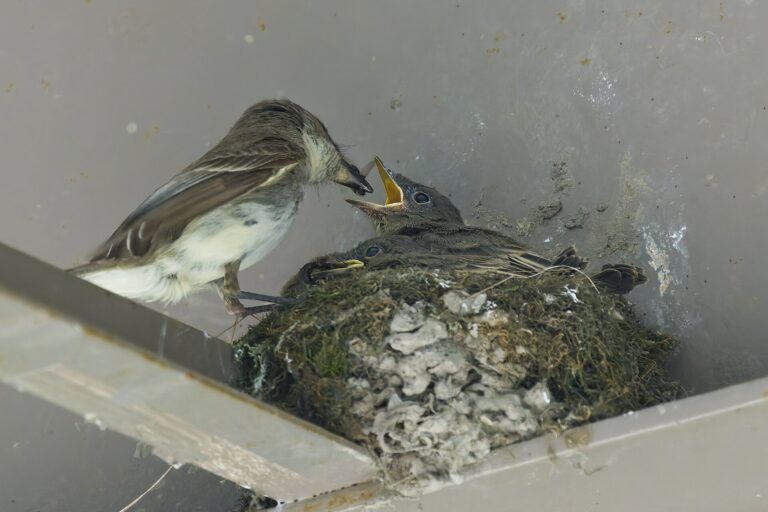
Understanding the Common Confusion: Phoebes and Flycatchers
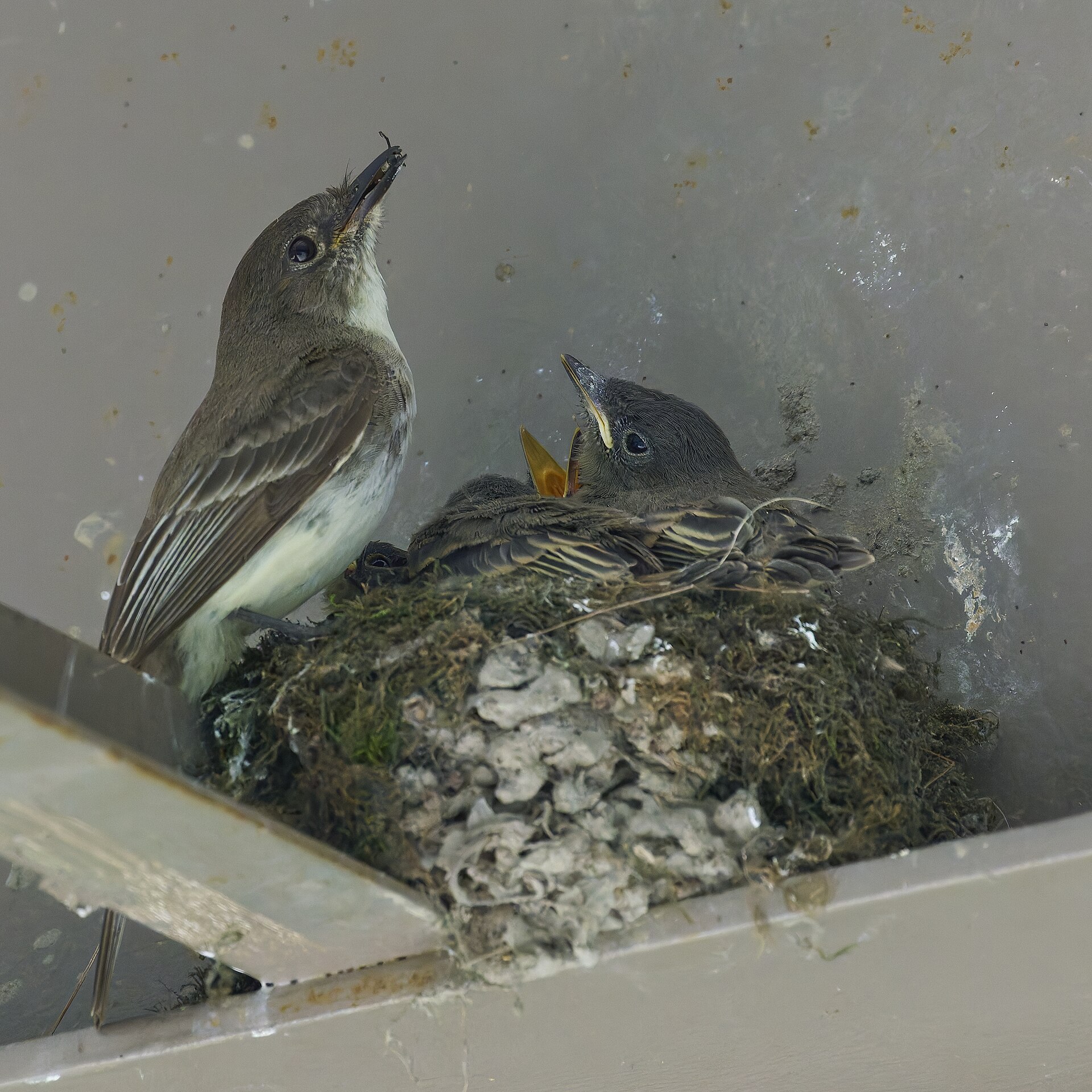
For many bird enthusiasts, especially those new to the hobby, distinguishing phoebes from other flycatchers can be a persistent challenge. Both groups belong to the same large avian family, Tyrannidae, commonly known as the tyrant flycatchers. This is an exclusively New World family, found only in the Americas, from Alaska and Canada down to the southern tip of South America.
Within this family, which includes over 400 species, phoebes represent a specific genus, Sayornis, comprising just three species. While all phoebes are flycatchers, not all flycatchers are phoebes. This article provides clear, actionable advice to help you confidently identify them in the field.
Overview of the Tyrannidae Family: The Tyrant Flycatchers
The family Tyrannidae showcases an incredible array of adaptations for catching insects, primarily in flight. From the diminutive Least Flycatcher to the much larger Great Crested Flycatcher, these birds exhibit a wide spectrum of sizes, plumages, and behaviors. Despite this diversity, most tyrant flycatchers share stout bodies, large heads, and broad, flattened bills perfectly adapted for snatching flying insects.
Their legs are often short, reflecting their perching-and-sallying hunting strategy rather than extensive walking. While many species are drab in coloration, others display striking patterns or crests. Understanding the broad characteristics of this family provides a foundation for differentiating its members, including the phoebes.
Key Identification Features: Dissecting the Differences
When trying to tell a phoebe from another flycatcher, look beyond a single feature and consider a combination of visual cues, behavioral patterns, and vocalizations. No single characteristic is foolproof, but together they paint a clear picture.
1. Physical Characteristics: Size, Shape, and Plumage
While both groups are generally small to medium-sized passerines, subtle physical differences can be telling:
- Overall Build and Posture: Phoebes tend to have a slightly more robust, compact build than many other flycatchers, often appearing stockier with a more rounded head. When perched they frequently adopt an upright posture.
- Bill Shape: All flycatchers have a broad, flattened bill for insect capture, but phoebes often have a relatively short, broad bill. Some other flycatchers, like the Olive-sided Flycatcher, have a noticeably larger, more prominent bill.
- Plumage: Phoebes typically show plain plumage, often with a dark head contrasting with lighter underparts. The Eastern Phoebe is dusky gray-brown above with whitish underparts; Say’s Phoebe has a rusty wash on its belly; Black Phoebes are unmistakable with sooty black upperparts and a white belly. Many Empidonax species are drab and olive-green, while others like the Great Crested Flycatcher have more distinctive colors.
- Eye Rings and Wing Bars: Phoebes generally lack prominent eye rings or strong wing bars. The presence of a clear eye ring or strong, contrasting wing bars often points away from a phoebe and toward another flycatcher.
Practical Example: A small, grayish-brown bird on a low branch with a faint, almost absent eye ring and no distinct wing bars could be an Eastern Phoebe. If it has a clear white eye ring and two noticeable white wing bars, you are likely looking at an Empidonax flycatcher.
2. Behavioral Traits: The Dynamic Clues
Behavior is arguably the most reliable differentiator, especially for phoebes:
- Tail Flicking: This is the signature behavior of phoebes. They constantly pump or flick their tail, often holding it slightly cocked, even when perched. While some other flycatchers might occasionally flick their tails, it is rarely as pronounced, consistent, or characteristic as with phoebes.
- Hunting Strategy (Perch-and-Sally): Both groups employ a ‘perch-and-sally’ technique: waiting on a perch, darting out to catch a flying insect, and returning. Phoebes often perch relatively low to the ground or water on rocks, fences, or low branches, and their sallies can be quite direct.
- Foraging Habitat: Phoebes prefer open or semi-open habitats, often near water or human structures like bridges and buildings, where they frequently nest under eaves.
Practical Example: If a bird on a fence post is constantly flicking its tail up and down and darts out to catch an insect before returning to the same post, you can be confident it is a phoebe.
3. Vocalizations: The Sound of Identification
For many flycatchers, especially the notoriously similar Empidonax species, vocalizations are often the most definitive identification tool. This holds true for phoebes as well:
- Phoebe Calls and Songs: Phoebes are named for their distinctive, emphatic two-part song that sounds like their name: ‘fee-bee!’ or ‘fee-bzzzt!’ The Eastern Phoebe’s song is a clear, raspy ‘fee-bee!’ often repeated. Say’s Phoebe has a softer, melancholy ‘pee-wee’ call, and the Black Phoebe has a sharp, clear ‘chip’ call and a more complex whistled song.
- Other Flycatcher Vocalizations: The Eastern Wood-Pewee has a mournful ‘pee-a-wee’ song; the Great Crested Flycatcher has a loud, burry ‘whee-EEP!’ call. Empidonax flycatchers often have short, buzzy, or whistled songs highly specific to each species.
Practical Example: Hearing a bird call ‘fee-bee!’ repeatedly strongly suggests an Eastern Phoebe. A high-pitched, sneezelike ‘fitz-bew!’ points to an Acadian Flycatcher.
Field Observation Tips for Beginner Birders
Birding is a skill that improves with practice. Here are tips to help you differentiate phoebes from other flycatchers:
- Start Local: Familiarize yourself with the phoebes and common flycatchers in your region first. A good field guide for your area is indispensable.
- Observe Everything: Do not just look at color. Pay attention to size, shape, posture, bill size, tail movements, flight patterns, and where the bird is foraging.
- Listen Actively: Many flycatchers are more easily identified by sound than by sight. Use apps like Merlin Bird ID or Xeno-canto to learn calls.
- Be Patient: Flycatchers can be elusive. Wait for the bird to move, call, or show a characteristic behavior.
- Use Binoculars: Good binoculars are essential for seeing subtle details like eye rings, wing bars, and bill shape.
- Document Your Observations: Take notes, photos, or sound recordings to review later or share with experienced birders.
Regional Variations and Species Examples
The species you encounter will depend heavily on your location. Here are common North American examples:
- Eastern Phoebe (Sayornis phoebe): Widespread across eastern North America. Classic tail-flicking, plain gray-brown and white plumage, and the distinctive ‘fee-bee!’ song. Often found near water, bridges, or buildings.
- Say’s Phoebe (Sayornis saya): Found in western North America. Distinguished by dusky upperparts and a rusty belly. Prefers open, arid country, often near cliffs or structures.
- Black Phoebe (Sayornis nigricans): Along the Pacific Coast and Southwest. Striking sooty black plumage with a white belly. Almost always found near water.
- Eastern Wood-Pewee (Contopus virens): A common eastern flycatcher. Lacks prominent tail-flicking, is more slender, often with faint wing bars. Identified by its melancholic ‘pee-a-wee’ song.
- Great Crested Flycatcher (Myiarchus crinitus): Larger than phoebes, with a noticeable crest, yellow belly, and rusty tail. Loud ‘whee-EEP!’ call in deciduous forests.
- Empidonax Flycatchers (Least, Willow, Acadian, Alder): Small, often olive-green or grayish, with subtle eye rings and wing bars that vary by species. Identification almost always relies on vocalizations, and they generally do not show constant tail-flicking.
Always consult regional field guides or online resources like eBird or Audubon for range maps, descriptions, and photographs, including sound recordings.
Supporting Broader Family Content
Understanding the diversity within the Tyrannidae family enhances your birding knowledge. For a deeper dive into flycatcher families and their relationships, explore our bird families overview and flycatcher species profiles. Learning the broader context of avian taxonomy makes these identification challenges more manageable.
Identification Cautions and Common Pitfalls
Even with the best tools, identifying flycatchers can be tricky. Here are common pitfalls:
- Variable Plumage: Plumage varies by age (juvenile vs. adult), sex, and wear. A fresh fall plumage can look different from a worn summer one. Consider the time of year and age.
- Lighting Conditions: Poor lighting drastically alters how colors appear. Try to observe birds from different angles and in varying light.
- Distance and Angle: A prominent eye ring from one angle can disappear from another, and bill size can be distorted by distance. Multiple observations are key.
- Mimicry: Some birds mimic calls of other species. Confirm with visual cues if a vocalization seems out of place.
- Hybridization: In rare cases, closely related species hybridize, producing individuals with mixed characteristics.
- The ‘Empid Headache’: Empidonax flycatchers are notoriously difficult. If you cannot get a clear vocalization or distinct visual cues, it is acceptable to identify the bird as ‘Empidonax sp.’ (species unknown).
Visual Observation Advice: What to Focus On
When you spot a potential phoebe or flycatcher, systematically scan for key features:
- Overall Impression: Get a general sense of size, shape, and primary colors. Is it small, medium, or large? Slender or stocky? What are the dominant colors?
- Head Details: Look for an eye ring (what color and thickness), whether the head contrasts with the back, and whether the bill is large or small, broad or narrow.
- Body and Wings: Check for distinct wing bars, streaking on the breast or flanks, and the color of the underparts (white, yellow, rusty).
- Tail and Legs: Is the tail long or short, with any distinctive color? Most importantly, is it flicking or pumping, and how often and how pronounced is the movement?
- Behavior and Habitat: Where is the bird perched and how high? What vegetation surrounds it? Is it making short sallies or longer flights? Is it near water, in dense woods, or in an open field?
By following this systematic approach, you will notice the subtle details that differentiate species. Take mental or physical notes as you observe.
The Importance of Habitat and Range
Understanding a species’ typical habitat and geographic range is a powerful identification tool. If you are birding in the eastern U.S. in a dense forest, an Eastern Phoebe is possible, but an Eastern Wood-Pewee or Acadian Flycatcher might be more likely. In the arid Southwest near a rocky canyon, a Say’s Phoebe would be a strong contender. Always consult a reliable field guide’s range maps for your location and time of year.
Migration patterns also matter. Many flycatchers are long-distance migrants present only in specific seasons. Phoebes, particularly the Eastern Phoebe, are among the earlier spring and later fall migrants, often signaling the change of seasons.
Conclusion
Distinguishing phoebes from other flycatchers becomes a rewarding part of birding with practice and keen observation. By focusing on physical characteristics (such as the absence of prominent eye rings or strong wing bars), distinctive behaviors (especially the constant tail-flicking), and unique vocalizations, you can improve your identification accuracy. Remember that all phoebes are flycatchers, but their specific traits set them apart within the vast Tyrannidae family.
Embrace the learning process, utilize reliable resources, and enjoy the nuanced world of these fascinating insectivorous birds.
