
Introduction: The Allure and Challenge of Warm-Colored Birds
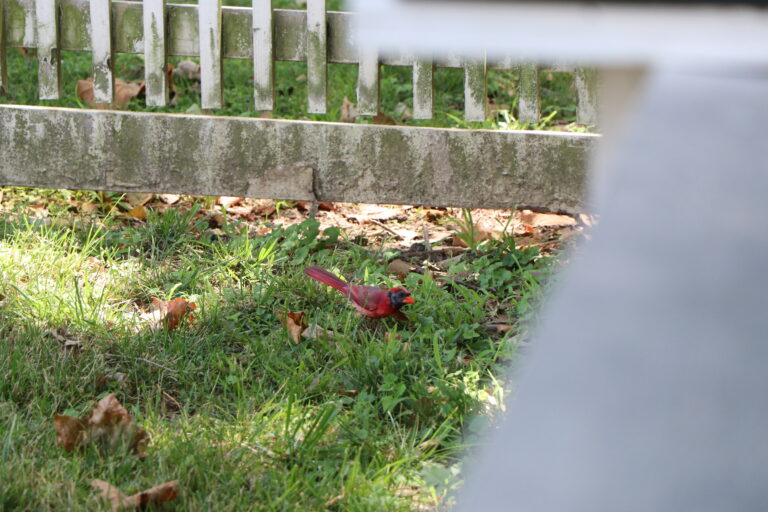
For many bird enthusiasts, the vibrant hues of warm-colored birds—reds and oranges—are among the most striking features of avian diversity. From the fiery flash of a Northern Cardinal against winter snow to the brilliant gleam of a Baltimore Oriole in a sun-dappled tree, these species capture our attention and ignite our passion for birding.
However, distinguishing between a truly red bird and a predominantly orange bird can sometimes be surprisingly challenging, especially for beginners. While some species are unmistakably vivid in their primary coloration, others display a spectrum of hues that can overlap, leading to confusion. Is that a reddish-orange or an orangish-red?
This comprehensive guide aims to clarify the key differences, providing practical identification tips, common pitfalls to avoid, and a deeper understanding of the factors influencing avian coloration, all to help birders accurately recognize these colorful species in their natural habitats.
Understanding Color in Bird Identification: More Than Meets the Eye
Color plays a significant role in bird identification, often serving as the first characteristic we notice. However, it is crucial to remember that color is only one piece of the identification puzzle. Factors such as size, shape, markings, behavior, vocalizations, and habitat are equally important, if not more so, for definitive identification.
When focusing on warm hues, it’s essential to consider the context—seasonal plumage changes, age and sex differences, individual variations, and perhaps most critically, lighting conditions can all dramatically influence how a bird’s color appears to the observer. A bird that looks brilliant scarlet in direct sunlight might appear dull brick-red on a cloudy day or in deep shadow.
The Nuances of Red vs. Orange: Discerning the Hues
Defining the Hues: Red vs. Orange
One of the most straightforward ways to begin differentiating red from orange birds is by examining the primary hue and saturation of their plumage. True red birds tend to exhibit a deeper, more intense coloration that can range from a rich crimson or scarlet to a ruby or cherry red. Think of the intense, almost uniform red of a male Northern Cardinal or the brilliant scarlet of a male Scarlet Tanager.
Orange birds, on the other hand, usually display a softer, often brighter, and sometimes more yellow-tinged hue. This can manifest as a vibrant tangerine, a fiery marigold, or a softer apricot. Consider the bright, almost glowing orange of a male Baltimore Oriole or the more muted, rusty orange of a Spotted Towhee’s flanks.
In the field, it’s helpful to compare the observed color against a mental ‘color palette’ or even a known object. Is it closer to a stop sign (red) or a pumpkin (orange)? While subjective, this initial assessment can guide your further observations.
Color Distribution and Patterns: Where the Color Lies
Beyond the primary hue, the pattern and distribution of color are invaluable clues. Red birds may exhibit solid, uniform coloration across large parts of their body, like the male Summer Tanager, which is entirely red. Others might have red confined to specific, well-defined areas, such as the red cap and belly patch of a Red-bellied Woodpecker (despite its name, the red is often subtle on the belly).
Orange birds often feature a combination of orange with other colors or distinctive markings. For instance, the Baltimore Oriole has a striking pattern of bright orange on its underside, shoulders, and rump, contrasting sharply with its black head and back. The American Redstart, a small warbler, is black with brilliant orange patches on its wings, tail, and flanks.
Pay close attention to whether the warm color extends over the entire body, is confined to specific areas like the throat, breast, or wings, or forms distinct streaks, spots, or bars.
The Role of Pigments: Why Birds are Red or Orange
The vibrant reds and oranges in birds are primarily due to carotenoid pigments, which birds cannot produce themselves. Instead, they obtain these pigments through their diet, often from fruits, seeds, and insects. The specific type and amount of carotenoids consumed, along with how they are processed and deposited in the feathers, determine the exact shade and intensity of the color.
This dietary link explains why some species might show regional variations in color intensity based on local food availability, and why a bird’s health and diet can impact the brilliance of its plumage. For example, a male House Finch’s red can vary from dull yellowish-orange to a deep, rosy red depending on its diet.
Practical Field Identification Tips for Warm-Colored Birds
Identifying warm-colored birds accurately in the field requires a systematic approach. Here are some practical tips:
- Observe Lighting Conditions Carefully: This is perhaps the most critical factor. Bright, direct sunlight can make even dull colors appear vibrant and can wash out subtle differences. Overcast conditions or deep shade can dull colors, making a bright orange appear brownish or a deep red look almost black. Try to observe the bird from different angles relative to the light source. If possible, wait for the bird to move into better light.
- Utilize Binoculars and Scopes: A good pair of binoculars (e.g., 8×42 or 10×42) is indispensable. They allow you to examine subtle color differences, feather patterns, and markings that are invisible to the naked eye. Look for fine streaks, feather edgings, or contrasting patches that might not be obvious at a distance.
- Note the Bird’s Overall Size and Shape: Before focusing solely on color, get a sense of the bird’s general proportions. Is it small and compact like a finch, or larger and more slender like an oriole? Does it have a long tail, a stout bill, or a crest? For example, a Northern Cardinal is a medium-sized songbird with a prominent crest and a thick, conical bill, while a Vermilion Flycatcher is much smaller, with a flatter head and a fine, pointed bill.
- Analyze Behavior and Movement: How does the bird move? Does it hop on the ground, climb tree trunks, or flit through foliage? Does it fly with a distinctive undulating pattern or a direct flight? Does it pump its tail? For instance, a Scarlet Tanager often moves slowly and deliberately through the canopy, while an American Redstart actively flits and fans its tail to flush insects.
- Listen for Vocalizations: Often, you’ll hear a bird before you see it. Learning common bird songs and calls can significantly narrow down your options, especially for species that are often hidden by foliage. Many red and orange birds have distinctive songs.
- Check the Habitat: Knowing the typical range and preferred environment of species can eliminate unlikely options. Is the bird in a dense forest, an open field, a suburban garden, or near water? For example, a Baltimore Oriole is typically found in open woodlands and along riparian corridors, while a House Finch is common in urban and suburban areas.
- Consult Field Guides (Printed or Digital): Always have a reliable field guide handy. Look at multiple images of the species in question, paying attention to variations due to age, sex, and subspecies. Read the descriptions carefully, focusing on key identification marks beyond just color. Digital apps often include sound recordings and range maps, which are incredibly useful.
- Consider the Time of Year: Many species undergo seasonal plumage changes. A male Scarlet Tanager is brilliant red in summer but molts into a yellowish-green plumage with black wings in fall and winter. A male American Goldfinch is bright yellow in summer but duller olive-brown in winter.
Common Red Birds: Examples and Identification Cues
When you encounter a bird that appears predominantly red, consider these common species:
- Northern Cardinal (Cardinalis cardinalis): Perhaps the most iconic red bird in North America. Males are a brilliant, uniform crimson red with a black mask around a prominent orange-red, conical bill and a distinctive crest. Females are reddish-brown with red accents. They are found in a wide variety of habitats, from dense shrubbery to suburban feeders. Their loud, clear ‘cheer-cheer-cheer’ song is unmistakable.
- Scarlet Tanager (Piranga olivacea): Males are an unmistakable brilliant scarlet red with jet-black wings and tail during the breeding season. They lack a crest and have a pale, conical bill. Females are olive-yellow with darker wings. They are typically found in mature deciduous forests, often high in the canopy, making them challenging to spot despite their color. Their song is often described as a ‘hoarse robin’.
- Summer Tanager (Piranga rubra): Males are entirely rose-red, lacking the black wings of the Scarlet Tanager. Their bill is pale. Females are dull yellow. They prefer open woodlands, often near water, and are insectivorous, frequently catching bees and wasps.
- Vermilion Flycatcher (Pyrocephalus rubinus): A stunning small flycatcher. Males have a brilliant vermilion red crown and underparts, contrasting with a dark brown back and mask. They often perch conspicuously on low branches or fences, making short sallies to catch insects. Found in arid and semi-arid regions of the southwestern US and Central/South America.
- House Finch (Haemorhous mexicanus): Males have a rosy red wash on their head, breast, and rump, which can vary in intensity from dull orange to deep red, often with streaky brown flanks and back. Females are streaky brown. Common in urban and suburban areas, they are frequent visitors to bird feeders. Their cheerful, jumbled song is a familiar sound.
Common Orange Birds: Examples and Identification Cues
If the bird you’re observing leans more towards orange, these species might be your match:
- Baltimore Oriole (Icterus galbula): Males are a striking bright orange on their underparts, shoulders, and rump, with a black head, back, and wings (with white wing bars). Females are duller, yellowish-orange. They have a slender, pointed bill. Orioles are often found in open woodlands, parks, and along rivers, and are known for their beautifully woven, hanging nests. Their rich, flute-like song is a hallmark of spring.
- Orchard Oriole (Icterus spurius): Smaller than the Baltimore Oriole. Males are a rich chestnut (a deep, rusty orange-brown) on their underparts, shoulders, and rump, with a black head, back, and wings. Females are yellowish-green. They prefer open woods, orchards, and riparian areas. Their song is a rapid, musical warble.
- American Redstart (Setophaga ruticilla): A small, active warbler. Males are primarily black with brilliant orange patches on their wings, tail sides, and flanks. Females are yellowish-gray with yellow patches. They constantly fan their tails and flit through foliage to flush insects. Found in deciduous and mixed forests.
- Varied Thrush (Ixoreus naevius): While not entirely orange, this thrush has a prominent rusty-orange breast, belly, and wing bars, contrasting with a dark gray back and a distinct dark breast band. Found in coniferous forests of the Pacific Northwest. Its ethereal, single-note whistle is hauntingly beautiful.
- Spotted Towhee (Pipilo maculatus): Males have a black head and back, with prominent white spots on their wings and back, and striking rusty-orange flanks and undertail coverts. Females are brownish where the male is black. They are ground-foraging birds, often heard rustling in leaf litter. Found in dense undergrowth and chaparral in western North America.
Beyond Red and Orange: The Spectrum of Warm Hues
It’s important to acknowledge that some birds defy simple categorization. Many species exhibit a blend of red and orange, or variations that lean one way or the other depending on light, age, or subspecies. For instance, the male Western Tanager has a bright red head that fades into a yellow body with black wings, creating a complex warm-colored appearance. The Pine Grosbeak male can range from a rosy-red to a more pinkish-orange.
Even within a single species, individual variation can be significant. This is why relying on multiple identification features—size, shape, markings, behavior, and habitat—is always more reliable than focusing on color alone.
Common Pitfalls and How to Avoid Them
Even experienced birders can be fooled by warm-colored birds under certain conditions. Being aware of common identification pitfalls can significantly improve your accuracy:
- The “Lighting Trick”: As mentioned, lighting is a major factor. A bird seen with the sun behind it (backlit) will appear much darker and less colorful than one with the sun illuminating its front. Similarly, a bird in deep shade might look duller than its true plumage. Always try to get the light source behind you, or observe the bird from multiple angles if possible.
- “Wishful Thinking”: It’s easy to want to see a rare or particularly striking bird. Be objective. If a bird doesn’t quite match the field guide image, don’t force the identification. It’s better to admit uncertainty than to misidentify.
- Focusing on a Single Feature: Never identify a bird based solely on its color. Always look for a combination of features: size, shape, bill type, tail length, wing patterns, leg color, eye color, and behavior. A red bird with a crest and a thick bill is likely a cardinal; a red bird without a crest and a slender bill is likely a tanager.
- Ignoring Context: Where are you? What time of year is it? What habitat is the bird in? A bright orange bird in a desert scrubland is unlikely to be a Baltimore Oriole, which prefers open woodlands. Always consider the bird’s geographic range and preferred habitat.
- Misjudging Size and Distance: It can be difficult to accurately gauge a bird’s size, especially at a distance or without a familiar object for comparison. Use your binoculars to assess relative size against nearby leaves or branches.
- Confusing Juveniles or Females: Many male birds are brightly colored, while their female and juvenile counterparts are much duller or have entirely different patterns. Always consult your field guide for all plumages. For example, a female Northern Cardinal is reddish-brown, not bright red.
Enhancing Your Field Observation Skills
Becoming proficient at identifying warm-colored birds, or any birds, requires developing strong field observation skills. Here’s how to hone them:
- Practice, Practice, Practice: The more time you spend in the field, the better you will become at noticing subtle details. Start in your backyard or a local park.
- Take Field Notes: Even quick sketches or written descriptions of what you see (color, size, shape, markings, behavior, vocalizations) can be invaluable later when consulting your field guide. Don’t just rely on memory.
- Use a Checklist: Many birding apps and websites offer local checklists. Checking off species as you see them helps you learn what to expect in your area and track your progress.
- Join a Birding Group: Learning from more experienced birders is one of the best ways to improve. They can point out subtle clues you might otherwise miss and share their knowledge.
- Be Patient and Still: Birds are often shy. Moving slowly and quietly, or simply sitting still and letting the birds come to you, will yield more observations.
- Learn Bird Sounds: Many birds are heard more often than seen. Learning their songs and calls is a powerful identification tool. Resources like the Cornell Lab of Ornithology’s Macaulay Library are excellent for this.
Conclusion: Cultivating a Keen Eye for Color and Context
Distinguishing between red and orange birds involves more than just noting their primary color. By developing a keen eye for subtle hue differences, understanding the distribution and patterns of coloration, and integrating observations of size, shape, behavior, and habitat, birders can significantly improve their identification accuracy. Remember that lighting conditions, seasonal changes, and individual variations can all influence how colors appear, so always approach identification with a holistic perspective.
Consulting authoritative field guides and reputable online resources, and cross-referencing multiple features, will empower you to confidently identify these magnificent warm-colored species and deepen your appreciation for the avian world.
For further assistance and visual examples, explore our detailed pages on red bird species and orange bird species. We strongly recommend using real or properly licensed photographs to ensure accurate identification and to avoid misrepresentation of species.
Featured image: licensed image via Wikimedia Commons. Credit: Rhododendrites. License: CC BY-SA 4.0. Used with attribution.
