
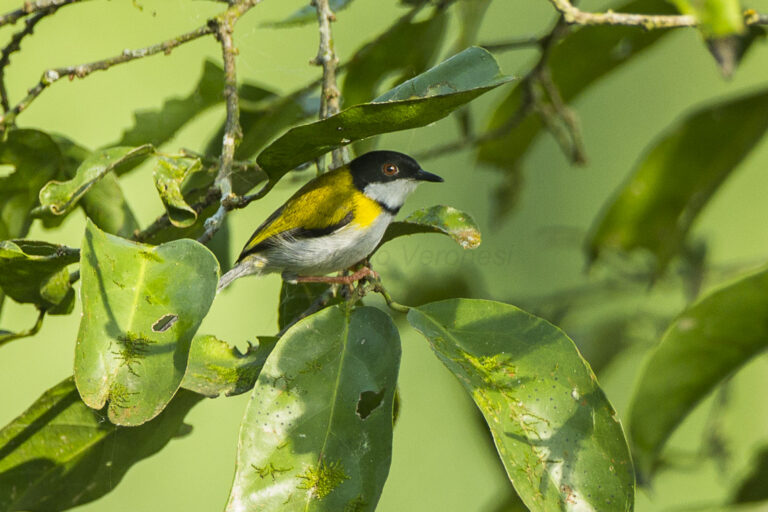
Introduction: Unveiling the Avian Wonders of the Rainforest
Rainforests, particularly the vast and enigmatic Amazon, represent Earth’s most extraordinary biodiversity hotspots. For birders, both seasoned and novice, these lush, multi-layered environments offer an unparalleled spectacle of avian life. However, the sheer density of vegetation, the dizzying array of species, and the often-elusive nature of rainforest birds can make identification a formidable, yet incredibly rewarding, challenge.
This comprehensive guide is designed to equip beginner birders with the foundational knowledge and practical strategies needed to confidently navigate the complexities of rainforest bird identification. We will look at the critical roles of plumage coloration, distinctive vocalizations, and characteristic canopy behaviors, providing a holistic approach to recognizing these magnificent creatures.
Mastering these identification techniques not only enriches your personal birding journey but also contributes invaluable data to conservation efforts and scientific understanding of these fragile ecosystems.
Understanding the Rainforest Habitat: A Vertical World of Avian Niches
To truly appreciate and identify rainforest birds, one must first grasp the intricate structure of their habitat. The rainforest is not a uniform expanse but a series of distinct vertical layers, each supporting a unique community of species. From the dark, humid forest floor to the sun-drenched emergent layer, birds have evolved specialized adaptations to thrive in their particular niche.
The most vibrant and active layer, and often the most challenging for observation, is the canopy. This uppermost stratum, formed by the crowns of towering trees, is a world unto itself, teeming with life. Many species, such as toucans, macaws, and various tanagers, spend their entire lives within this aerial realm, rarely descending to the forest floor.
Understanding these habitat preferences – whether a bird favors dense undergrowth, the mid-story, open clearings, or the highest branches – provides crucial context for identification. For instance, spotting a large, brightly colored bird high in a fruiting tree strongly suggests a canopy-dwelling frugivore, narrowing down your potential identifications significantly. Conversely, a small, drab bird foraging silently in the dense understory might point towards an antpitta or a ground-dwelling ovenbird.
Color as an Identification Tool: Beyond the Obvious Hues
Vivid Plumage and Its Multifaceted Significance
Rainforest birds are renowned for their breathtakingly vibrant plumage. This riot of color serves a multitude of biological purposes: attracting mates, signaling species identity, establishing territories, and even providing camouflage amidst the dappled light and varied foliage. Species like the Scarlet Macaw (Ara macao) with its fiery red, yellow, and blue, or the Keel-billed Toucan (Ramphastos sulfuratus) with its kaleidoscopic bill, are instantly recognizable due to their conspicuous coloration.
However, relying solely on overall color can be misleading. Many species exhibit sexual dimorphism, where males and females have different plumages (e.g., some cotingas, like the male Andean Cock-of-the-Rock with its brilliant orange plumage contrasting with the duller female), or age-related plumage variations (juveniles often have less vibrant or different patterns than adults).
Furthermore, the quality and angle of light in the rainforest can drastically alter how colors appear, making a bright blue bird seem dull or even dark. Always consider the lighting conditions and potential variations when using color as a primary identifier. For example, a bird that appears uniformly dark in deep shade might reveal iridescent greens or blues when caught in a shaft of sunlight.
Discerning Details: Color Patterns and Field Marks
True identification often hinges on specific, subtle details rather than broad color swaths. These ‘field marks’ are distinctive patterns or patches of color that differentiate one species from another, even among those with similar overall hues. Examples include:
- Wing bars: Contrasting bands of color on the wings, often visible when the bird is perched or in flight.
These can be single or double, thick or thin, and their color can be diagnostic.
- Eye rings or eye-lines: Distinctive circles or stripes around the eye. For example, many antbirds have prominent eye-rings. A white eye-ring can distinguish one species of flycatcher from another that lacks it.
- Tail patterns: Unique arrangements of colors or shapes on the tail feathers, such as a forked tail, a long central tail feather, or distinct banding.
The presence or absence of white outer tail feathers can be a key identifier for many species.
- Bill shape and color: The size, curvature, and color of the bill can be a critical field mark, especially for specialized feeders like toucans, hummingbirds, or curassows.
A long, decurved bill suggests a nectarivore or an insect-prober, while a stout, conical bill points to a seed-eater.
- Leg color: While often difficult to observe, leg color can sometimes be a distinguishing feature, particularly for waterbirds or ground-dwelling species.
- Crown patches or crests: Patches of distinctive color on the head, or a prominent crest, can be crucial.
The male Golden-headed Manakin, for instance, is unmistakable due to its bright yellow crown.
When observing a bird, try to systematically scan its entire body for these details. A small patch of yellow on the rump, a white supercilium (eyebrow stripe), or a specific pattern of spots on the breast can be the key to unlocking its identity.
For instance, while several tanager species might appear generally ‘green’ or ‘yellow,’ a specific blue patch on the head or a black mask around the eyes can pinpoint the exact species. Always consult your field guide, which meticulously illustrates these crucial field marks and often highlights the most important ones for differentiation.
Listening to the Rainforest: The Symphony of Bird Calls and Songs
The Indispensable Role of Vocalizations in Identification
In the dense, visually challenging environment of the rainforest, sound often takes precedence over sight for bird identification. Many birds are heard far more frequently than they are seen, hidden by foliage or perched high in the canopy. Vocalizations – encompassing both calls (short, often alarm or contact notes) and songs (more complex, often territorial or mating displays) – are incredibly species-specific.
Learning to recognize these sounds is arguably the most powerful tool for rainforest birding, especially for species that are shy, cryptic, or inhabit the inaccessible upper canopy.
Imagine trying to spot a tiny antpitta skulking in the undergrowth; its distinctive, often repetitive call is usually the only clue to its presence. Similarly, the loud, far-carrying calls of oropendolas or the melodic whistles of some trogons can be heard from a considerable distance, guiding you to their general location.
For many species, especially those in large, diverse families like ovenbirds and antbirds, vocalizations are the most reliable, and sometimes the only, way to distinguish between otherwise similar-looking species.
Practical Strategies for Bird Sound Identification
Developing an ear for rainforest bird sounds requires practice and patience, but the rewards are immense:
- Immerse yourself in recordings: Before your trip, spend time listening to recordings of common rainforest birds from your target region. Websites like eBird, Xeno-canto, and the Cornell Lab’s Macaulay Library offer vast databases of avian vocalizations.
Focus on species you expect to encounter, and listen repeatedly to internalize their unique patterns.
- Use a good-quality recording device: A smartphone with a decent microphone or a dedicated field recorder can capture calls for later analysis. This is invaluable when you hear a sound you can’t immediately identify.
Many birding apps also have sound recording and identification features, which can provide instant suggestions.
- Analyze the sound’s characteristics: Don’t just listen for the ‘tune.’ Pay attention to:
- Rhythm: Is it fast, slow, choppy, or continuous? Does it have a regular beat or is it erratic?
- Pitch: Is it high-pitched, low-pitched, or does it vary? Does it ascend or descend?
- Timbre/Quality: Is it clear, buzzy, harsh, flute-like, squeaky, or metallic?
Is it nasal or throaty?
- Pattern: Does it repeat in a specific sequence? How many notes are in a phrase? Does it accelerate or decelerate?
- Volume: Is it loud and far-carrying, or soft and subtle?
For example, the distinctive ‘whee-whee-whee’ call of a Rufous-tailed Jacamar is very different from the complex, bubbling song of a musician wren, even if both are heard in the same forest.
Describing these characteristics in your notes will help you compare with field guide descriptions.
- Learn by association: When you do get a visual on a bird, try to associate its appearance with any sounds it’s making. This reinforces your learning and builds a mental library of bird calls.
- Listen at different times of day: Bird activity, and thus vocalization, varies throughout the day.
Dawn chorus (just before and after sunrise) is typically the most vocal period, but some species are more active at dusk, and nocturnal birds, like owls and nightjars, become vocal after dark.
Canopy Behavior and Movement Patterns: Clues from Avian Actions
Observing Bird Behavior in the Canopy
Beyond static visual cues and auditory signals, a bird’s behavior provides a dynamic layer of identification information. How a bird moves, feeds, and interacts with its environment can be as distinctive as its plumage or call. Many canopy birds exhibit specialized behaviors that are key to their survival and, consequently, to their identification:
- Movement style: Does the bird hop deliberately along branches, flit rapidly between leaves, or cling to tree trunks like a woodpecker?
For example, woodcreepers are known for spiraling up tree trunks, probing bark for insects, while antwrens are typically seen gleaning insects from foliage with quick, jerky movements. Manakins perform elaborate courtship dances.
- Flight pattern: Is its flight direct, undulating, hovering, or soaring? Hummingbirds, for instance, are masters of hovering flight, while raptors soar on thermals with minimal wingbeats.
Parrots often fly in noisy, direct lines, whereas cotingas might have a more erratic, butterfly-like flight.
- Perching habits: Does it prefer open branches, dense foliage, or specific types of trees? Some cotingas prefer to perch conspicuously at the very top of emergent trees, while others are more secretive. Trogons often sit upright and motionless for long periods.
- Social behavior: Is it solitary, in pairs, or part of a mixed-species flock?
Many rainforest birds participate in large, noisy mixed-species flocks that move through the canopy, and recognizing these flocks can lead to numerous identifications. Observing the composition and behavior of these flocks can be a rich source of information.
- Foraging height: Does the bird feed in the understory, mid-story, or high canopy?
This can immediately narrow down possibilities.
Observing these behavioral nuances requires patience and a keen eye, but they can often confirm an identification or provide the missing piece of the puzzle when visual cues are ambiguous. For instance, seeing a bird sallying from a perch to catch an insect in mid-air strongly suggests a flycatcher, even if its plumage is somewhat indistinct.
Feeding Habits and Ecological Niches: What and How They Eat
A bird’s diet and feeding strategy are intrinsically linked to its morphology and behavior, offering powerful identification clues. Rainforest birds occupy an incredible diversity of ecological niches, each with its own feeding specialization:
- Frugivores (fruit-eaters): Many large, brightly colored birds like toucans, aracaris, and cotingas are primarily frugivores. Their large bills are often adapted for plucking and swallowing whole fruits.
Observing a bird actively feeding on a fruiting tree is a strong indicator, and the type of fruit can sometimes even provide clues.
- Insectivores (insect-eaters): This is a vast category, with birds employing various strategies. Flycatchers sally (fly out to catch insects in mid-air), antbirds follow army ant swarms, woodcreepers probe bark crevices, and ovenbirds forage in leaf litter.
Their agile movements and often smaller, more delicate bills are adapted for capturing insects.
- Nectarivores (nectar-eaters): Hummingbirds are the quintessential nectarivores, with long, slender bills and tongues adapted for sipping nectar from flowers. Their hovering flight is also a clear indicator, as is their attraction to brightly colored flowers.
- Carnivores/Piscivores (meat/fish-eaters): Raptors like harpy eagles prey on mammals and birds, while kingfishers dive for fish. Their powerful talons and sharp beaks are unmistakable.
Vultures and some hawks are scavengers.
- Granivores (seed-eaters): While less common in the canopy, some finches and seedeaters consume seeds, often indicated by their stout, conical bills designed for cracking open tough seeds.
For example, if you see a small, active bird darting out from a perch to snatch an insect in mid-air, you can confidently narrow your search to flycatchers or similar insectivorous families.
Conversely, a large bird with a massive, colorful bill systematically plucking berries from a tree is almost certainly a toucan or aracari. Combining these behavioral observations with visual and auditory cues creates a robust identification strategy. Always consider the context: what is the bird doing, where is it doing it, and what does its body suggest it’s adapted to eat?
Practical Birding Tips for the Rainforest Environment
Birding in the rainforest presents unique challenges and requires specific approaches to maximize your success and enjoyment:
- Move Slowly and Silently: Rainforest birds are often wary and easily spooked. Rushing through the forest will only scare them away. Adopt a slow, deliberate pace, pausing frequently to listen and scan. Every movement should be intentional.
- Look Up, Way Up: Many of the most spectacular birds reside high in the canopy. Train your eyes to scan the upper reaches of the trees, especially around fruiting or flowering trees, or where you hear vocalizations coming from. A wide-brimmed hat can help shield your eyes from the sun.
- Utilize Optics Effectively: Good quality binoculars (8×42 or 10×42 are popular choices) are essential. Consider models with a wide field of view and good low-light performance, which is crucial in the dim rainforest understory. A spotting scope can be invaluable for distant canopy birds, but remember it adds weight and requires a stable tripod.
- Carry a Region-Specific Field Guide: A general bird guide won’t suffice. Invest in a detailed field guide specific to the Amazon or the particular rainforest region you are visiting. These guides will feature local species, distribution maps, and often include QR codes or links to vocalizations. Digital field guides on smartphones can also be very useful, often including sound files.
- Document Your Observations: Keep a detailed notebook. Jot down plumage details, behaviors, vocalizations (try to describe them phonetically), habitat, and time of day. Take photographs or videos whenever possible, even if they are not perfect. These can be reviewed later with your field guide or shared with experienced birders for confirmation. Even a blurry photo can sometimes reveal a key field mark.
- Embrace the Dawn Chorus: The period just before and after sunrise is typically the most active and vocal time for rainforest birds. Plan to be out early, as this is often the best chance to hear and see a wide variety of species.
- Seek Out Microhabitats: Don’t just stick to one trail. Explore different areas: river edges, oxbow lakes, forest clearings, areas with fruiting trees, and even disturbed areas can attract different species. Each microhabitat supports a unique avian community.
- Go with a Knowledgeable Local Guide: This is perhaps the single most important tip for beginner rainforest birders. Local guides possess an intimate knowledge of the birds, their calls, and their preferred habitats. They can spot birds you would undoubtedly miss and teach you invaluable identification techniques, often knowing the exact tree where a rare species might be found.
- Dress Appropriately: Wear lightweight, breathable, quick-drying clothing in muted colors (greens, browns, grays) to blend in. Long sleeves and pants will protect you from insects, scratches, and sun. A wide-brimmed hat is also recommended. Sturdy, waterproof hiking boots are a must.
- Be Prepared for Insects: Mosquitoes, biting flies, and other insects are a reality of rainforest birding. Carry insect repellent with DEET or picaridin, and consider treating your clothing with permethrin. A head net can be a lifesaver in some areas.
- Stay Hydrated and Energized: Carry plenty of water and snacks. Birding in the rainforest can be physically demanding due to humidity and uneven terrain.
Advanced Considerations and Cautions for Identification
While the principles of color, sound, and behavior are foundational, rainforest bird identification can still present challenges, even for experienced birders:
- Similar Species (Look-alikes): Many rainforest families, such as antbirds, flycatchers, and ovenbirds, contain numerous species that are incredibly similar in appearance. This is where subtle field marks, precise vocalizations, and behavioral nuances become absolutely critical. For example, distinguishing between various species of Myiarchus flycatchers often comes down to minute differences in call and tail pattern, or the presence of a faint wing bar.
- Subspecies Variation: Some species have multiple subspecies across their range, which can exhibit slight differences in plumage or vocalizations. While field guides typically cover the most common variations, be aware that not every subtle difference will be depicted.
- Hybrids: While less common, hybridization can occur between closely related species, leading to individuals with mixed characteristics that defy easy classification. These can be particularly perplexing.
- Vagrants and Out-of-Range Species: Occasionally, a bird may appear far outside its typical distribution due to weather events or other factors. While exciting, these rare occurrences can be highly confusing for identification. Rely on strong evidence (clear photos, multiple observers, distinctive calls) before claiming a vagrant.
- Lighting Conditions: As mentioned, the dappled, often dim light of the rainforest can play tricks on the eyes, altering perceived colors and making details difficult to discern. Try to observe birds from different angles and wait for better light if possible. Iridescent colors, in particular, change dramatically with light.
- Observer Bias: It’s easy to see what you expect to see, especially when you have a target species in mind. Always approach an unknown bird with an open mind and systematically work through your identification process rather than jumping to conclusions. Compare your observations rigorously with your field guide.
- Molting Birds: Birds undergoing molt can have patchy or incomplete plumage, making identification more difficult.
- Juveniles: Juvenile birds often have different plumage from adults, and their calls may also differ. This adds another layer of complexity.
Additional Resources and References
To deepen your understanding and enhance your birding skills, consult these authoritative sources:
- Cornell Lab of Ornithology: A world leader in bird research and conservation, offering extensive resources including species accounts, sound libraries, and online courses. Their ‘All About Birds’ website is an invaluable resource.
- eBird: A global citizen science platform for bird observations. Use it to find hotspots, explore species distributions, and contribute your own sightings. It’s also an excellent tool for preparing species lists for your target locations.
- Xeno-canto: An extensive online database of bird sounds from around the world, invaluable for learning vocalizations. You can search by species, region, or even upload your own recordings for identification help.
- National Audubon Society: Provides information on bird conservation, identification, and field guides, particularly for North and South American species.
- Regional Field Guides: Essential for any trip. Look for guides specifically covering the Amazon Basin, northern South America, or Central America, depending on your destination. Examples include ‘Birds of Ecuador,’ ‘Birds of Peru,’ ‘The Birds of Northern South America,’ or ‘Birds of Brazil.’ Choose a guide that is compact enough to carry in the field but comprehensive enough for your needs.
- Online Birding Forums and Groups: Many online communities (e.g., on Facebook or dedicated birding websites) allow you to share photos, recordings, and identification queries with experienced birders from around the world.
Conclusion: A Lifelong Journey of Discovery
Identifying rainforest birds is a journey of continuous learning and immense satisfaction. By diligently applying the principles of visual observation (focusing on color patterns and field marks), honing your auditory skills (recognizing distinctive vocalizations), and understanding behavioral patterns (feeding habits, movement), beginner birders can understand this incredibly diverse avian world. Remember that patience, persistence, and a deep respect for wildlife and their fragile habitats are your most valuable tools.
Each identified species, whether a flash of vibrant color in the canopy or a haunting call from the undergrowth, represents a profound connection to nature’s unparalleled artistry. Embrace the challenge, enjoy the process, and allow the rainforest to reveal its countless feathered wonders. Your accurate observations contribute not only to your personal enrichment but also to the vital understanding and protection of these irreplaceable ecosystems.
Featured image: licensed image via Wikimedia Commons. Credit: Rhododendrites. License: CC BY-SA 4.0. Used with attribution.
