
Introduction: The Art and Science of Bird Photography for Identification
In the vibrant world of birding, a photograph is more than just a pretty picture; it’s a powerful tool for scientific documentation, personal learning, and community contribution. Capturing high-quality images of birds in their natural habitats is a vital skill for birders and naturalists aiming to accurately identify species, especially those with subtle distinctions or in unfamiliar territories.
Good photographs can reveal crucial details such as precise plumage patterns, the unique shape of a beak, the color of an eye, or the relative size of a bird—details that are often fleeting or difficult to discern with the naked eye or through quick field sketches. This comprehensive guide provides practical advice on how to improve your bird photography, ensuring your images are not only aesthetically pleasing but also scientifically useful and ethically obtained.
Understanding the Indispensable Role of Good Bird Photos in Identification
Photographs serve as invaluable, objective records for bird identification. They can be crucial when observing species with minute differences, such as distinguishing between various empidonax flycatchers or subtle subspecies variations, or when encountering a vagrant far from its typical range. Clear, well-focused images can help confirm species, document rare sightings for local bird clubs or state ornithological societies, and contribute significantly to citizen science projects like eBird, iNaturalist, or local bird atlases.
These platforms rely heavily on photographic evidence to verify observations and build comprehensive databases of avian distribution and behavior. Moreover, in an era where ethical birding is paramount, well-prepared photographers can capture images swiftly and efficiently, minimizing disturbance to the birds and their environment. This approach allows for detailed study without prolonged intrusion, reflecting a deep respect for wildlife.
Thorough Preparation: The Foundation of Successful Bird Photography
Research and Essential Equipment Choices
Before venturing into the field, thorough preparation is key. Familiarize yourself with the species common to your intended birding area through local field guides, online resources like Cornell Lab of Ornithology’s All About Birds, or regional birding apps. Understanding what birds you might encounter helps you anticipate their behavior and typical perching spots. Choosing appropriate equipment is equally crucial. While any camera can capture a bird, a dedicated setup significantly enhances your chances of success.
A telephoto lens with a focal length of at least 300mm (or an equivalent crop-sensor focal length of 450mm or more) is often considered a minimum for capturing close-up shots from a respectful, non-intrusive distance. Many bird photographers opt for lenses in the 400mm to 600mm range, often paired with teleconverters for even greater reach.
For example, a 400mm lens on a camera with a 1.5x crop factor effectively becomes a 600mm lens, providing excellent reach. Consider lenses with built-in image stabilization (VR/OS/IS) to help reduce blur from camera shake, especially when hand-holding.
A sturdy tripod or monopod is essential for stabilizing your camera, especially with heavy telephoto lenses or in low-light conditions, preventing camera shake and ensuring sharper images. Additionally, consider cameras with advanced autofocus systems (e.g., those with bird-eye detection or subject tracking) and high-resolution sensors to capture the intricate details necessary for identification. Modern mirrorless cameras often excel in these areas, offering fast burst rates and excellent low-light performance.
A camera with a high frame rate (e.g., 10-20 frames per second) can dramatically increase your chances of capturing that one perfect, sharp shot as a bird moves.
Deciphering Bird Behavior and Habitat Clues
Knowing where and when birds are most active can dramatically improve your chances of capturing quality images. Early mornings and late afternoons, often referred to as the ‘golden hours,’ typically provide the best natural lighting conditions—soft, warm light that enhances colors and reduces harsh shadows. These times also coincide with peak bird activity, as many species are foraging, singing, or engaging in territorial displays.
Understanding specific bird behaviors—such as their feeding habits, preferred perches, nesting patterns, or flight paths—can help you anticipate movement and position yourself strategically. For example, knowing that a certain warbler species prefers the canopy of deciduous trees or that a shorebird favors mudflats at low tide allows you to focus your attention and camera lens more effectively.
If you’re looking for a Belted Kingfisher, observing a quiet stretch of river with overhanging branches and clear water will be far more productive than searching in a dense forest. Similarly, understanding that many raptors use thermals to soar during the warmer parts of the day can guide your search for flight shots.
Observing a bird’s pre-flight cues, like a slight crouch or a head bob, can prepare you for capturing stunning flight shots. Patience is not just a virtue; it’s a fundamental skill in bird photography. Often, the best strategy is to find a promising location, set up, and wait for the birds to come to you, rather than actively pursuing them.
Optimizing Camera Settings for Pin-Sharp Identification Photos
Mastering your camera’s settings is paramount for capturing the detail required for identification. While automatic modes can be convenient, manual or semi-manual modes offer greater control and better results.
Exposure Triangle: Shutter Speed, Aperture, and ISO
- Shutter Speed: This is arguably the most critical setting for bird photography. To freeze motion, especially for active or flying birds, set your camera to fast shutter speeds—typically 1/1000 second or faster. For birds in flight, 1/2000s or even 1/4000s might be necessary, depending on the speed of the bird and your lens’s focal length. A common beginner mistake is using a shutter speed too slow, resulting in blurry images. For stationary birds, you might be able to drop to 1/500s or 1/250s, but always err on the side of faster to ensure sharpness. For instance, a small, quick bird like a hummingbird requires a much faster shutter speed (e.g., 1/2000s or more) than a relatively still Great Blue Heron (which might be sharp at 1/500s).
- Aperture: The aperture (f-number) controls the depth of field (the area in focus) and the amount of light entering the lens. A wider aperture (lower f-number, e.g., f/4 or f/5.6) creates a shallower depth of field, helping to isolate the bird from a potentially distracting background, making the bird ‘pop.’ This also allows more light in, which is beneficial for maintaining fast shutter speeds. However, a very wide aperture might mean only a small part of the bird is in sharp focus. For identification, it’s often desirable to have the entire bird, or at least key features like the head and body, in focus. An aperture of f/6.3 to f/8 can often provide a good balance, ensuring sufficient depth of field while still blurring the background effectively. For a large bird like a goose, f/8 might ensure the entire body is sharp, whereas for a tiny warbler, f/5.6 might be sufficient to get the head and most of the body in focus while still blurring the background.
- ISO: ISO determines the camera sensor’s sensitivity to light. Adjust ISO to maintain fast shutter speeds and appropriate aperture settings, especially in challenging light conditions. Modern cameras handle higher ISO values (e.g., ISO 800, 1600, or even 3200) remarkably well without introducing excessive digital noise (graininess). However, always aim for the lowest ISO possible that still allows for your desired shutter speed and aperture to minimize noise and maximize image quality. In bright sunlight, you might be able to keep ISO at 100 or 200, but in a shaded forest or on an overcast day, you might need to push it to 800 or 1600. It’s a trade-off: a slightly noisy but sharp image is almost always preferable to a clean but blurry one for identification.
Focusing Systems and White Balance
- Autofocus Modes: Use continuous autofocus (often called AI Servo on Canon, AF-C on Nikon, or Tracking AF on Sony) to keep moving subjects sharp. This mode continuously adjusts focus as the bird moves, which is essential for capturing elusive avian subjects. Experiment with different autofocus area modes; a single-point AF can be precise for static birds, while dynamic area AF or 3D tracking can be effective for birds in flight or those moving erratically. Many modern cameras now feature advanced subject-tracking modes that can specifically detect and follow a bird’s eye or body, significantly improving focus accuracy. Practice with these modes to understand their strengths and limitations in various scenarios. For a bird perched on a branch, a single-point AF mode placed directly on the bird’s eye will yield the sharpest results. For a bird flying across the frame, a wider zone or tracking AF mode will be more effective.
- White Balance: White balance should be set to match the lighting conditions (e.g., ‘Daylight’ for sunny days, ‘Cloudy’ for overcast skies, ‘Shade’ for shaded areas). Alternatively, leaving it on ‘Auto White Balance’ (AWB) offers versatility, as modern cameras are quite good at estimating correct color temperature. If shooting in RAW format, white balance can be easily adjusted in post-processing without loss of quality. However, getting it close in-camera saves time and gives a more accurate preview. Incorrect white balance can subtly alter plumage colors, which, in some cases, could lead to misidentification, especially for species where color nuances are key.
Advanced Techniques for Capturing Identifiable Bird Images
The Art of Approach and Stealth
The way you approach a bird can make or break your photographic opportunity. Approach slowly, quietly, and indirectly, avoiding direct eye contact or sudden movements that might startle the bird. Use natural cover like trees, bushes, or terrain to break up your silhouette. If available, using a photographic blind or even just sitting patiently in one spot can allow birds to become accustomed to your presence.
Patience is paramount; often, the best shots come after a period of quiet waiting, allowing the bird to relax and exhibit natural behavior rather than rushing to get a quick, potentially stressful shot. For example, if you spot a warbler foraging in a shrub, instead of trying to follow it through the dense foliage, find a clear spot with good light and wait. The bird may eventually move into your frame.
Camouflage clothing can also help you blend into the environment, making you less conspicuous to wary birds. Always move deliberately and smoothly, avoiding sudden gestures.
Composition and the Power of a Clean Background
While identification is the primary goal, good composition significantly enhances the utility and aesthetic appeal of your photos. Frame your subject thoughtfully, paying close attention to the background. A cluttered background with distracting branches, bright spots, or busy patterns can obscure key identification features and detract from the bird. Strive for a clean, contrasting background that helps the bird stand out.
This can often be achieved by adjusting your shooting angle, moving slightly to the left or right, or waiting for the bird to move to a more favorable perch. For instance, if a bird is perched in front of a busy tangle of branches, try to reposition yourself so that the background is a patch of sky, a distant uniform forest, or a body of water.
Using a wide aperture, as discussed, also helps to blur the background, creating a pleasing ‘bokeh’ effect. Applying compositional guidelines like the rule of thirds, where the bird is placed off-center, can create more dynamic and engaging images. A clean background not only makes the bird more prominent but also allows for easier digital cropping later without introducing distracting elements.
Prioritizing Key Identification Features
For identification purposes, focus on capturing images that clearly showcase distinctive plumage patterns, wing markings (e.g., wing bars, speculum color), tail shape and length, beak characteristics (size, shape, color), leg and foot color, and eye color or eye-rings. It’s often beneficial to capture multiple angles of the same bird: a profile shot, a head-on shot, a dorsal view (if possible), and close-ups of specific features like the head or feet.
For example, distinguishing between similar sparrow species might rely on subtle streaking patterns on the breast or the presence of a supercilium (eyebrow stripe). For raptors, the pattern of the underwing can be critical, especially when soaring overhead. If a bird is vocal, a photo with its mouth open might reveal tongue or gape color, which can sometimes be an identification clue.
When photographing ducks, paying attention to the bill color and shape, as well as the speculum (a patch of iridescent color on the secondary flight feathers), is crucial. For gulls, the color of the legs and the pattern of black on the wingtips are often definitive.
Don’t just take one shot; take a burst of photos to increase your chances of getting a perfectly sharp image with the bird in an ideal pose, perhaps even with its head turned to catch the light on its eye.
Post-Processing and Effective Image Management
Post-processing is an integral part of modern digital photography. It allows you to refine your images, bringing out details that might be subtle in the raw file. Adjustments to brightness, contrast, sharpness, and color balance can significantly enhance features critical for identification. For example, gently increasing clarity or sharpness can make feather details more apparent, helping to distinguish between similar species.
Cropping can also be used to bring the bird closer in the frame, highlighting key features, but always be mindful not to over-crop, which can degrade image quality.
However, it’s crucial to avoid over-processing, which can lead to unnatural-looking images or introduce artifacts that might obscure true identification marks. For instance, excessive saturation can distort plumage colors, and over-sharpening can create halos or artificial textures. Always retain the original, unedited file (RAW files are highly recommended for their flexibility) for verification purposes.
Properly cataloging your images with metadata—including location, date, time, and initial species notes—is vital for personal organization and for contributing to citizen science platforms. This metadata can be invaluable when reviewing your photos months or years later, or when sharing them with others for identification help.
Software like Adobe Lightroom, Capture One, or free alternatives like Darktable can help manage and process your growing collection of bird photos. These tools allow for non-destructive editing, meaning your original file remains untouched while your adjustments are saved separately.
Ethical Considerations: Respecting Wildlife Above All
The pursuit of a great bird photo should never come at the expense of the bird’s well-being. Respect the birds’ space and avoid causing stress or disturbance. This means maintaining a safe distance, moving slowly, and never chasing or flushing birds for a better shot. Be particularly mindful during nesting season, as disturbing nesting birds can lead to nest abandonment or increased predation risk for eggs and chicks.
If you observe a nest, keep your distance and use a long lens; never approach closely or try to clear vegetation around it for a better view.
Avoid using excessive playback of bird calls (pishing or audio lures), as this can disrupt natural behaviors, stress birds, and potentially draw predators. While a very brief, limited use of call playback might be acceptable in some situations for identification, continuous or loud playback is harmful. If you notice a bird showing signs of distress (e.g., alarm calls, agitated movements, flying away repeatedly), back off immediately.
Use camouflage or blinds when necessary to minimize your presence. Always adhere to local wildlife regulations, park rules, and private property boundaries. Never bait birds with food that is unnatural or unhealthy for them, as this can disrupt their diet and make them dependent on humans.
Remember that the primary goal of birding and bird photography is to observe and enjoy wildlife without impacting their natural behavior or habitat. A good photograph is one that is ethically obtained.
Practical Examples and Identification Cautions
Consider the challenge of identifying empidonax flycatchers. These small, drab birds are notoriously difficult to distinguish visually. A good photograph will clearly show the length of the primary projection (how far the primary wing feathers extend beyond the tertials), the shape of the eye-ring (complete, broken, or absent), the color of the lower mandible, and the overall head shape. Without these details, even an expert might struggle.
For example, a Least Flycatcher often has a compact head and a short primary projection, while a Willow Flycatcher has a flatter head and a longer primary projection. These are subtle differences that require sharp focus and good light.
Similarly, distinguishing between a Downy Woodpecker and a Hairy Woodpecker often comes down to the length of the beak relative to the head and the presence or absence of black spots on the outer tail feathers—details that are easily missed without a sharp, well-exposed image. The Downy’s bill is noticeably shorter than its head, while the Hairy’s bill is roughly as long as its head. For gulls, pay attention to leg color (yellow vs.
pink), bill color and shape (e.g., presence of a red spot on the lower mandible), and wingtip patterns (the extent and pattern of black on the primary feathers). For warblers, look for wing bars, streaking on the flanks, distinct facial patterns (e.g., eye-rings, supercilium, lore color), and undertail covert color.
Always be cautious of lighting conditions that can alter perceived colors; a bird in shadow might appear darker than it truly is, or a bird in harsh sunlight might have washed-out colors. For instance, a normally bright yellow bird might look dull green in deep shade, or a reddish-brown bird might appear almost black in low light. These optical illusions can lead to misidentification.
Cross-reference your photos with multiple field guides and online resources, and consider submitting challenging identifications to expert forums or eBird for community review. Provide as much context as possible with your photo, including location, date, time, and any observed behaviors.
Field Observation Tips for the Photographer-Birder
Integrating photography with traditional birding skills enhances both. Before even raising your camera, take a moment to observe the bird through binoculars. Note its behavior, its surroundings, and its potential movements. This initial observation can inform your photographic strategy. Look for perches that offer a clean background or good light. Anticipate where the bird might fly next. If a bird is actively feeding, it might stay in one area longer, offering more opportunities.
If it’s preening, it might eventually pause in a photogenic pose. Use your ears; bird calls and songs can lead you to subjects you might otherwise miss. When you do find a subject, start by taking a few wider shots to capture the bird in its habitat, which can be useful for contextual identification, then gradually zoom in for tighter portraits. Don’t be afraid to experiment with different angles and compositions.
Sometimes, getting low to the ground can provide a more intimate and impactful perspective. The more you practice, the more intuitive these observations and photographic decisions will become. Keep a mental checklist of key identification features for common difficult groups, like sparrows or shorebirds, and actively try to capture those details in your photos.
Additional Resources for the Aspiring Bird Photographer
- Cornell Lab of Ornithology: An invaluable resource for bird identification, behavior, and conservation. Their ‘All About Birds’ guide is excellent.
- eBird: A global citizen science project where you can record your sightings, explore bird distribution, and get identification help. Essential for any serious birder.
- Audubon Society: Offers extensive resources on bird conservation, identification tips, and local chapters for community engagement.
- RSPB (Royal Society for the Protection of Birds): For UK-specific birding guidance, conservation efforts, and identification resources.
- National Geographic Bird Photography Tips: Provides insights from professional wildlife photographers.
- BirdGuides: Offers regional bird information, news, and identification articles, particularly strong for European birding.
- Consult local field guides: These are indispensable for detailed species descriptions, range maps, and regional variations specific to your area. Examples include the Sibley Guide to Birds or Peterson Field Guides.
- Online bird photography forums and communities: Platforms like Flickr, 500px, or dedicated bird photography groups on social media can offer inspiration, feedback, and learning opportunities from experienced photographers.
Conclusion: A Journey of Discovery and Contribution
Improving your bird photography is a continuous and rewarding process that profoundly enhances your ability to identify, appreciate, and contribute to our understanding of avian diversity. By diligently understanding your equipment, meticulously preparing for your outings, mastering essential camera settings, and above all, respecting the wildlife you seek to capture, you can create images that are not only aesthetically captivating but also scientifically invaluable.
Each photograph becomes a data point, a learning opportunity, and a testament to the intricate beauty of the natural world. Remember, every shot is an opportunity to learn, to refine your skills, and to contribute to the collective knowledge of birdlife, fostering a deeper connection with the birds around us.
Embrace the journey, be patient, and let your camera be an extension of your passion for birds, helping you to see and understand them in new and exciting ways.
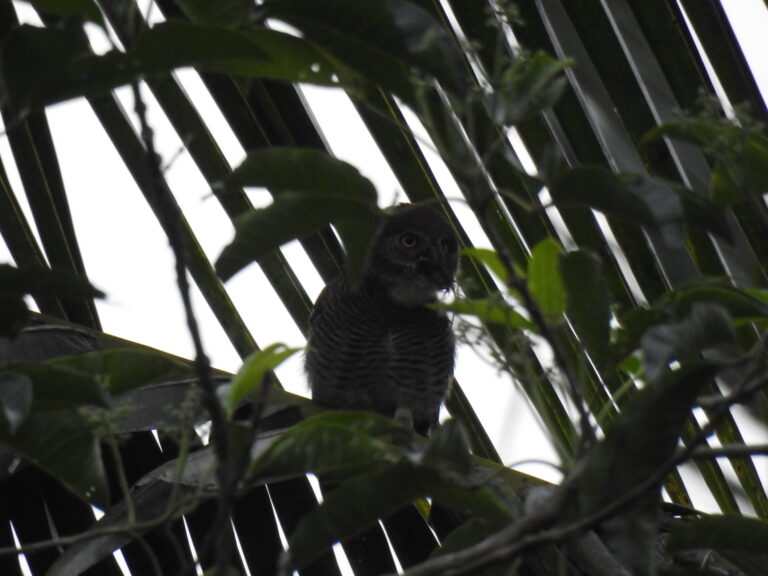
Featured image: licensed image via Wikimedia Commons. Credit: Irvin calicut. License: CC BY-SA 4.0. Used with attribution.
