
Understanding the Evolution of Bird Names: More Than Just Labels
For many bird enthusiasts, names are fundamental to identification and appreciation. They are the labels we use to communicate about the species we observe, the subjects of our field guides, and the entries in our life lists. However, bird names are not static; they evolve over time due to scientific discoveries, taxonomic revisions, and cultural shifts. This dynamic nature can sometimes cause confusion among birders, conservationists, and educators alike.
Understanding why these changes occur can deepen our appreciation for avian diversity and the scientific process itself.
Imagine you’ve spent years learning to identify a particular bird by its common name, only to find it listed under a different name in a new field guide. This experience, common for many birders, highlights the fluid nature of bird nomenclature. Far from being arbitrary, these changes are usually rooted in a continuous effort to better understand and classify the natural world.
The Cornerstone of Change: Scientific Taxonomy
At the core of bird name changes lies taxonomy—the science of classifying living organisms. Taxonomy provides a hierarchical system for organizing life, from broad categories like ‘kingdom’ down to specific ‘species’ and ‘subspecies.’ This system, largely based on the work of Carl Linnaeus, aims to reflect evolutionary relationships.
As scientists study birds more closely, they often discover new species, recognize that what was once thought to be a single species actually comprises multiple distinct ones, or find that previously separated species are, in fact, the same. These discoveries lead to revisions in scientific names (the Latin binomials like Turdus migratorius for the American Robin) and, consequently, often in common names.
Taxonomic revisions are not made lightly. They are typically based on new, compelling evidence, such as advanced genetic analyses, detailed vocalization studies, or meticulous morphological (physical structure) examinations. For instance, DNA sequencing can reveal that two populations of birds that look very similar and were once considered the same species have been reproductively isolated for millions of years, leading to their reclassification as distinct species.
Conversely, genetic evidence might show that two species, thought to be separate, are so closely related that they should be merged into one.
When such evidence suggests that two populations are more different than previously thought, taxonomists may ‘split’ a species into two or more, each with its own scientific and common name. An example of this is the former Northern Oriole, which was split into the Baltimore Oriole (Icterus galbula) and Bullock’s Oriole (Icterus bullockii) based on genetic and morphological differences, despite their ability to hybridize in a narrow zone.
Conversely, a ‘lump’ occurs when two or more previously recognized species are combined into a single species. This happened with the Rufous-sided Towhee, which was lumped into the Eastern Towhee (Pipilo erythrophthalmus) and Spotted Towhee (Pipilo maculatus) after further study revealed they were distinct. These splits and lumps are crucial for accurately representing biodiversity and informing conservation efforts.
Historical and Cultural Influences on Common Names
While scientific names follow strict international codes, common names are often more fluid and influenced by human history, culture, and language. Many names originate from local languages, indigenous terms, or early European explorers’ descriptions. As cultures interact, knowledge spreads, and societal values evolve, common names can change or be replaced to reflect new understandings or sensitivities.
For example, a bird once named after a colonial figure might be renamed to better honor local cultures, describe a key characteristic, or to remove offensive associations. The American Ornithological Society (AOS) recently announced plans to change common names of birds named after people, particularly those with problematic historical legacies. This initiative aims to promote inclusivity and respect within the birding community, ensuring that bird names are welcoming to all.
An example of this type of change is the current discussion around ‘McCown’s Longspur’ (Rhynchophanes mccownii), named after an army officer who fought against Native Americans. Such changes are not about erasing history but about fostering a more inclusive future for birding.
Beyond ethical considerations, common names sometimes change simply to improve clarity or consistency. A bird might have several different common names across its range, leading to confusion. Standardizing a single, widely accepted common name helps facilitate communication among birders, scientists, and the public.
For instance, what was once known as the ‘Common Crow’ is now simply the ‘American Crow’ (Corvus brachyrhynchos) in North America, a subtle but helpful distinction from other crow species found elsewhere in the world.
Impacts on Bird Identification and Birding Practices
For birders, name changes can be both a challenge and an opportunity. Initially, they can be disorienting. You might open a new field guide or check an online database and find a familiar bird under an unfamiliar name. This can lead to moments of doubt, making you question your identification skills or the reliability of your resources.
However, these updated names reflect the latest scientific understanding, helping birders identify species more accurately and appreciate the subtle distinctions that scientists have uncovered.
The challenge arises when field guides, checklists, or birding apps are not synchronized with current taxonomy. A birder using an older guide might miss a newly split species or misidentify a bird if they are unaware of a name change. This highlights the importance of staying current. Embracing these changes means adapting your mental lexicon and updating your resources, which ultimately enhances your birding knowledge.
Consider the example of the ‘Thayer’s Gull’ (Larus thayeri). For many years, it was considered a distinct species. However, extensive research, particularly genetic studies, led to its reclassification as a subspecies of the Iceland Gull (Larus glaucoides thayeri). For birders, this meant that a ‘life bird’ might suddenly become a ‘subspecies,’ changing how they record and report their sightings.
While this can be frustrating, it also reflects a deeper, more accurate understanding of gull taxonomy, which is notoriously complex.
Practical Tips for Staying Current and Navigating Changes
Staying informed about bird name changes is an ongoing process, but it doesn’t have to be overwhelming. Here are some practical tips for birders, especially beginners, to navigate this dynamic landscape:
- Use Multiple, Up-to-Date Sources: Don’t rely on a single, old field guide. Cross-reference information using multiple reputable sources. Invest in the latest editions of your preferred field guides. Supplement these with online databases and birding apps that are regularly updated.
- Stay Informed by Following Reputable Organizations: The American Ornithological Society (AOS) in North America and the International Ornithological Congress (IOC) for global taxonomy are the primary authorities for scientific and common name conventions. Organizations like the Cornell Lab of Ornithology, eBird, and Audubon (in North America), or the RSPB and BirdLife International (globally) regularly publish updates and articles about taxonomic revisions. Subscribing to their newsletters or following their social media can keep you in the loop.
- Focus on Visual and Vocal Cues, Not Just Names: While names change, the physical characteristics, behaviors, and vocalizations of birds remain constant. Develop strong identification skills based on these intrinsic features. Learn to recognize field marks (e.g., wing bars, eye rings, bill shape), plumage patterns, flight style, habitat, and, crucially, songs and calls. If you can confidently identify a bird by its features, adapting to a new name becomes much easier. For example, a ‘Yellow-rumped Warbler’ (Setophaga coronata) will always have that distinctive yellow rump, regardless of any future name adjustments.
- Understand the ‘Why’ Behind the Change: When you encounter a name change, take a moment to understand the scientific reasons behind it. Often, these changes are based on fascinating new discoveries about a species’ evolutionary history or genetic makeup. This intellectual curiosity can transform a potentially frustrating experience into a rewarding learning opportunity.
- Respect Local Naming Conventions: Recognize that common names can vary regionally, even if scientific names are standardized. In some parts of the world, local names have deep cultural significance. While scientific names provide universal clarity, appreciating regional common names enriches your understanding of human-bird interactions.
- Update Your Life Lists and Records: If you maintain a life list or keep detailed birding records, make sure to update them according to the latest taxonomic changes. Many birding apps and online platforms like eBird automatically incorporate these updates, simplifying the process.
Case Studies in Avian Nomenclature: Learning from Examples
Examining specific examples can illustrate the diverse reasons behind bird name changes:
One notable example involves the Northern Flicker (Colaptes auratus). Historically, it was known by many regional common names, including ‘Yellowhammer’ (especially in the southern US, causing confusion with the European Yellowhammer, Emberiza citrinella) or ‘Golden-winged Woodpecker.’ Early scientific revisions recognized two main forms, the ‘Yellow-shafted Flicker’ in the east and the ‘Red-shafted Flicker’ in the west, which interbreed in a narrow zone. For a time, they were considered separate species.
However, further genetic and morphological studies led to their reclassification as a single species, the Northern Flicker, with the ‘yellow-shafted’ and ‘red-shafted’ forms now recognized as subspecies. This ‘lumping’ reflects a better understanding of their genetic continuity and reproductive compatibility.
Another classic case is the Red-breasted Merganser (Mergus serrator). While its common name has been relatively stable, its scientific classification within the duck family (Anatidae) has seen adjustments as taxonomists refine the relationships between diving ducks, dabbling ducks, and mergansers. Understanding these relationships helps scientists trace evolutionary lineages and informs conservation strategies by identifying distinct genetic units.
A recent and impactful example is the ongoing re-evaluation of common names by the American Ornithological Society (AOS). As mentioned, the AOS is systematically reviewing all English common names of birds within its purview that are named after people. This initiative, driven by a commitment to inclusivity and addressing historical injustices, will lead to changes for species like ‘Townsend’s Solitaire’ (Myadestes townsendi) or ‘Steller’s Jay’ (Cyanocitta stelleri).
The new names are expected to be descriptive, referring to the bird’s appearance, habitat, or vocalizations, rather than honoring individuals. This move, while requiring adaptation from birders, represents a significant cultural shift in how we name and relate to the natural world.
Consider also the complexities of species complexes, where subtle differences lead to splits. The ‘Western Scrub-Jay’ (Aphelocoma californica) was split into three distinct species: the California Scrub-Jay (Aphelocoma californica), Woodhouse’s Scrub-Jay (Aphelocoma woodhouseii), and Island Scrub-Jay (Aphelocoma insularis). This split was based on detailed genetic, morphological, and vocalization studies, revealing that these populations, though visually similar, were reproductively isolated and had distinct evolutionary trajectories.
For birders, this meant potentially adding two new species to their life lists if they had observed birds from the newly recognized ranges.
Conclusion: Embracing Change for a Deeper Understanding
While name changes can initially seem confusing or even frustrating, they are a sign of progress in our understanding of bird diversity and the intricate web of life. They reflect the dynamic nature of scientific inquiry, where new evidence constantly refines our knowledge. Embracing these updates enhances our appreciation of avian biodiversity and supports more accurate communication and conservation efforts.
By staying engaged with current taxonomy and reputable sources, and by focusing on the intrinsic characteristics of birds, your birding experience will remain informed, rewarding, and deeply connected to the ongoing scientific journey of discovery.
Ultimately, bird names, both common and scientific, are tools. They are essential for communication, research, and conservation. As these tools are refined and improved, so too is our ability to understand, protect, and enjoy the incredible diversity of birds around us. The journey of birding is one of continuous learning, and adapting to name changes is just another fascinating aspect of that journey.
Additional Resources for Birders
- Bird guides and field guides: Always seek out the latest editions.
- Bird conservation organizations: Many provide updates on species status and nomenclature.
- Bird name etymology resources: Explore the origins and meanings of bird names.
- American Ornithological Society (AOS) Checklists: The official source for North American bird taxonomy.
- International Ornithological Congress (IOC) World Bird List: A comprehensive global checklist.
References
- Cornell Lab of Ornithology, https://www.birds.cornell.edu/home/
- eBird, https://ebird.org/
- RSPB, https://www.rspb.org.uk/
- American Ornithological Society, https://americanornithology.org/
- International Ornithological Congress, https://www.worldbirdnames.org/
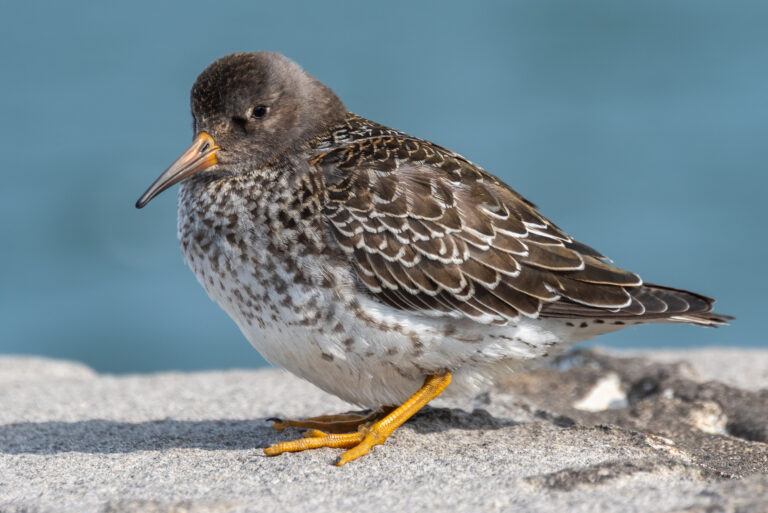
Featured image: licensed image via Wikimedia Commons. Credit: Gordon Leggett. License: CC BY-SA 4.0. Used with attribution.
