
Introduction: Unraveling the Waterfowl Mystery
Waterfowl – swans, geese, and ducks – are found on wetlands, ponds, rivers, and coasts worldwide. They all belong to the Anatidae family and share aquatic adaptations like webbed feet and waterproof plumage, yet each group has unique characteristics. This guide offers practical, beginner-friendly tips to help you tell swans, geese, and ducks apart confidently.
Understanding the Anatidae Family: A Shared Heritage
Swans, geese, and ducks are all members of the Anatidae family, a group of about 150 species known for their strong association with water. They share specialized oil glands that waterproof their feathers, dense insulation, and webbed feet for efficient swimming. Millions of years of evolution, however, have produced distinct physical and behavioral adaptations that let us tell the three groups apart.
The Art of Identification: Key Distinguishing Features
No single feature is foolproof, so look for a convergence of clues involving size, body shape, neck length, bill structure, plumage, and behavior.
1. Size and Overall Body Shape: The First Impression
Overall size and silhouette are usually the easiest features to judge, even from a distance, making them a reliable starting point.
- Swans: The giants of the waterfowl world, with elongated, streamlined bodies. A Mute Swan can weigh over 25 pounds (11 kg) with a wingspan exceeding 8 feet (2.4 meters), making it unmistakable next to even the largest goose.
- Geese: Medium-to-large and more robust than most ducks. A Canada Goose is clearly bigger than a Mallard but nowhere near the size of a swan; their stout build suggests strength.
- Ducks: Generally the smallest and most compact, with rounded, agile bodies. Even the largest ducks, like a Common Eider, are smaller than an average goose.
Practical Tip: Compare the bird to others nearby. Even if you don’t know the exact species, categorizing birds by general size class gives you a strong foundation for further identification.
2. Neck Length and Posture: The Elegant Curve vs. The Sturdy Column
How a bird holds its neck is a reliable indicator, often visible at a considerable distance.
- Swans: Their defining feature is a long, graceful neck, often longer than the body. Mute Swans hold it in a distinctive S-curve with the bill angled down; Tundra Swans hold theirs straighter but still very long, letting them reach submerged vegetation.
- Geese: Medium-length necks, noticeably shorter and thicker than a swan’s, usually held upright or slightly curved. A Canada Goose’s black neck and white chinstrap is a classic example of this sturdy posture.
- Ducks: Short, stout necks held close to the body, well-suited to dabbling or diving. Even a long-bodied Northern Pintail has a proportionately shorter neck than a goose.
Practical Tip: Watch the neck both on land and in water. A swan’s neck still appears disproportionately long even when tucked in for rest, making it a consistent marker.
3. Bill Shape and Coloration: Specialized Tools for Feeding
The bill is a highly specialized feeding tool whose shape and color offer crucial identification clues.
- Swans: Large, robust bills, often straight and wedge-shaped. Mute Swans have an orange bill with a black knob at the base; Tundra Swans have a black bill, often with a yellow patch near the eye.
- Geese: Shorter, stouter, more conical bills adapted for grazing. Colors range from black (Canada Goose) to orange or pink (Greater White-fronted Goose); Snow Geese have a distinctive ‘grinning patch’.
- Ducks: The widest variety of bill shapes. Dabbling ducks have broad, flattened bills for sifting water; diving ducks have more slender, pointed bills for catching fish. Bill color ranges from bright yellows and blues to dull grays, often a key species-specific identifier.
Practical Tip: Use binoculars to note the bill’s overall shape, length relative to the head, and any distinct colors or markings – bill features are often quite specific and can narrow down the species quickly.
4. Plumage and Coloration: Beyond Just White or Brown
Plumage can vary by species, age, sex, and even season, adding richness to the identification challenge.
- Swans: Most adults are pure white (Mute, Trumpeter, Tundra). Exceptions include the all-black Black Swan of Australia and the Black-necked Swan. Juveniles often have grayish or brownish plumage that whitens over their first few years.
- Geese: Usually subdued gray, brown, black, and white, often with distinctive head or neck patterns – the Canada Goose’s black neck and white ‘chinstrap,’ and the mostly white Snow Goose with black wingtips.
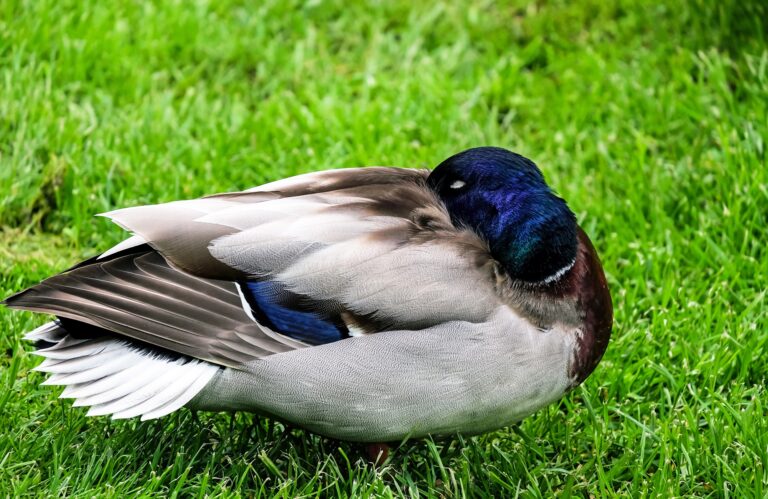
- Ducks: The most diverse and vibrant plumage, often with strong sexual dimorphism. Drakes show iridescent greens, blues, and purples (the green head of a male Mallard); hens are duller and mottled for camouflage while nesting.
Practical Tip: Look for specific patterns and patches of color on the head, neck, and wings. Plumage can vary seasonally (such as eclipse plumage in ducks) and by age, so consult a field guide for details.
5. Behavior and Habitat Use: How They Live Their Lives
Their actions and preferred environments are often highly indicative of group and species.
- Swans: Usually seen gliding on open water in pairs or small family groups, less gregarious than geese or ducks. They ‘tip up’ to reach submerged vegetation with their long necks.
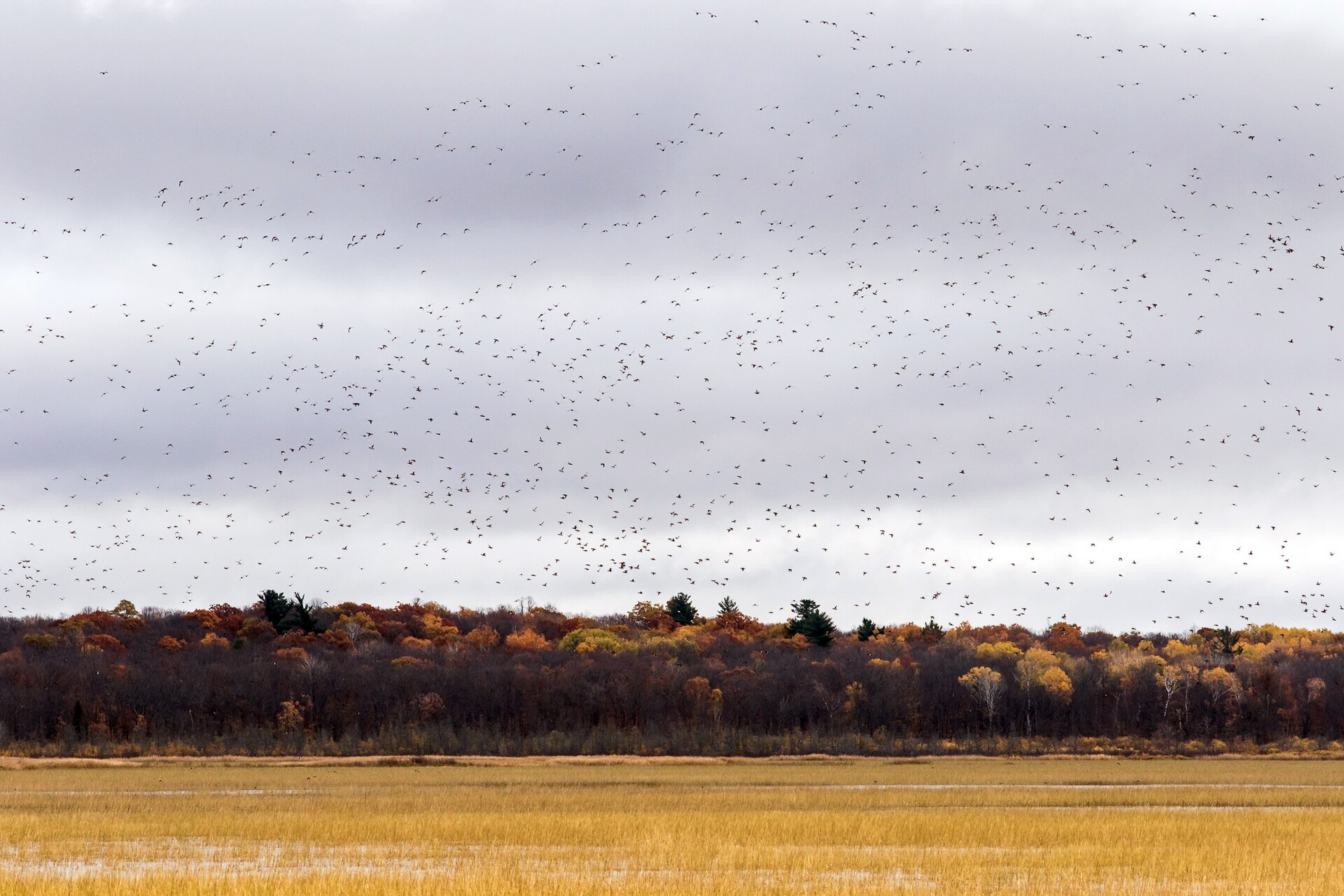
- Geese: Spend time on both water and land, avidly grazing in fields, parks, and farms. Highly social, they gather in large flocks, especially during migration, and their loud honking is often heard before they are seen.
- Ducks: Dabbling ducks ‘tip up’ in shallow water with tails in the air; diving ducks disappear underwater to forage. Ducks are more active and agile on the water than swans or geese.
Practical Tip: Watch how the bird feeds, moves, and interacts. Is it grazing, diving, or gliding? Note the habitat type for further context.
6. Vocalizations: The Sounds of Waterfowl
Sounds are especially helpful when birds are obscured by vegetation or seen at a distance.
- Swans: Deep, resonant calls described as trumpeting or bugling. Trumpeter Swans have a loud, clear, horn-like call; Mute Swans hiss, snort, and grunt, and their wingbeats make a distinctive ‘singing’ sound in flight.
- Geese: Loud, raucous honking – the Canada Goose’s familiar ‘honk-honk.’ Snow Geese give a higher-pitched, nasal ‘huk-huk,’ often used in flight and within flocks.
- Ducks: The most varied, from the classic ‘quack’ of a female Mallard to whistles, squeaks, and grunts. Male Wood Ducks produce a distinctive ‘woo-eek’ whistle.
Practical Tip: Record calls with your phone or note their character. Birding apps and field guides include sound clips that can confirm an identification.
Field Identification Tips: Putting It All Together
- Start with Size: Is it huge (swan), medium-large (goose), or small-to-medium (duck)? Compare it to other birds or familiar objects if possible.
- Assess Neck Length: Long and graceful (swan), medium and sturdy (goose), or short and compact (duck)? Note the posture – S-curved, upright, or tucked in.
- Examine the Bill: What is its shape and color? Are there distinctive markings or knobs? Use binoculars for a clear view.
- Observe Plumage: What are the dominant colors and any distinct head or body markings? Remember that duck drakes and hens differ and juvenile plumage varies.
- Listen for Calls: A trumpet (swan), honk (goose), or quack/whistle/squeak (duck)? Sound can confirm a visual identification.
- Note Behavior and Habitat: Grazing, diving, dabbling, or gliding? Open water, marsh, or field?
Caution: Juveniles often have duller plumage and may lack adult characteristics, so rely more on size, neck length, and bill shape – which are consistent even in young birds – and watch for domestic varieties that may resemble wild species.
Regional Variations and Species Examples
Which species you encounter depends on your location and season, so consult a local field guide or regional online resource.
- Swans: In North America: the Mute Swan (often introduced), the Trumpeter Swan (the largest North American waterfowl), and the slightly smaller, migratory Tundra Swan. In Europe: the Whooper Swan and Bewick’s Swan.
- Geese: The Canada Goose is widespread in North America; also the white Snow Goose and the gray Greater White-fronted Goose. In Europe: the Greylag Goose (ancestor of most domestic geese) and the Barnacle Goose.
- Ducks: Common dabbling ducks include the Mallard, American Wigeon, and Northern Pintail. Diving ducks include the Canvasback, Redhead, and scaup species. Sea ducks like the Common Eider and Surf Scoter live in coastal marine waters.
Example Scenario: At a North American park pond, a huge white bird with a long S-curved neck and orange bill with a black knob is a Mute Swan. A large gray-brown bird with a black neck and white chinstrap, grazing and honking, is a Canada Goose. A smaller bird with an iridescent green head, white neck ring, and yellow bill, dabbling in shallow water, is a male Mallard. Applying size, neck, bill, plumage, behavior, and sound lets you identify all three.
Supporting Resources and Further Reading
- eBird (ebird.org): A global database of bird observations; find local species and submit your own sightings.
- All About Birds (allaboutbirds.org): Detailed species accounts, photos, sounds, and identification tips from the Cornell Lab.
- Audubon Bird Guide (audubon.org/bird-guide): Identification, habitat, and conservation information with stunning photography.
- RSPB (rspb.org.uk): The go-to identification resource for the UK and Europe.
Conclusion: A World of Waterfowl Awaits
By systematically observing size, neck length, bill shape, plumage, behavior, and vocalizations, even novice birders can quickly distinguish swans, geese, and ducks. Every observation builds your expertise and appreciation for the natural world. Carry good binoculars and a regional field guide, respect wildlife by keeping a safe distance, and enjoy the diversity of the waterfowl world. Happy birding!
