
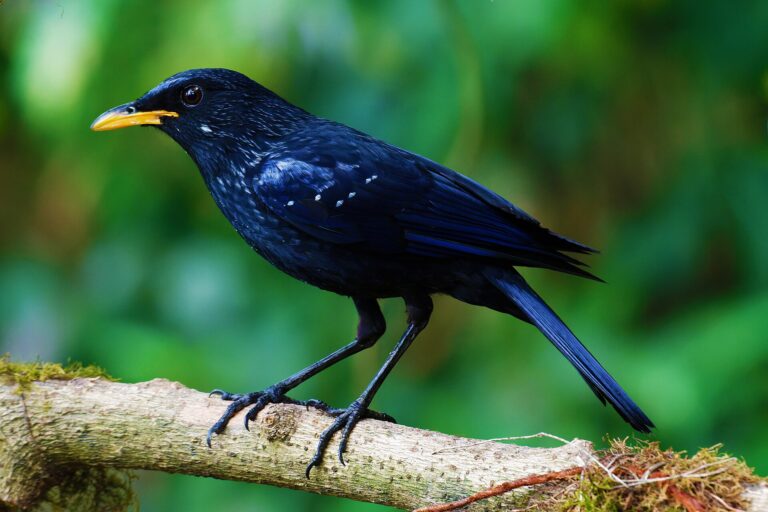
Introduction: The Allure of Blue and the Challenge of Identification
The sight of a vivid blue bird is a highlight for any birder – and it often sparks the question, “Is that a bluebird?” True bluebirds (genus Sialia) are iconic, but many other species across North America display stunning blue hues. This guide gives you the field marks, behavior, habitat, and vocalizations needed to tell real bluebirds from their beautiful look-alikes, so you can identify the blue birds you encounter accurately.
Understanding the Bluebird Family and Their Look-Alikes: A Foundation for Identification
True bluebirds belong to the thrush family (Turdidae) and the genus Sialia. Three species live in North America: the Eastern (Sialia sialis), Western (Sialia mexicana), and Mountain Bluebird (Sialia currucoides). All share a small, stocky build, a short straight bill, and an upright perch. Their blue is structural – created by light interacting with feather microstructure – so it appears brighter or duller depending on the light angle, a trait shared by many blue birds.
Other blue species range from the familiar Blue Jay to the Indigo Bunting, swallows, and kingfishers. The key to identification is moving beyond the initial impression of ‘blue’ and observing the full suite of features that define each species.
Key Visual Clues for Differentiation: Beyond Just Color
When you spot a blue bird, look at the whole picture, not just the color.
1. Size and Shape: The Silhouette Speaks Volumes
Bluebirds are small, compact songbirds about 6.5 to 8.5 inches (16.5-21.5 cm) long, with a rounded head, short tail, and upright posture. Compare them to the larger, crested Blue Jay (up to 12 inches), the slender, pointed-winged Tree Swallow, or the more robust, thick-billed Blue Grosbeak. An Eastern Bluebird’s plump silhouette is very different from a jay’s angular crest and long tail.
2. Color and Markings: The Devil is in the Details
Bluebirds show bright sky-blue upperparts; Eastern and Western Bluebirds have rusty-red chests and flanks with white lower bellies, while the Mountain Bluebird is nearly all sky-blue. Note exactly where the blue is and whether white, black, or rusty marks appear – these details separate species.
Examples of Blue Look-Alikes and Their Markings:
- Blue Jay (Cyanocitta cristata): A large, crested bird with powdery blue, black barring on wings and tail, a black necklace, and a white face – no bluebird has a crest or such intricate black-and-white patterning.
- Indigo Bunting (Passerina cyanea): A small finch, uniformly brilliant indigo with no rusty tones; it can look blackish in poor light. Females are dull brown, sometimes with faint streaking.
- Tree Swallow (Tachycineta bicolor): Iridescent blue-green upperparts with a pure white underside to the chin; the sharp white belly and aquatic habitat set it apart.
- Blue Grosbeak (Passerina caerulea): Deep rich blue with two rusty-brown wing bars, a combination unique among blue birds; females are warm brown with faint wing bars.
- Steller’s Jay (Cyanocitta stelleri): A western, dark-blue jay with a blackish head and crest and a robust body.
- Florida Scrub-Jay (Aphelocoma coerulescens): Uniform gray-blue with a gray back and white underparts, no crest or rusty tones, and a limited Florida range.
- Pinyon Jay (Gymnorhinus cyanocephalus): A dull blue-gray bird of western pinyon-juniper woodlands, larger than a bluebird and highly social.
Pay attention to wing bars, eye rings, crests, and the color of the belly and undertail coverts; bluebirds typically have dark bills and legs.
3. Habitat and Range: Knowing Where to Look
Habitat Preferences:
- Eastern Bluebird: open woodlands, orchards, pastures, and suburban areas with scattered trees and short grass; a cavity nester.
- Western Bluebird: open woodlands, savannas, and clearings, often oak or ponderosa pine habitats in drier western regions.
- Mountain Bluebird: high-elevation alpine meadows, sagebrush flats, and open conifer forest, often hovering while foraging.
- Blue Jay: deciduous, coniferous, and mixed forests plus parks and suburbs, especially near feeders.
- Indigo Bunting: overgrown fields, shrubby areas, and forest edges with dense undergrowth.
- Tree Swallow: open areas near water – marshes, lakes, and rivers – often nesting in cavities over or near water.
- Blue Grosbeak: dense shrubby thickets and overgrown fields, often near water.
- Steller’s Jay: coniferous and mixed evergreen forests in western North America.
Context matters: a blue bird soaring over a marsh is far more likely a Tree Swallow than an Eastern Bluebird, while one perched on a wire in an open field is a strong bluebird candidate.
Behavioral Traits to Observe: Actions Speak Louder Than Words
Behavior is often as diagnostic as plumage.
- Bluebirds: perch upright and ‘drop-pounce’ to snatch insects, returning to a perch; eat berries in winter; fly with graceful, undulating bursts and sing soft, warbling songs.
- Blue Jays: bold and intelligent with loud, varied calls and mimicry; forage for acorns and nuts in trees and on the ground; strong, direct flight and often found in small groups.
- Indigo Bunting: males sing from prominent perches but forage secretively, gleaning insects and seeds and flicking their tails; shyer than bluebirds.
- Tree Swallows: highly aerial, swooping over water or fields to catch insects in flight; agile, acrobatic, and rarely perched, often in flocks.
- Blue Grosbeak: secretive, foraging low in dense vegetation and cracking seeds with its large bill.
- Steller’s Jay: bold and inquisitive in western forests, caching acorns and giving harsh, scolding calls.
A bird that hovers frequently is more likely a Mountain Bluebird; one that is constantly flying and rarely perching is almost certainly a swallow.
Vocalizations: The Sound of Identification
Learning songs and calls is an effective tool, especially in dense foliage or low light.
- Eastern Bluebird: a soft, warbling ‘chur-wi’ or ‘tru-ly,’ with a gentle, melodic quality.
- Western Bluebird: a harsher, more complex warble, often ‘few-few-few’ or ‘cheer-cheer-chur.’
- Mountain Bluebird: a soft, high-pitched musical warble like ‘tural-ee.’
- Blue Jay: loud, raucous ‘jay jay’ calls plus whistles, clicks, and hawk mimicry.
- Indigo Bunting: a high, energetic, repetitive ‘sweet-sweet-chew-chew-sweet-sweet.’
- Tree Swallow: liquid, gurgling notes and soft ‘wit-wit’ calls given in flight.
- Blue Grosbeak: a rich, deliberate warbling song with a sharp metallic ‘chink’ call.
- Steller’s Jay: harsh, scolding ‘shkaaaar’ calls, often repeated.
Apps like Merlin Bird ID can identify birds by sound, but training your ear remains valuable in noisy settings.
Using Field Marks in Practice: A Step-by-Step Approach
- First Impression (Jizz): overall size, shape, crest, and bill thickness.
- Primary Colors: shade of blue and any rusty, white, or black, and where they sit.
- Specific Markings: wing bars, belly and throat color, eye ring, streaks or spots.
- Habitat: forest, open field, near water, or suburban garden?
- Behavior: drop-pouncing, aerial hawking, or gleaning? Alone or in a flock?
- Vocalizations: harsh, warbling, chattering, or melodic?
Practical Example 1: In a suburban park, a robin-sized blue bird with a rusty chest and white belly perches upright, then flies down to snatch an insect and returns. Size, color pattern, drop-pounce foraging, and open-park habitat point to an Eastern Bluebird.
Practical Example 2: If that bird had a prominent crest, black barring, and called ‘jay! jay!’ from the oak trees, the crest, size, and calls would make it a Blue Jay despite the blue color.
Practical Example 3: A small, slender blue-green bird darting over a pond to catch insects mid-air, with a pure white underside, is a Tree Swallow – not a bluebird – by its shape, color, flight, and water association.
Identification Cautions: Common Pitfalls and Variability
- Lighting: structural blue can look dull, gray, or black in poor light – observe with the light behind you.
- Juvenile plumage: young birds are duller and often spotted or streaky, easily mistaken for other thrushes or sparrows.
- Sexual dimorphism: in buntings and grosbeaks, males are blue while females are brown; female bluebirds are duller versions of males.
- Seasonal change: some species lose blue intensity outside breeding season.
- Regional variation: subspecies like the Blue Jay can differ slightly by region, so use a local field guide.
- Rare sightings and escapes: most ‘unidentifiable’ blue birds turn out to be common species in unusual conditions.
- Hybridization: rarely, closely related species hybridize, producing mixed traits.
Photographing Blue Birds for Identification: A Modern Tool
Clear photos are a huge help, and smartphone cameras often capture key field marks. Try to photograph the back, front, and underside; zoom in on wing bars, bill, and eye color; capture behavior and surrounding habitat; and note how the light reveals structural blue. Share photos with experienced birders or online communities to confirm an identification.
Additional Resources and References: Continuing Your Learning Journey
- Field Guides: the National Geographic Field Guide and The Sibley Guide to Birds are comprehensive and easy to use.
- Online Databases: eBird offers range maps and recent sightings; Audubon provides guides and conservation info; All About Birds has detailed profiles and sound recordings.
- Birding Apps: Merlin Bird ID offers photo and sound identification.
- Local Birding Groups: Audubon chapters and clubs offer field trips with experienced leaders.
Conclusion: The Rewarding Journey of Precise Identification
By observing size, shape, plumage patterns, habitat, behavior, and vocalizations, you can move beyond the initial impression of ‘blue’ and confidently identify the blue birds around you. Patience and practice make every observation easier, and each accurate identification deepens your connection to the natural world while contributing to conservation. Happy birding!
