
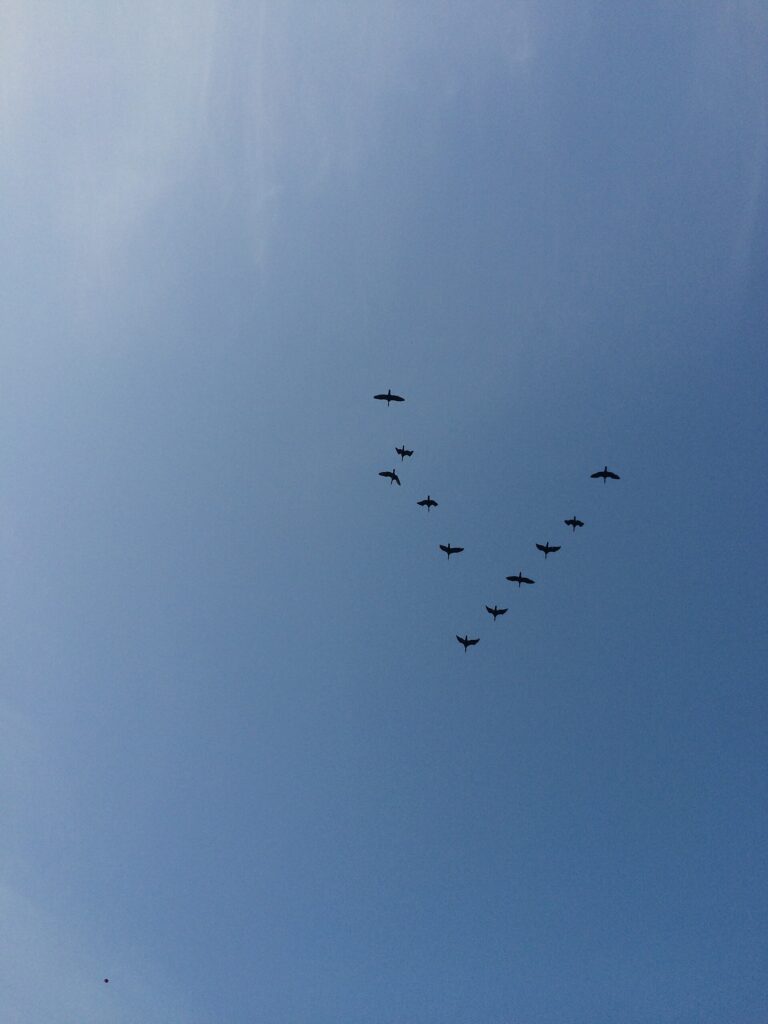
Understanding the V Formation in Bird Flight: An Aerodynamic Masterpiece
Observing a flock of birds, particularly large waterfowl, soaring across the sky in a perfectly orchestrated ‘V’ shape is one of nature’s most iconic and awe-inspiring sights. This distinctive flight pattern, far from being a mere aesthetic choice, is a sophisticated evolutionary strategy that offers profound advantages to the birds undertaking arduous journeys. For birders, both novice and experienced, understanding the mechanics and purpose behind the V formation not only enriches the observation experience but also provides deeper insight into the incredible adaptations of migratory species.
The Intricate Mechanics of the V Formation: Harnessing Air Currents
At its core, the V formation is a brilliant application of aerodynamics. When a bird flies, its wings generate lift, but also create turbulence and vortices – swirling masses of air – off its wingtips. These vortices consist of both updrafts (rising air) and downdrafts (sinking air). The genius of the V formation lies in how subsequent birds position themselves to take advantage of the updrafts created by the bird in front.
Imagine the lead bird cutting through the air. As its wingtips move, they create a swirling wake. Just behind and slightly to the side of each wingtip, there’s a pocket of rising air. A following bird, by carefully positioning itself within this updraft, can effectively ‘surf’ on this rising air. This reduces the amount of effort it needs to expend to stay aloft and move forward. It’s akin to a cyclist drafting behind another rider in a race, conserving energy by reducing air resistance.
Why the ‘V’ Shape is Optimal
The specific ‘V’ shape is crucial because it maximizes these aerodynamic benefits for the greatest number of birds in the flock. If birds flew directly behind one another, they would be caught in the downdrafts, which would increase their energy expenditure. By positioning themselves to the side, each bird can access the beneficial updraft from the bird ahead without being negatively impacted by the downdraft.
Energy Conservation: The Primary Driver of V Formation Flight
The most significant advantage of flying in a V formation is the substantial reduction in energy expenditure. Research, often involving tracking birds with GPS and measuring their heart rates or oxygen consumption, has demonstrated that birds flying in formation can reduce their energy costs by an impressive 10-30% compared to flying solo. For species undertaking migrations that span thousands of miles, this energy saving can be the difference between survival and exhaustion.
Sharing the Burden: The Rotating Lead
Leading the V formation is the most energetically demanding position, as the lead bird faces the full force of air resistance without the benefit of drafting. To mitigate this, flocks employ a sophisticated strategy: they rotate leaders. Birds will take turns at the front, allowing others to drop back into the less strenuous drafting positions to rest and recover. This cooperative behavior ensures that the entire flock can sustain flight for longer periods and cover greater distances. Observing a flock subtly shift its leader mid-flight is a fascinating demonstration of this collective effort.
Communication and Coordination: More Than Just Aerodynamics
Visual Cues and Vocalizations
Birds in a V formation rely heavily on visual cues. Each bird can easily see the birds in front and to the side, allowing them to adjust their speed, altitude, and trajectory in real-time. This visual connection helps prevent collisions, especially in dense flocks or during maneuvers like turns or descents. When observing, notice how the birds seem to move as one, even as individuals subtly adjust their wingbeats. The slight tilt of a wing, a momentary change in speed, or a shift in body angle can all convey information to neighboring birds.
Navigational Benefits and Collective Intelligence
Flying in a large, coordinated formation can also aid in navigation. The collective experience and sensory input of many birds can be more effective than that of a single individual. If one bird detects a change in wind patterns, spots a landmark, or senses an approaching weather front, the information can be quickly disseminated through the formation, allowing the entire flock to adjust its course.
Species Commonly Seen in V Formation: A Birder’s Guide
While the V formation is most famously associated with large waterfowl, it’s important to note that not all migratory birds adopt this pattern. It is particularly advantageous for species with relatively large wingspans and those that undertake long, sustained flights. Here are some of the most common and recognizable species you might observe flying in a V:
- Canada Geese (Branta canadensis): Perhaps the quintessential V-formation flyer, their distinctive honking often announces their presence long before they are seen. Their large size, black neck and head with a white chinstrap, and gray-brown body make them easily identifiable against the sky.
- Snow Geese (Anser caerulescens): These beautiful white geese with black wingtips often form massive V-shaped flocks during migration, creating a stunning spectacle. They can also be seen in a ‘blue morph’ variant, which is mottled gray-brown with a white head.
- Greater White-fronted Geese (Anser albifrons): Similar to Canada Geese in size but with a distinctive white patch at the base of their pinkish-orange bill and often irregular black barring on their belly, they also utilize V formations. Their calls are higher-pitched and more musical than Canada Geese.
- Tundra Swans (Cygnus columbianus) and Trumpeter Swans (Cygnus buccinator): These magnificent large white birds, with their long necks, create particularly graceful V formations. Tundra Swans typically have a small yellow spot near the eye on their black bill, while Trumpeter Swans have an all-black bill and are generally larger with a deeper, bugling call.
- American White Pelicans (Pelecanus erythrorhynchos): Uniquely, pelicans often combine V formation with soaring, using thermals to gain altitude before gliding in formation. Their massive white bodies and huge orange bills are unmistakable. They are often seen over large bodies of water.
- Sandhill Cranes (Antigone canadensis): While not strictly waterfowl, these tall, elegant birds are also well-known for their V-formation flights and distinctive bugling calls during migration. Their reddish-brown plumage and bare red patch on their crown are key identification features.
Practical Birding Tips for Observing V Formations
Observing birds in V formation can be a rewarding experience. Here are some tips to enhance your field observations:
- Timing is Key: Migratory V formations are most commonly seen during spring (March-May) and fall (September-November) migration periods. Early morning and late afternoon/dusk often offer the best viewing opportunities as birds are actively migrating or moving to/from roosting sites. Consult local birding reports or online resources for peak migration dates in your area.
- Listen First: For many species, especially geese and cranes, their distinctive calls will often alert you to their presence before you see them. Learn the calls of common migratory waterfowl in your area. The loud, resonant honking of Canada Geese or the rattling bugle of Sandhill Cranes are unmistakable signs that a V formation might be approaching.
- Scan the Horizon: Look up! V formations can appear suddenly, often starting as a distant speck on the horizon. Scan the sky with your naked eye first to spot the general shape, then use binoculars to get a closer look at individual birds and confirm species identification. A wide field of view in your binoculars can be helpful.
- Identify the Leader: Try to identify the bird at the apex of the V. Observe if and when the lead bird changes. This requires patience and a steady hand with binoculars. You might notice a bird slightly drop back and another smoothly take its place, a fascinating display of cooperation.
- Count the Birds: Estimating the number of birds in a large V formation can be a fun challenge and helps assess the scale of migration. Start by counting one arm of the V and then doubling it, or try to count in groups of 5 or 10.
- Note the Direction: Pay attention to the direction of flight. This can give clues about their migratory route and destination. Are they heading generally north in spring or south in fall? Knowing local flyways can help predict where and when to look.
- Consider Weather Conditions: Birds often prefer to migrate with favorable tailwinds, which reduce their energy expenditure. On calm days, their flight might be more direct and higher. Strong headwinds can sometimes cause them to fly lower, seek shelter, or even delay their migration. Overcast days can sometimes offer better contrast for viewing white-plumaged birds.
- Be Patient: Migration is a dynamic process. You might see small groups, large flocks, or even individual birds. The V formation is just one of many fascinating flight behaviors. Sometimes, you’ll see loose aggregations that aren’t a perfect V, but still show elements of drafting.
Identification Cautions and Visual Observation Tips
While the V formation is a strong indicator of certain species, especially waterfowl, always try to confirm identification with other field marks. At a distance, it can be challenging to distinguish between different goose or swan species. Use your binoculars to look for:
- Size and Color: Are they large and dark with a black neck (Canada Geese), medium and pure white (Snow Geese), or very large and pure white with extremely long necks (Swans)? Note any distinct patches or markings.
- Neck Length: Swans have notably long necks compared to geese. Cranes also have long necks but typically hold them more extended in flight than swans.
- Vocalizations: The distinct honks of geese, bugles of cranes, or softer calls of swans are excellent identifiers, especially when visual cues are limited. Learn to differentiate between the various calls.
- Wingbeat Pattern: Observe the speed and depth of their wingbeats. Geese tend to have strong, steady wingbeats. Swans have slower, more powerful wingbeats. Pelicans often alternate between flapping and gliding.
- Bill Shape and Color: If close enough, the bill can be a crucial identifier. For example, the all-black bill of a Trumpeter Swan versus the yellow-marked bill of a Tundra Swan, or the pinkish-orange bill of a Greater White-fronted Goose.
- Legs in Flight: Note if their legs trail behind their body. Cranes and swans typically extend their legs well past their tail in flight, while geese often keep them tucked closer to their body.
Conservation and the Importance of Migration Corridors
Understanding the intricate behaviors like V formation flight underscores the critical importance of conservation efforts. Migratory birds rely on a network of healthy habitats along their entire migratory flyway – from breeding grounds to wintering grounds, and all the crucial stopover sites in between. These stopover sites, often wetlands, agricultural fields, or coastal areas, provide essential resting and refueling opportunities, without which birds would not have the energy to complete their epic journeys.
Conclusion: A Symphony of Survival
The V formation in bird flight is a stunning example of natural engineering and social cooperation. It’s a sophisticated strategy that allows birds to conquer immense distances, conserve precious energy, and maintain the cohesion vital for their survival. For birders, observing this behavior offers a profound connection to the natural world and a deeper appreciation for the wonders of avian migration.
