

Among the diverse world of fisher birds, the Belted Kingfisher is known for its vivid blue and white plumage and skill in diving to catch fish. The Pied Kingfisher, recognizable by its black mask and ability to hover over water, thrives across Africa and Asia. The Ringed Kingfisher, one of the largest American species, boasts striking coloration and a powerful call. The Amazon Kingfisher, adapted to South American riverine environments, excels in diving for fish and insects. Lastly, the compact Green Kingfisher, with striking green plumage, commonly feeds on aquatic insects in Central and South America. Each bird presents unique adaptations to its aquatic lifestyle, offering more insights into their fascinating behaviors and habitats.
Belted Kingfisher
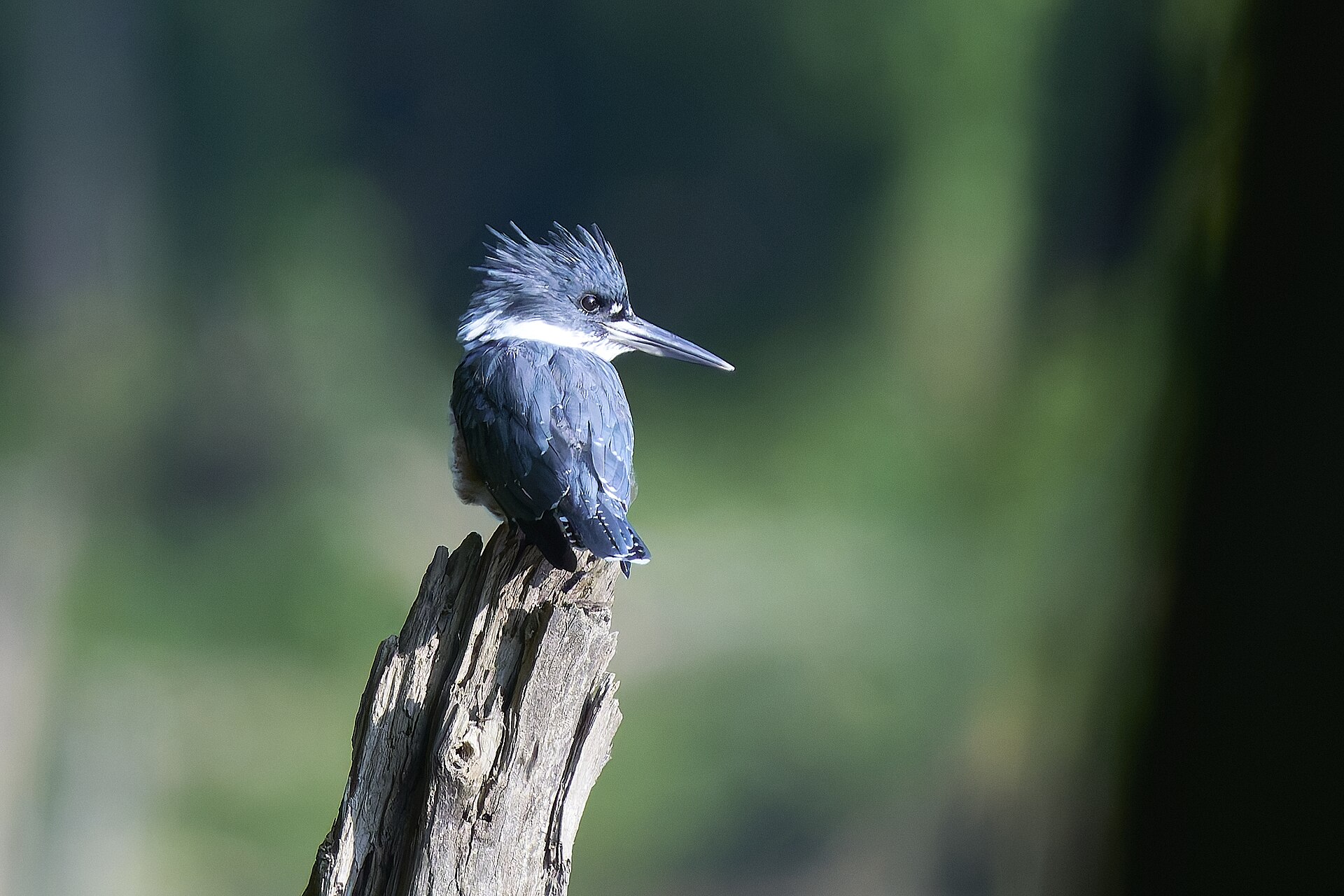 Belted Kingfisher (Megaceryle alcyon)” title=”Belted Kingfisher” width=”1000″ height=”666″ style=”width:100%;height:auto;”>
Photo by Paul Danese (CC BY-SA 4.0, via Wikimedia Commons)
The Belted Kingfisher is a medium-sized bird distinguished by its large head and striking blue and white plumage. It excels in diving to catch fish with remarkable precision.
Commonly mistaken for the similarly aquatic Fischers Lovebirds, the Belted Kingfisher is identifiable by its loud, rattling call and distinctive white ring across its chest. This makes it a notable presence near various bodies of water.
Pied Kingfisher
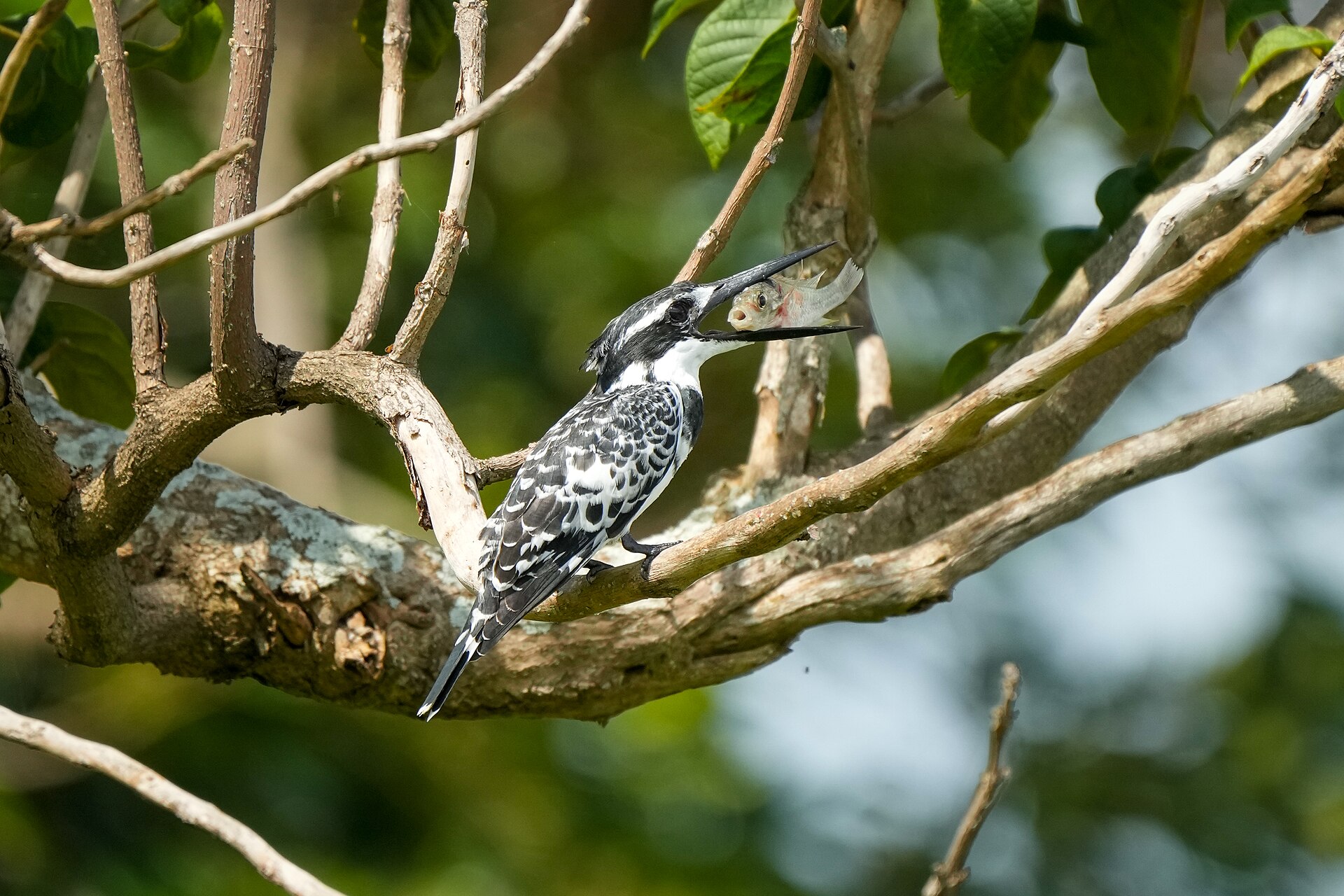 Pied Kingfisher ()” title=”Pied Kingfisher” width=”1000″ height=”666″ style=”width:100%;height:auto;”>
Photo by Giles Laurent (CC BY-SA 4.0, via Wikimedia Commons)
Sporting a distinctive black mask and a crest atop its head, the Pied Kingfisher is renowned for its exceptional ability to hover over water while hunting for fish. Found across Africa and Asia, this bird mirrors the high-pitched energy of the Fischers lovebird, another discovery of German explorers.
Its striking black and white plumage is perfectly adapted for fishing near lakes and rivers.
Ringed Kingfisher
 Ringed Kingfisher (Megaceryle torquata)” title=”Ringed Kingfisher” width=”1000″ height=”666″ style=”width:100%;height:auto;”>
Photo by Giles Laurent (CC BY-SA 4.0, via Wikimedia Commons)
While primarily residing near aquatic environments, the Ringed Kingfisher distinguishes itself as one of the largest kingfisher species in the Americas. This bird, with its shaggy crest and large bill, showcases striking blue and white coloration.
Known for its powerful, rattling calls, it expertly dives into water bodies to capture fish, much like the Fischers lovebird is adept in its own environment.
Amazon Kingfisher

Inhabiting mainly in the water-rich environments of Central and South America, the Amazon Kingfisher captivates with its vivid plumage and robust physique. These large, colorful birds are skilled divers, plunging into water to snag fish and aquatic insects.
Known for their distinctive, rattling calls, they exemplify adaptation to riverine life, showcasing both hunting prowess and striking appearance in their natural habitats.
Green Kingfisher
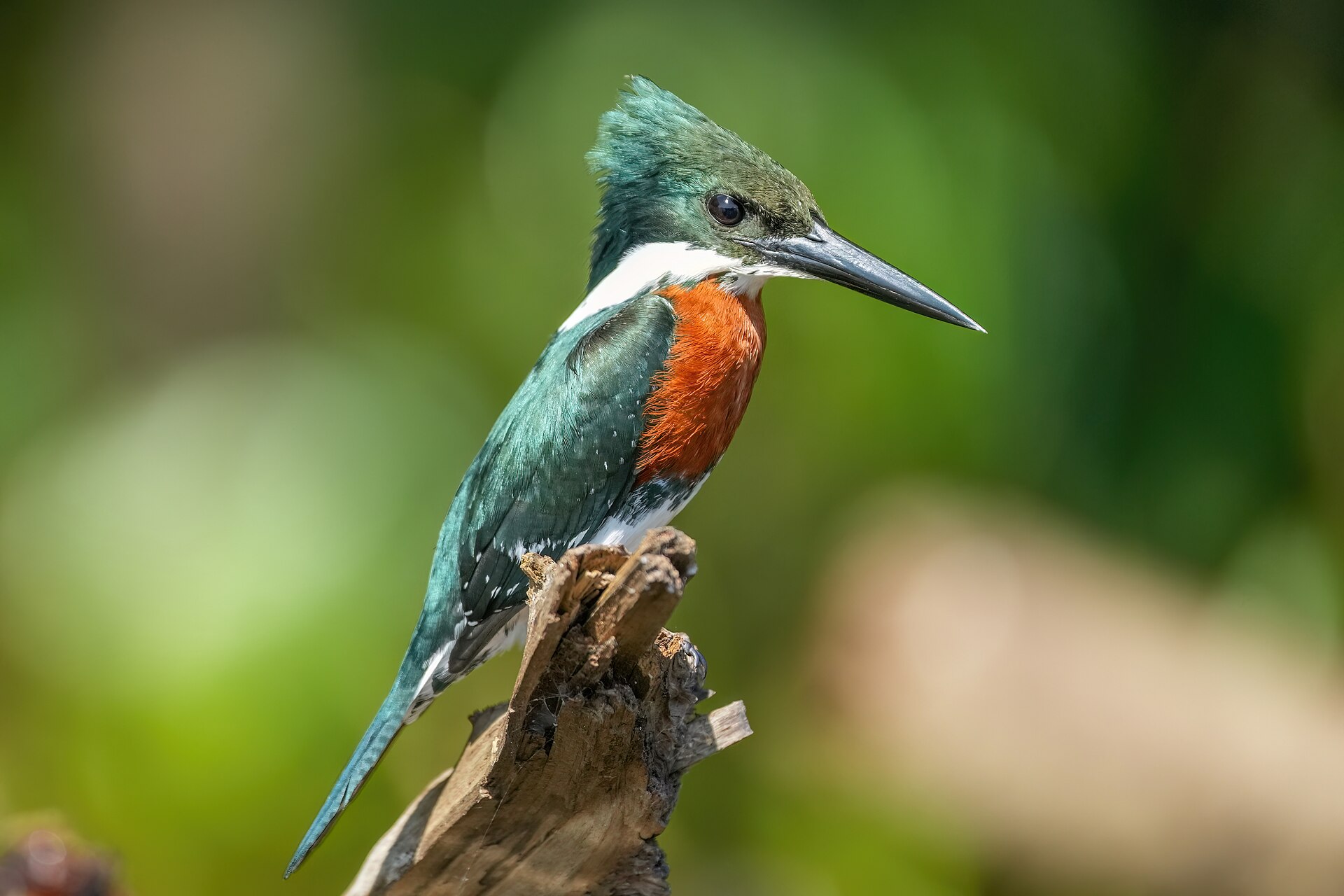 Green Kingfisher (Chloroceryle americana)” title=”Green Kingfisher” width=”1000″ height=”666″ style=”width:100%;height:auto;”>
Photo by Giles Laurent (CC BY-SA 4.0, via Wikimedia Commons)
Continuing our exploration of kingfisher species, the Green Kingfisher stands out with its striking green plumage and compact size. Common in Central and South America, it frequently visits rivers, streams, and ponds.
This bird mainly feeds on fish and aquatic insects, capturing its prey in swift, low flights over water. They nest by excavating tunnels in riverbanks, creating a secure environment for their offspring.
Giant Kingfisher
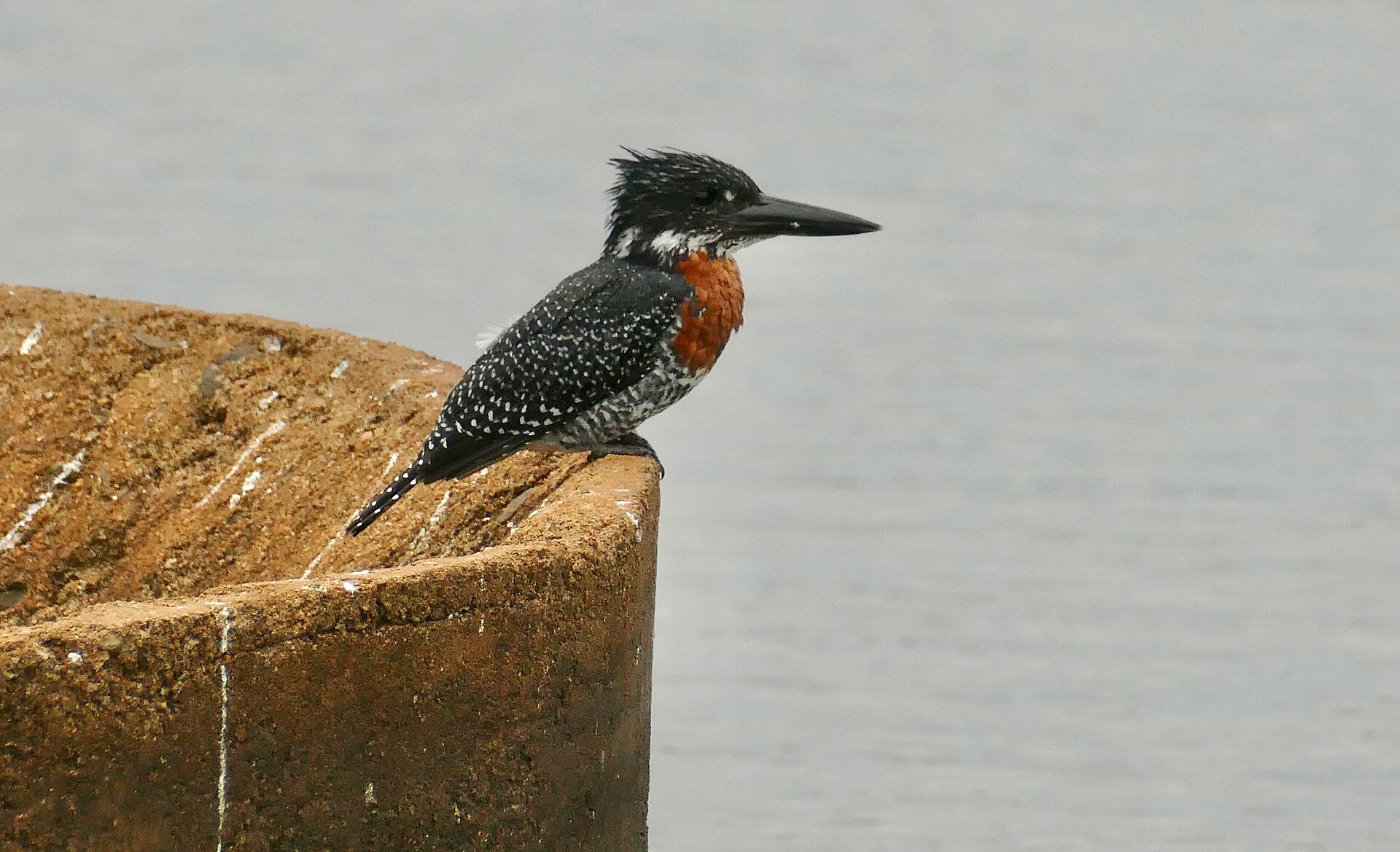 Giant Kingfisher (Megaceryle maxima)” title=”Giant Kingfisher” width=”1000″ height=”608″ style=”width:100%;height:auto;”>
Photo by Bernard DUPONT from FRANCE (CC BY-SA 2.0, via Wikimedia Commons)
The Giant Kingfisher, measuring an impressive 35-40 cm in length, ranks as one of the largest species within the kingfisher family. Sporting a distinctive shaggy crest and a robust black bill, it thrives near sub-Saharan Africa's rivers, lakes, and coasts.
Known for its loud cackle, this bird skillfully dives to capture fish and other aquatic prey, demonstrating remarkable hunting precision.
American Pygmy Kingfisher
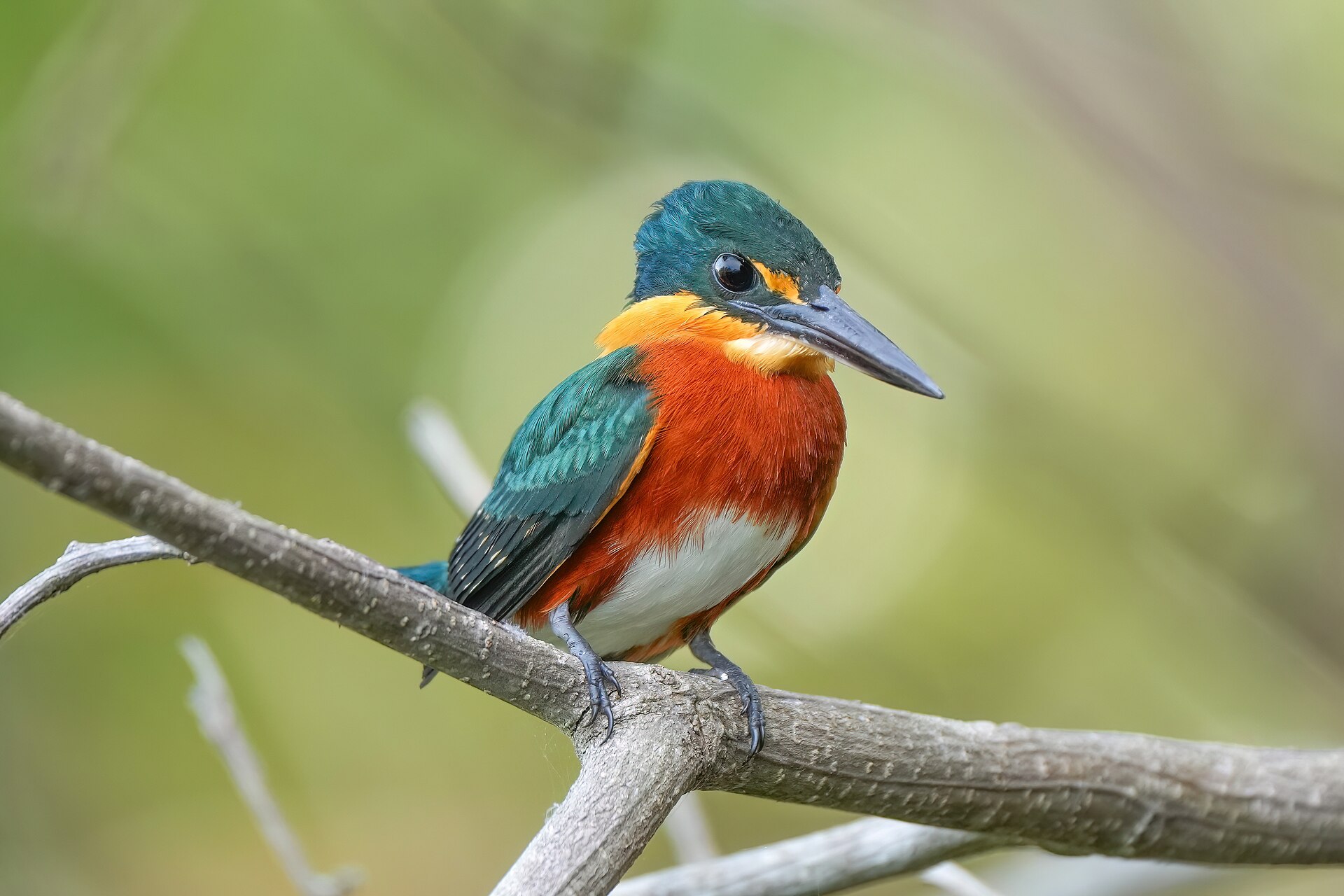 American Pygmy Kingfisher (Chloroceryle aenea)” title=”American Pygmy Kingfisher” width=”1000″ height=”666″ style=”width:100%;height:auto;”>
Photo by Giles Laurent (CC BY-SA 4.0, via Wikimedia Commons)
With a length of just 12 cm, the American Pygmy Kingfisher stands as one of the tiniest members of the kingfisher family. Native to Central and South America, they inhabit areas near slow-moving waters.
Their striking plumage blends green, blue, and orange hues. Renowned for their sharp, high-pitched calls, they skillfully dive from perches to snatch small fish and aquatic invertebrates.
Blue-breasted Kingfisher
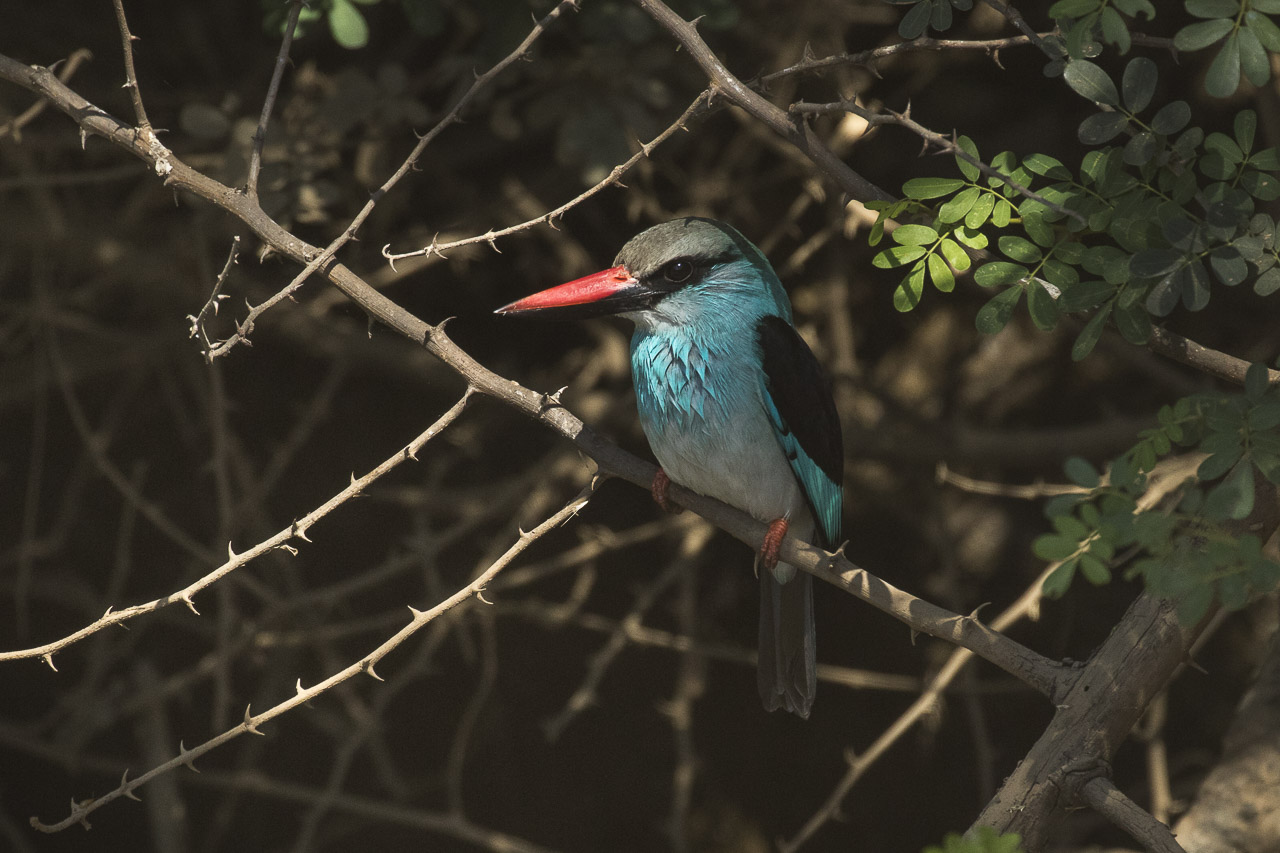 Blue-breasted Kingfisher (Halcyon malimbica)” title=”Blue-breasted Kingfisher” width=”1000″ height=”666″ style=”width:100%;height:auto;”>
Photo by Francesco Veronesi from Italy (CC BY-SA 2.0, via Wikimedia Commons)
Shifting our focus to another vibrant member of the kingfisher family, the Blue-breasted Kingfisher captivates with its vivid blue and orange plumage. Native to several African nations like Nigeria and Cameroon, this bird frequents dense forests near water, hunting insects, small fish, and amphibians.
Its sharp beak is key in seizing prey, and its distinctive call echoes through the forest canopy.
Brown-hooded Kingfisher
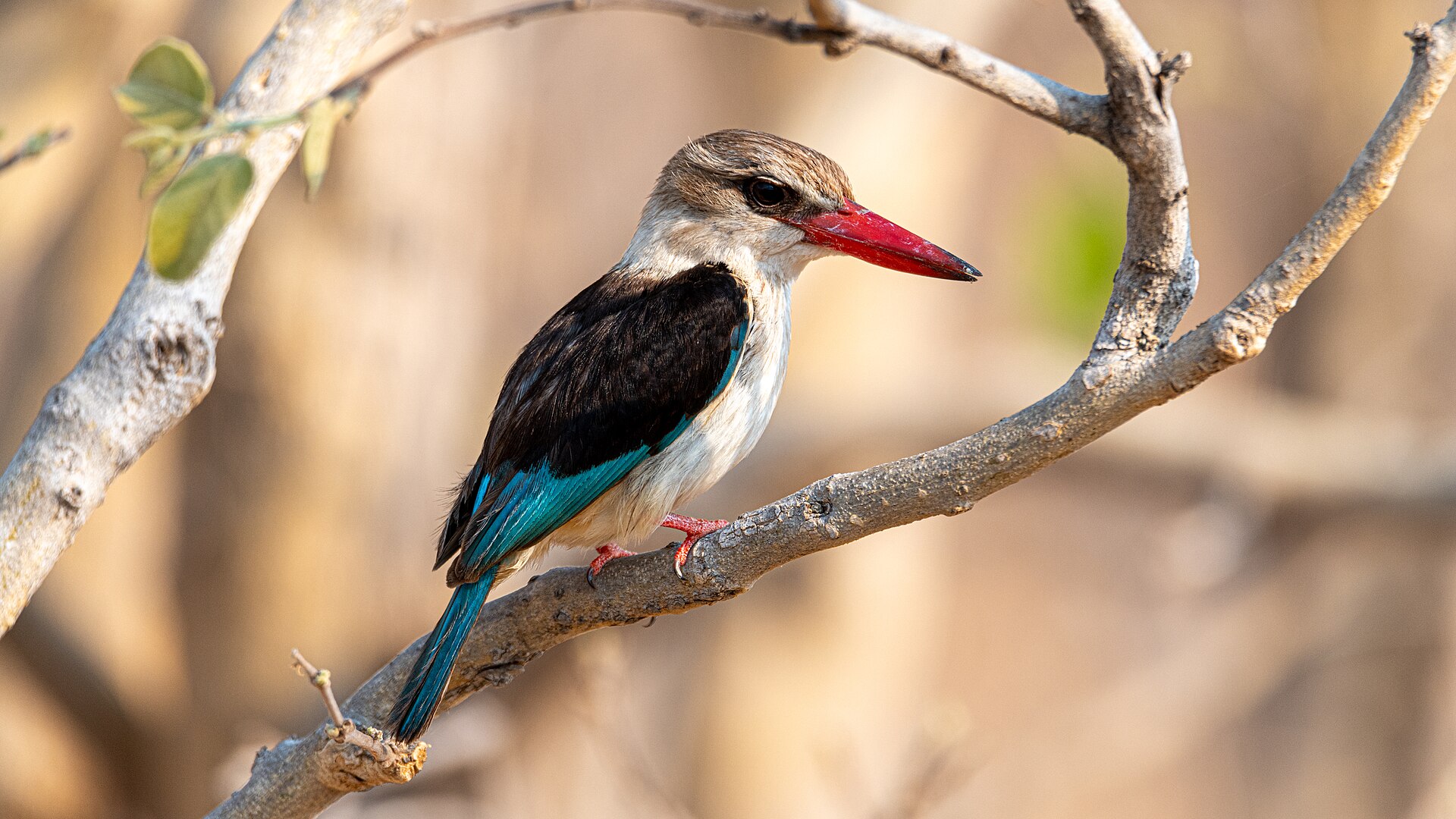 Brown-hooded Kingfisher (Halcyon albiventris)” title=”Brown-hooded Kingfisher” width=”1000″ height=”562″ style=”width:100%;height:auto;”>
Photo by Christoph Strässler (CC BY-SA 2.0, via Wikimedia Commons)
Among the diverse species of kingfishers, the Brown-hooded Kingfisher stands out with its distinctive brown head and striking blue wings. Native to sub-Saharan Africa, it frequents rivers and streams, feeding on insects, small fish, and invertebrates.
Recognizable by its loud, rattling call, it expertly perches while hunting. These birds nest in sandy bank tunnels, laying 2-4 eggs per clutch.
Striped Kingfisher
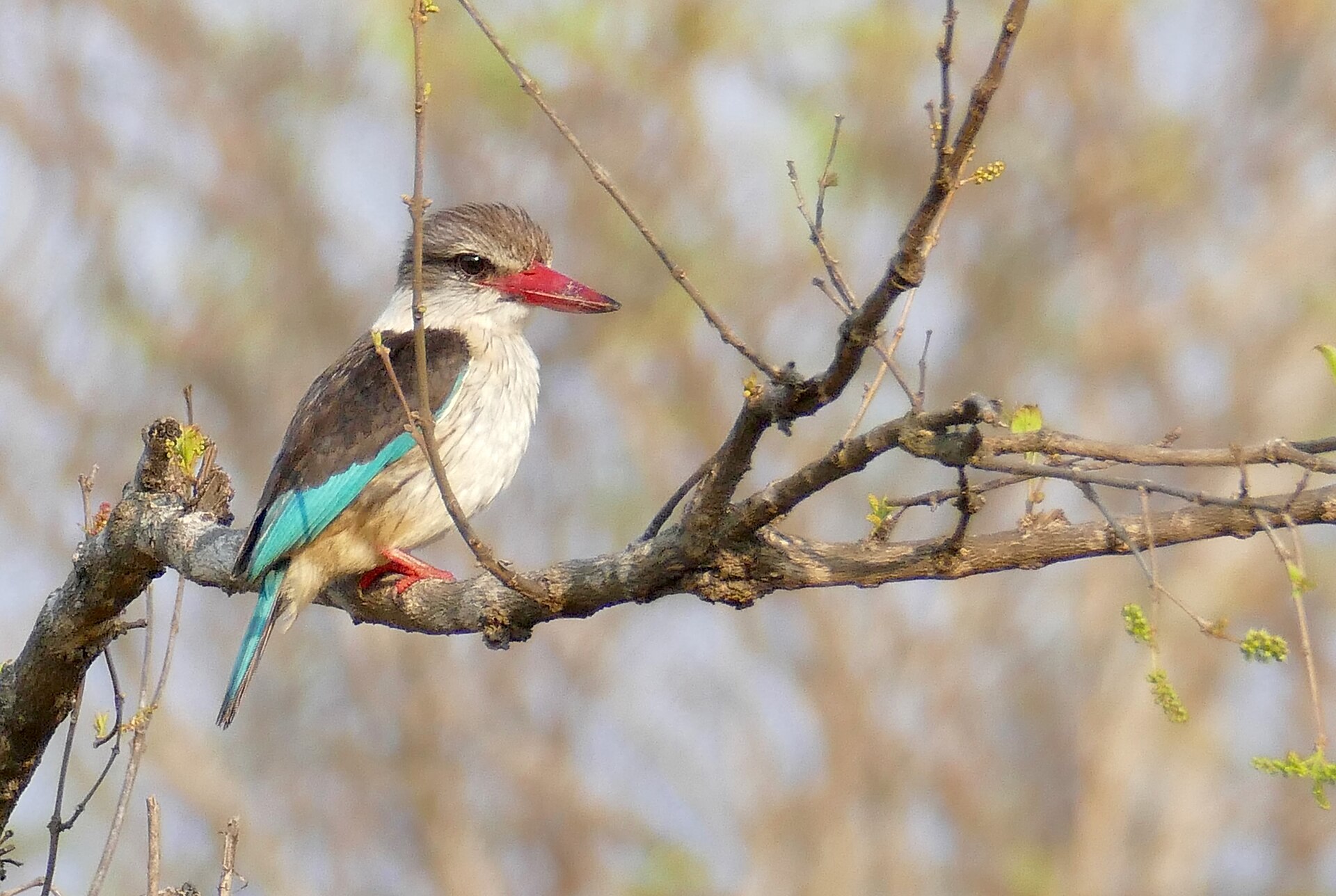 Striped Kingfisher (Halcyon chelicuti)” title=”Striped Kingfisher” width=”999″ height=”671″ style=”width:100%;height:auto;”>
Photo by Bernard DUPONT from FRANCE (CC BY-SA 2.0, via Wikimedia Commons)
The Striped Kingfisher is a bird species found in sub-Saharan Africa. It is recognized by its distinctive black and white striped head and chest. This bird is commonly seen in savannas, grasslands, and open woodlands. Its diet consists mainly of insects, small reptiles, and sometimes small birds. Unlike other kingfisher species, the Striped Kingfisher does not rely on water sources for food. Instead, it hunts from visible perches, using its diving skills to catch prey.
White-throated Kingfisher
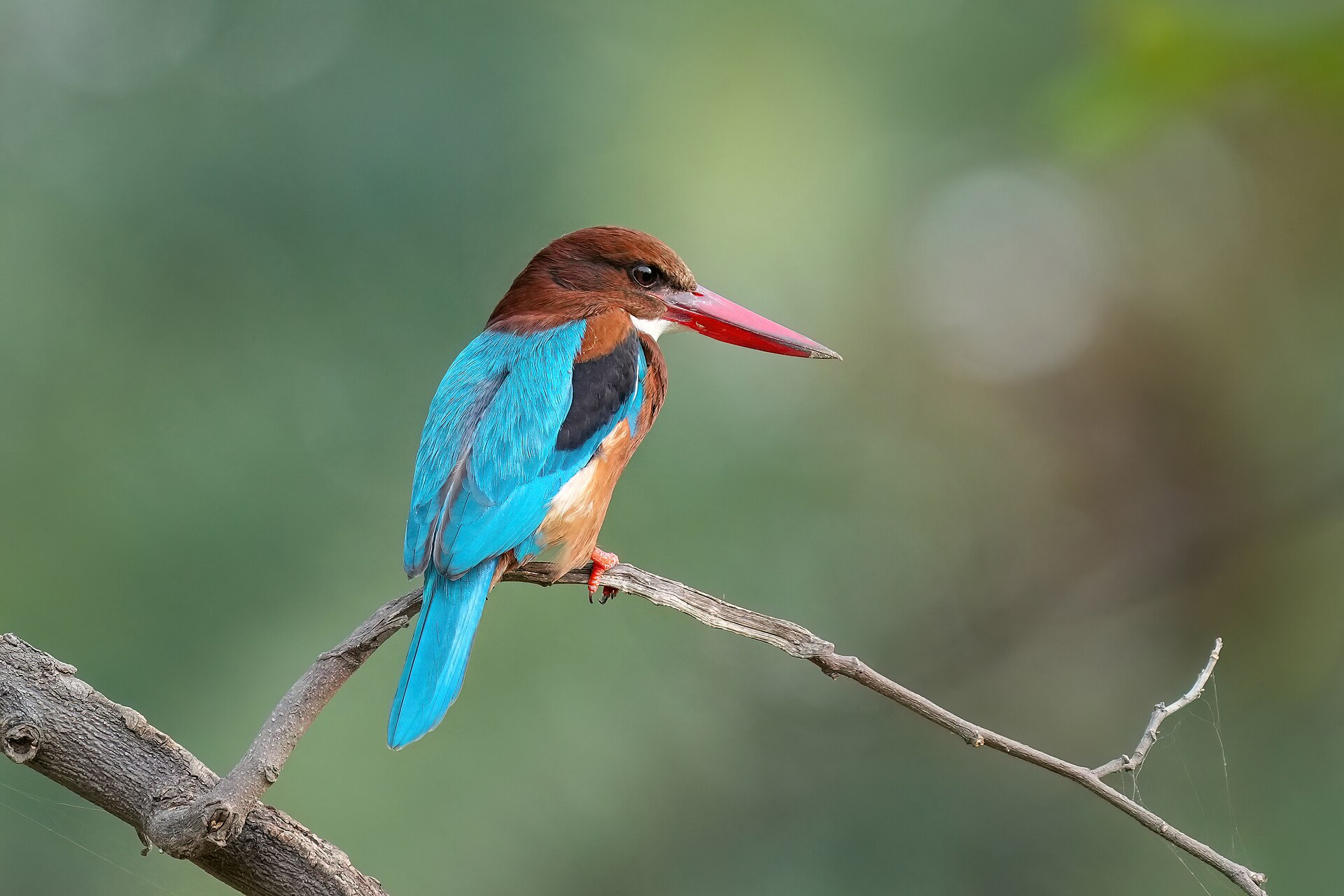 White-throated Kingfisher (Halcyon smyrnensis)” title=”White-throated Kingfisher” width=”1000″ height=”666″ style=”width:100%;height:auto;”>
Photo by Giles Laurent (CC BY-SA 4.0, via Wikimedia Commons)
While the Striped Kingfisher thrives away from water, the White-throated Kingfisher is frequently spotted along rivers, lakes, and mangroves in Asia.
Known for its striking blue and white plumage, this kingfisher is a skilled predator, adept at diving to catch fish.
It is widespread, found from Turkey to the Philippines, and is recognizable by its loud, cackling call.
Black-capped Kingfisher
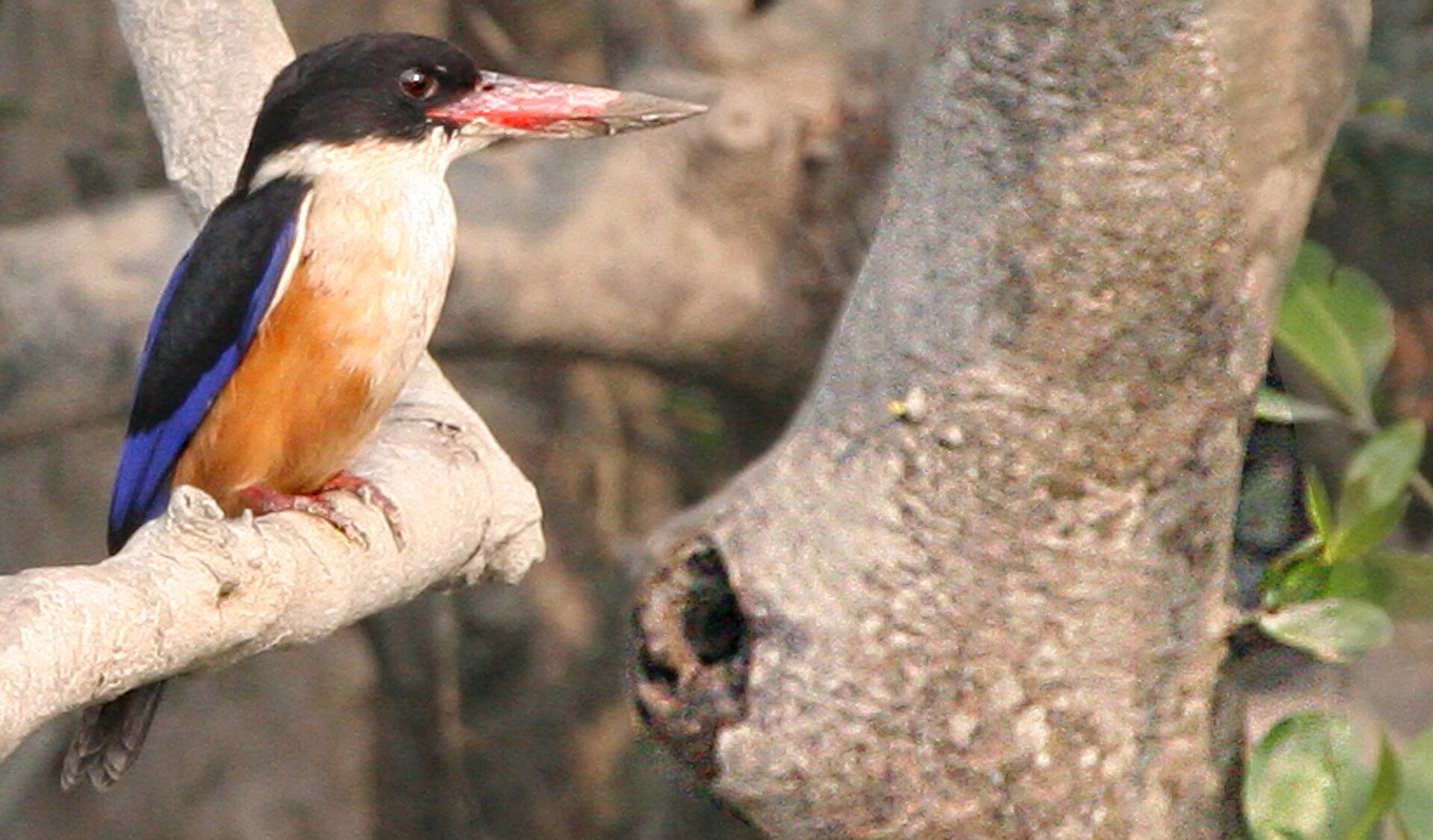 Black-capped Kingfisher ()” title=”Black-capped Kingfisher” width=”1000″ height=”586″ style=”width:100%;height:auto;”>
Photo by Anirnoy (CC BY-SA 4.0, via Wikimedia Commons)
Distinguished by its striking black cap and vivid blue wings, the Black-capped Kingfisher is a medium-sized bird commonly found near water bodies across Asia.
It primarily feeds on fish, crustaceans, and insects, utilizing its sharp, pointed beak for hunting.
Known for its distinctive call, this solitary and territorial species skillfully perches on branches to efficiently spot and dive for prey.
African Pygmy Kingfisher
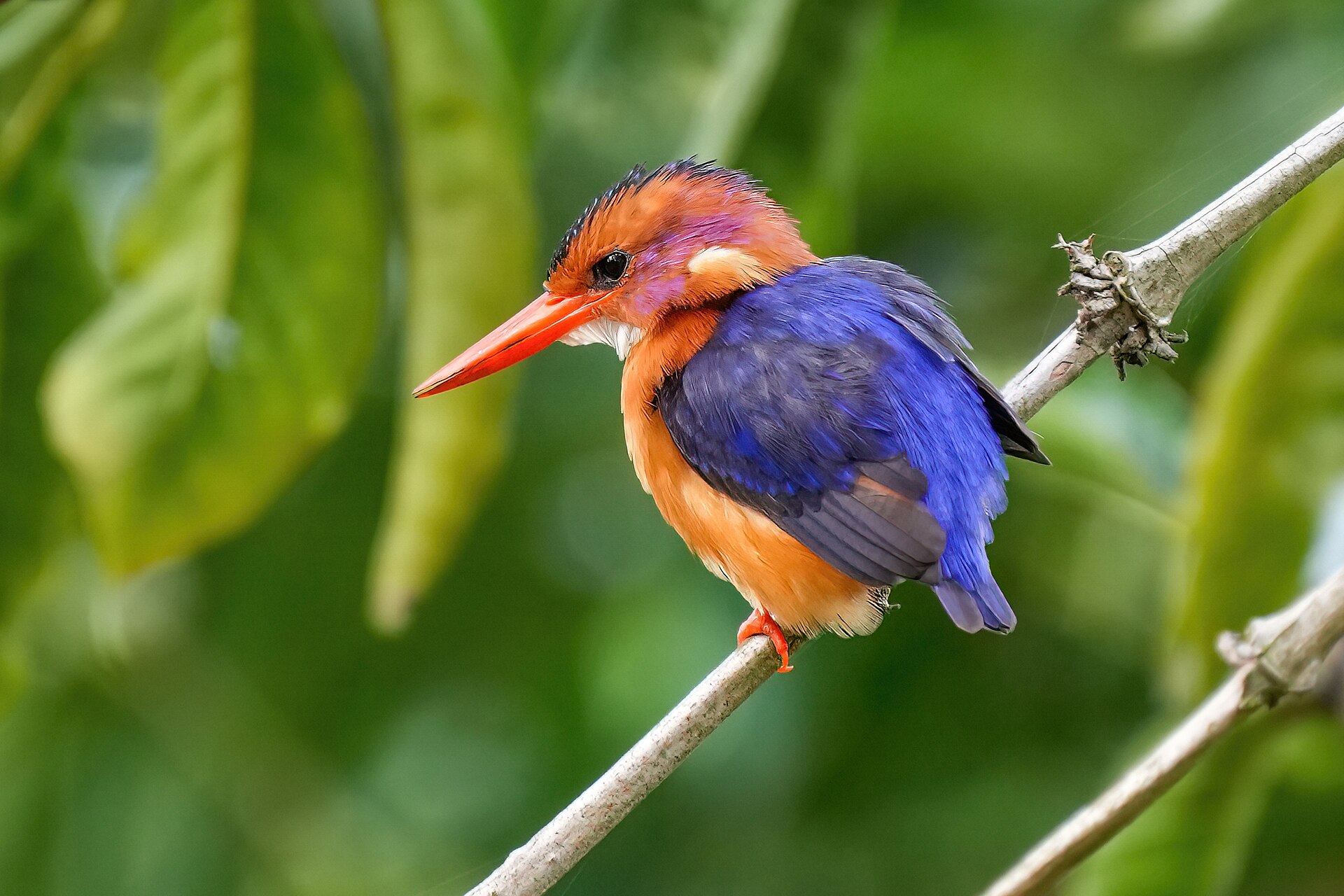 African Pygmy Kingfisher (Ispidina picta)” title=”African Pygmy Kingfisher” width=”1000″ height=”666″ style=”width:100%;height:auto;”>
Photo by Giles Laurent (CC BY-SA 4.0, via Wikimedia Commons)
Among the smallest of the kingfisher species, the African Pygmy Kingfisher captivates with its bright blue back and orange underparts. Found across sub-Saharan Africa, it inhabits woodland areas near water.
This vividly colored bird, measuring just 10-13 cm, primarily feeds on insects, small fish, and aquatic invertebrates. It dives swiftly into water to catch its prey with remarkable accuracy and speed.
Crested Kingfisher
 Crested Kingfisher ()” title=”Crested Kingfisher” width=”1000″ height=”750″ style=”width:100%;height:auto;”>
Photo by Imran Shah from Islamabad, Pakistan (CC BY-SA 2.0, via Wikimedia Commons)
The Crested Kingfisher, notable for its impressive size and distinctive crest, inhabits fast-flowing rivers and mountainous regions across Asia.
This large kingfisher, ranging from 41 to 46 cm, features a blue back and wings, with a white throat and a striking shaggy crest.
Known for their loud calls, they skillfully dive to catch fish, playing an essential role in their ecosystems.
What is the Difference Between Fisher Birds and Warblers Birds?
Fisher birds are raptors that primarily feed on fish, while warbler birds are small, insect-eating songbirds. Warblers birds have various colorful plumage, which can be seen in various types of warblers birds pictures. Fisher birds, on the other hand, have sharp talons and keen eyesight for hunting. You can find various forest birds pictures online, showcasing the diverse species that inhabit wooded areas. Warblers are commonly found in forests due to the abundance of insects, while fisher birds are often spotted near bodies of water where they can easily catch fish. These distinct habitats have shaped the behaviors and physical characteristics of both types of birds. Warbler birds are known for their melodious songs, which they use to communicate with mates and defend their territories. In contrast, fisher birds are more solitary and generally communicate with calls and vocalizations. Both types of singing birds play important roles in maintaining the balance of their respective ecosystems, contributing to the diversity and vitality of the natural world. You can learn more about the behaviors and characteristics of these beautiful birds by exploring the various types of singing birds pictures available online.
Common Kingfisher
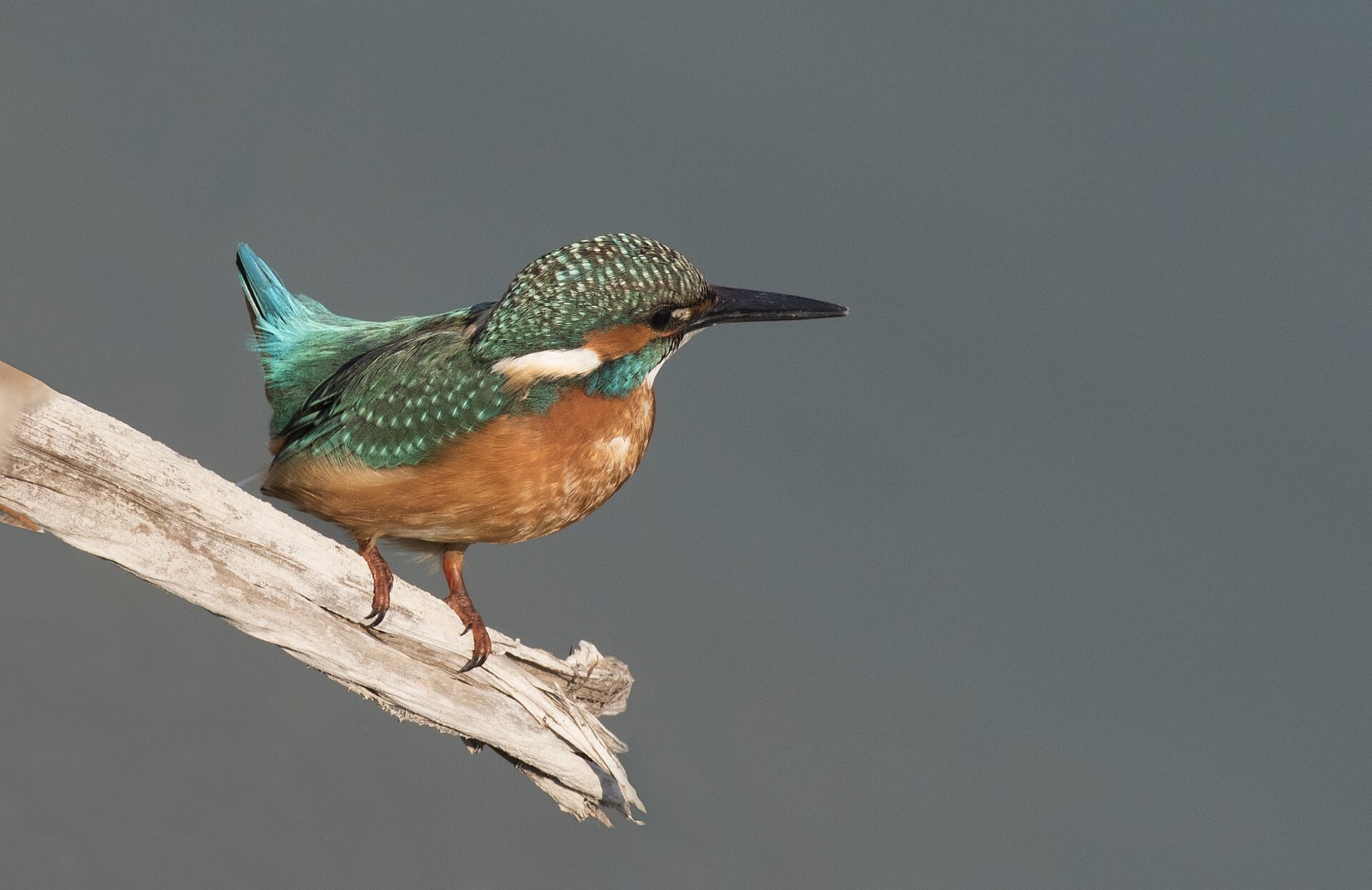 Common Kingfisher (Alcedo atthis)” title=”Common Kingfisher” width=”1000″ height=”648″ style=”width:100%;height:auto;”>
Photo by Zeynel Cebeci (CC BY-SA 4.0, via Wikimedia Commons)
The Common Kingfisher, also known as the Eurasian Kingfisher, is renowned for its vibrant coloration and proficient fishing skills. This small bird flaunts electric blue and orange plumage, utilizing a long, sharp bill to dive for fish, insects, and amphibians in slow-moving waters.
Found across Europe, Asia, and North Africa, it's recognized by its rapid flight and sharp, shrill call.
