
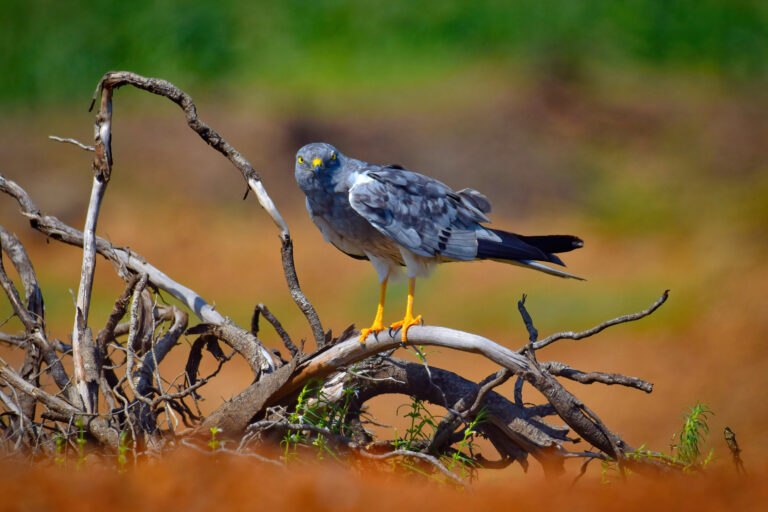
Introduction: Unveiling the Avian Wonders of Grasslands
Grasslands and open-country habitats represent some of the planet’s most expansive and ecologically vital environments. Far from being monotonous, these landscapes teem with life, hosting a specialized array of bird species that have evolved remarkable adaptations to thrive in open spaces. For birders, whether just starting their journey or seasoned observers, understanding the nuances of identifying these grassland inhabitants can transform a casual outing into a deeply rewarding experience.
This comprehensive guide delves into the fascinating world of grassland birds, offering practical identification tips, insights into their unique behaviors, and considerations for various regions. We’ll explore the characteristics of ground-dwelling species, the majestic raptors that patrol the skies, and other open-country birds, equipping you with the knowledge to confidently identify these avian residents during your field excursions.
Understanding Grassland Habitats and Avian Adaptations
Grasslands are defined by their dominant vegetation: grasses and other herbaceous plants, often with scattered shrubs or isolated trees. These biomes span continents, from the vast prairies of North America and the steppes of Eurasia to the savannas of Africa and the pampas of South America. The birds inhabiting these areas are masters of their environment, exhibiting behaviors and physical traits perfectly suited to life in open, often treeless, landscapes.
Their survival strategies often revolve around keen eyesight for detecting threats or prey, camouflage to avoid detection, and efficient flight for covering large distances or escaping predators. Many grassland birds also possess specialized vocalizations that carry effectively across open terrain, serving for territorial defense or mate attraction.
Birding in grasslands demands a different approach than forest birding. Here, the focus shifts from dense canopy observation to scanning vast horizons, paying close attention to subtle movements, distinctive flight patterns, and the often-elusive vocalizations that carry across open air. Many ground birds are incredibly cryptic, relying on their plumage to blend seamlessly with the dry grasses and soil, making them difficult to spot unless they move or call.
Raptors, conversely, are often visible from great distances as they circle high above, utilizing thermals to conserve energy while hunting. Recognizing these fundamental behavioral patterns is the cornerstone of successful grassland bird identification.
The Ecological Importance of Grasslands for Birds
Beyond being home to specific species, grasslands play a crucial role in global biodiversity. They serve as vital breeding grounds for many migratory birds, provide essential wintering habitat for others, and support a complex food web. Unfortunately, grasslands are among the most threatened ecosystems globally, facing pressures from agricultural conversion, urbanization, and climate change. Understanding and identifying the birds that rely on these habitats is the first step in appreciating and advocating for their conservation.
Ground-Dwelling Birds: Masters of Camouflage and Elusiveness
Characteristics and Identification Challenges
Ground birds are perhaps the most challenging group to identify in grasslands due to their inherent elusiveness and superb camouflage. Their plumage typically features intricate patterns of browns, grays, and buffs, allowing them to disappear into the background of dry grasses and soil. They possess strong legs adapted for running and walking, often preferring to escape on foot rather than taking flight.
When they do fly, it’s usually a short, low burst before dropping back into cover.
Common examples across various grasslands include species like quails (e.g., Northern Bobwhite, California Quail), partridges (e.g., Gray Partridge, Chukar), various larks (e.g., Horned Lark, Eurasian Skylark), and pipits (e.g., American Pipit, African Pipit). In some regions, species like Greater Prairie-Chicken or Lesser Prairie-Chicken are iconic grassland ground birds, known for their elaborate courtship displays.
Identification often hinges on subtle cues. Look for movement in the grass, listen intently for their calls, and observe their behavior when they are briefly visible. Patience is paramount when seeking these birds.
Field-Identification Tips for Ground Birds
- Observe Body Shape and Size: While camouflage makes them hard to see, try to gauge their overall silhouette. Is it plump and rounded like a quail, or more slender like a pipit? How does its size compare to familiar birds like a robin or a sparrow?
- Pay Attention to Tail Shape and Posture: When a ground bird is alert or calling, its tail might be held at a specific angle or have a distinctive shape. For instance, a Vesper Sparrow often bobs its tail, while a Horned Lark has a short, stiff tail. Note if the tail is fanned, cocked, or held flat.
- Listen for Specific Vocalizations: This is often the most reliable method for identifying ground birds. Many species have unique calls or songs that carry well across open landscapes. For example, the distinctive ‘bob-white!‘ call of the Northern Bobwhite is unmistakable, even if the bird itself remains hidden. Similarly, the melodious, ascending song of a Western Meadowlark is a quintessential sound of North American prairies. Familiarize yourself with regional ground bird calls using apps or online resources before your outing.
- Scan Low Vegetation and Ground Cover: Use your binoculars to methodically scan the base of grass clumps, along dirt tracks, and near any scattered shrubs. Look for subtle movements, a flicker of an eye, or a head popping up. Remember that many ground birds will freeze when they detect a predator, relying on their camouflage.
- Note Flight Patterns: If flushed, observe how the bird flies. Is it a rapid, whirring flight like a quail, or a more undulating flight like a pipit? Does it fly far or drop quickly back into cover? Does it show any distinctive wing or tail markings in flight?
Practical Example: Identifying a Savannah Sparrow vs. a Vesper Sparrow
These two sparrows are common in North American grasslands and can look similar. A Savannah Sparrow (Passerculus sandwichensis) typically has a yellowish wash above the eye (the supercilium) and streaking on its breast that often forms a central spot. Its song is a buzzy ‘tsit-tsit-tsit, tsee-tsaaay‘, often described as insect-like.
A Vesper Sparrow (Pooecetes gramineus), on the other hand, lacks the strong yellow supercilium but often shows a distinctive white eye-ring and, crucially, white outer tail feathers that are visible in flight. Its song is clear and musical, often starting with two slurred notes followed by trills. By noting these subtle differences in plumage, song, and flight characteristics, you can distinguish between them.
Always try to get multiple field marks when identifying sparrows, as they can be notoriously tricky.
Raptors of the Grasslands: Sky Hunters
Common Raptors and Identification Features
Open habitats are prime hunting grounds for raptors, birds of prey that utilize their keen eyesight and powerful talons to capture prey. These magnificent birds are often visible soaring high above, patiently scanning the ground for rodents, insects, or smaller birds. Key species include various hawks, eagles, and falcons, each with distinct flight styles and physical characteristics.
- Hawks (Buteos): Many grassland hawks, such as the Red-tailed Hawk (Buteo jamaicensis) or Swainson’s Hawk (Buteo swainsoni), have broad, rounded wings and a soaring flight pattern, often circling on thermals. Their tails are typically broad and fan-shaped. Identification often relies on underwing patterns, tail coloration (e.g., the reddish tail of an adult Red-tailed Hawk), and overall size. Look for the ‘patagial marks’ (dark leading edge of the underwing) on Red-tailed Hawks. Swainson’s Hawks often show a dark flight feather panel and a dark trailing edge on the underwing, with a distinctive dark chest band in lighter morphs.
- Eagles: Larger and more powerful, eagles like the Golden Eagle (Aquila chrysaetos) are impressive sights. They have massive wingspans and can soar at incredible heights. Look for their immense size, powerful bill, and often golden nape feathers. Immature eagles can be tricky, sometimes showing white patches under the wings or at the base of the tail, which can lead to confusion with other species if not observed carefully.
- Falcons: Falcons, such as the American Kestrel (Falco sparverius), Merlin (Falco columbarius), or Prairie Falcon (Falco mexicanus), are characterized by their pointed wings and rapid, direct flight. They often hunt by hovering (kestrel) or making swift, powerful dives (stoops). Kestrels are small and colorful, often seen perched on wires, while Prairie Falcons are larger and paler, adapted to arid grasslands, and often show dark ‘armpits’ (axillaries) in flight.
- Harriers: The Northern Harrier (Circus hudsonius) is a quintessential grassland raptor, easily identified by its distinctive V-shaped flight pattern, low-to-the-ground hunting style, and prominent white rump patch, visible as it glides over the grass. Males are gray and white, while females and immatures are brown and streaky.
Practical Observation Tips for Raptors
- Scan the Sky and Horizon: Regularly sweep the sky with your binoculars, looking for distant specks that might be soaring raptors. Also, check prominent perches like fence posts, utility poles, and isolated trees, as many raptors use these as lookout points to survey their hunting grounds.
- Note Flight Patterns: This is critical for raptor identification. Are the wings broad and held in a slight dihedral (V-shape) for soaring (hawks, harriers)? Are they pointed and beating rapidly (falcons)? Does the bird hover (kestrel, some hawks)? Observe how often they flap versus soar.
- Observe Wing Shape and Tail Length: These are key structural features. Broad, rounded wings suggest a Buteo hawk. Long, pointed wings indicate a falcon. A long, narrow tail is characteristic of some falcons, while a broad, fanned tail is typical of many hawks. Pay attention to the wing-to-tail proportion.
- Use a Spotting Scope for Details: For distant raptors, a spotting scope is invaluable for observing subtle wing markings, tail bands, and head patterns that can confirm an identification. Even with a scope, heat shimmer can distort views, so choose your observation times carefully.
- Be Aware of Seasonal Movements: Many raptors are migratory. Grasslands can be important stopover points or wintering grounds for species that breed elsewhere. Knowing the seasonal presence of different raptors in your area can narrow down possibilities. For example, Rough-legged Hawks are typically winter visitors to many temperate grasslands.
Identification Caution: Distinguishing between similar-looking raptors
Immature raptors can be particularly challenging as their plumage often differs significantly from adults. For example, an immature Red-tailed Hawk might have a banded tail rather than the solid red tail of an adult. Similarly, light morphs and dark morphs exist within some species (e.g., Swainson’s Hawk, Rough-legged Hawk), adding another layer of complexity. These morphs can look dramatically different from each other, making it essential to learn the full range of plumage variations.
Always consider multiple field marks, including size, shape, flight style, and behavior, rather than relying on a single feature. When in doubt, note as many details as possible and consult your field guide or an experienced birder later.
Other Open-Country Bird Species: Passerines and Specialized Adaptations
Passerines and Perching Birds of the Open
While many passerines (perching birds) are associated with forests or shrublands, a significant number have adapted to grassland life. These species often forage on the ground or perch on low vegetation, making them accessible to observant birders. They play crucial roles in insect control and seed dispersal within the ecosystem.
- Meadowlarks: Both Eastern Meadowlark (Sturnella magna) and Western Meadowlark (Sturnella neglecta) are iconic grassland birds in North America. They are stocky, ground-dwelling birds with bright yellow underparts and a distinctive black V on the breast. While visually similar, their songs are distinctly different – the Eastern’s song is a clear, whistled ‘spring-of-the-year!‘, while the Western’s is a more flutey, gurgling series of notes. Learning their songs is the most reliable way to tell them apart.
- Pipits: Species like the American Pipit (Anthus rubescens) are often found walking on the ground, wagging their tails. They are streaky brown birds that can be confused with sparrows, but their slender build, longer legs, and characteristic tail-wagging are good clues. They often give a thin ‘pip-pip‘ call in flight.
- Shrikes: Loggerhead Shrike (Lanius ludovicianus) and Northern Shrike (Lanius borealis) are predatory passerines, often called ‘butcher birds’ for their habit of impaling prey on thorns or barbed wire. They are grey and white with a black mask and a hooked bill, often perching conspicuously on shrubs or wires, making them easier to spot.
- Longspurs: These small, seed-eating birds (e.g., Lapland Longspur, Chestnut-collared Longspur) are characteristic of northern grasslands and tundra. They are named for their unusually long hind claws. They are often found in flocks, especially in winter, and can be challenging to identify without good views of their head and breast patterns. Their flight calls are also very distinctive and useful for identification.
- Larks: Beyond the Horned Lark, other lark species like the Eurasian Skylark (Alauda arvensis) are renowned for their sustained, complex songs delivered during high, hovering flight displays. These displays are a characteristic sight and sound of European and Asian grasslands.
Specialized Open-Habitat Birds
Some species are highly specialized for grassland life, exhibiting unique adaptations that set them apart:
- Horned Lark (Eremophila alpestris): Found across vast open areas globally, the Horned Lark is easily recognized by its small ‘horns’ (feather tufts), black mask, and often yellowish throat. It is frequently seen running or hopping across bare ground or short grass, often foraging for seeds and insects. Its high-pitched, tinkling song is often given in flight, sometimes from considerable height.
- Curlews and Godwits: Large shorebirds like the Long-billed Curlew (Numenius americanus) and Marbled Godwit (Limosa fedoa) are often found in wet grasslands and prairies, particularly during migration or breeding. Their exceptionally long, decurved (curlew) or slightly upcurved (godwit) bills are unmistakable as they probe for invertebrates in soft soil. Their loud, bubbling calls are also very distinctive.
- Bustards: In Old World grasslands, species like the Great Bustard (Otis tarda) are among the heaviest flying birds, known for their impressive size and elaborate courtship displays. These birds are often wary and require careful observation from a distance.
- Cranes: Species such as the Sandhill Crane (Antigone canadensis) and Whooping Crane (Grus americana) utilize grasslands for breeding and foraging. Their immense size, long legs, and distinctive bugling calls make them unmistakable, even from afar. They often forage for grains, insects, and small vertebrates.
Practical Birding Strategies in Grasslands: Maximizing Your Observations
Birding in open habitats presents its own set of challenges and rewards. The vastness of the landscape can make birds seem distant and small, but with the right approach, you can significantly increase your chances of successful identification.
- Timing is Key: Arrive early in the morning, shortly after sunrise, or in the late afternoon/early evening. Birds are generally most active during these cooler periods, foraging, singing, and moving more frequently. Mid-day heat often leads to reduced activity, though raptors might be more visible soaring on thermals.
- Utilize Optics Effectively: A good pair of binoculars (8×42 or 10×42 are popular choices) is essential for bringing distant birds into focus. For scanning very distant raptors or identifying subtle features on stationary birds, a spotting scope mounted on a sturdy tripod is invaluable. Learn to scan systematically, sweeping the horizon and then closer vegetation. Practice quickly locating a bird in your binoculars after spotting it with your naked eye.
- Listen Intently: In grasslands, sound is often your first clue. Many ground birds are heard long before they are seen. Learn regional bird songs and calls using field guides, smartphone apps (like Merlin Bird ID or Audubon Bird Guide), or online resources. Practice distinguishing similar-sounding species. Even faint calls can lead you to a hidden bird.
- Move Slowly and Quietly: Grassland birds, especially ground-dwellers, are often skittish. Approach slowly, avoiding sudden movements. If you spot a bird, stop and observe from a distance, allowing it to become accustomed to your presence. Avoid walking directly towards a bird; instead, try to move tangentially or find a natural screen.
- Use the Landscape to Your Advantage: Look for natural breaks in the vegetation, dirt roads, or fence lines where birds might be more visible. Check the tops of shrubs, fence posts, and utility wires for perching birds. These elevated spots are often used by shrikes, kestrels, and other species as hunting perches or song posts.
- Dress for the Environment: Wear neutral-colored clothing that blends with the surroundings to minimize disturbance. Long pants and sleeves can protect against ticks, thorny vegetation, and sun exposure. A wide-brimmed hat is also recommended for sun protection, and sturdy, comfortable walking shoes are a must for covering ground.
- Be Patient: Grassland birding often requires more patience than other habitats. Spend time in one area, allowing birds to emerge from cover or raptors to appear in the sky. Sometimes, sitting quietly for 15-20 minutes can yield unexpected sightings as birds become more comfortable with your presence.
- Observe Behavior: Beyond identifying the species, pay attention to what the bird is doing. Is it foraging, singing, displaying, or interacting with other birds? Behavioral cues can often aid identification and provide fascinating insights into their lives. For example, a bird performing an elaborate aerial song flight is likely a lark or a pipit.
Regional Considerations and Resources: Tailoring Your Approach
The specific species you encounter will vary significantly depending on the grassland region you are birding in. A prairie in North America will host different species than a steppe in Central Asia or a savanna in Africa. Therefore, consulting local field guides and regional birding resources is not just advisable, but essential.
- Local Field Guides: Invest in a field guide specific to your region or continent. These guides will highlight the most common species, provide accurate range maps, and often include local identification tips. Look for guides that emphasize vocalizations and behavioral traits, as these are crucial in grasslands.
- Online Databases and Apps: Resources like the Cornell Lab of Ornithology’s All About Birds and eBird are invaluable. eBird allows you to explore recent sightings in your specific area, giving you an idea of what species are currently present. The Merlin Bird ID app can even help identify birds by sound, which is particularly useful for cryptic grassland species.
- Audubon Society and RSPB: Organizations like the National Audubon Society (North America) and the Royal Society for the Protection of Birds (RSPB) (UK) offer extensive information on bird identification, conservation, and local birding hotspots. Many have local chapters that organize field trips.
- Local Birding Groups and Forums: Joining a local birding club or online forum can connect you with experienced birders who can provide up-to-date information on local sightings and offer guidance specific to your area. These groups often know the best local spots and current conditions.
- National Parks and Wildlife Refuges: These protected areas often have excellent grassland habitats and may offer guided bird walks or provide checklists of local species. They are frequently managed to preserve biodiversity, making them prime locations for bird observation.
- Citizen Science Projects: Participating in projects like the Breeding Bird Survey or local bird counts not only contributes valuable data for conservation but also enhances your identification skills by providing structured observation opportunities.
Conclusion: A Rewarding Journey into Open Skies and Hidden Lives
Grassland and open-country birding offers a uniquely rewarding experience, inviting observers to connect with a diverse array of species perfectly adapted to these expansive and often challenging environments. By honing your observation skills, understanding the behaviors and physical traits of ground birds, raptors, and other open-country species, and utilizing the wealth of available resources, you can significantly enhance your identification abilities.
Beyond the thrill of identification, birding in grasslands fosters a deeper appreciation for these vital ecosystems and the conservation challenges they face. Each successful identification is not just a notch on a life list, but a step towards understanding and protecting the intricate web of life that thrives beneath the vast, open skies.
Embrace the patience, the quiet observation, and the thrill of discovery that grassland birding offers, and you will find yourself drawn back to these magnificent landscapes again and again.
Featured image: licensed image via Wikimedia Commons. Credit: Shiv's fotografia. License: CC BY-SA 4.0. Used with attribution.
