
Introduction: Unlocking the Avian Symphony
For many bird enthusiasts, visual identification is the most straightforward approach. The vibrant plumage of a Northern Cardinal or the distinctive flight of a soaring hawk are easily recognized. However, the world of birding extends far beyond what meets the eye.
Bird sounds—calls and songs—are equally vital for accurate identification, especially in dense habitats, during low light conditions like dawn and dusk, or when a bird is simply too far or too well-camouflaged to see clearly. Learning to recognize bird vocalizations can profoundly enhance your birding experience, allowing you to detect species that might otherwise go unnoticed, and providing a deeper connection to the natural world around you.
This comprehensive guide offers a practical, beginner-friendly approach to understanding and interpreting bird sounds, focusing on the fundamental distinctions between calls and songs, the significance of repetition patterns, and actionable tips for developing your auditory identification skills in the field.
The Language of Birds: Calls vs. Songs
To effectively identify birds by sound, it’s crucial to understand the two primary categories of vocalizations: calls and songs. While the distinction isn’t always rigid, recognizing their general characteristics and functions will provide a solid foundation for your learning journey.
Calls: The Everyday Communication
Calls tend to be shorter, simpler, and often less melodic sounds. Think of them as the everyday communication of birds, serving a variety of immediate and practical purposes. They are typically used by both sexes and across all age groups. Examples include:
- Alarm Calls: Sharp, urgent notes that alert other birds to the presence of a predator. A common example is the ‘chip’ call of a Dark-eyed Junco or the scolding ‘chick-a-dee-dee-dee’ of a Black-capped Chickadee when a hawk is nearby. These calls often vary depending on the type and proximity of the threat.
- Contact Calls: Soft, repetitive sounds used to maintain cohesion within a flock or between a pair, especially in dense vegetation or during migration. The ‘seet’ call of a Cedar Waxwing or the ‘peep’ of a Canada Goose gosling are good examples.
- Flight Calls: Specific calls made while in flight, often used during migration to keep flocks together in the dark or in adverse weather. Many nocturnal migrants, like warblers and thrushes, have distinct flight calls.
- Begging Calls: Young birds use these insistent, often raspy calls to solicit food from their parents.
- Aggression Calls: Harsh, often chattering or hissing sounds used to warn off rivals or defend a nest site.
Because calls are so varied in their function, they can be a powerful tool for identification, especially when a bird is not singing. Many species have highly distinctive calls that are instantly recognizable once learned.
Songs: The Declaration of Territory and Courtship
Songs are generally more complex, often involving a series of notes, phrases, or elaborate melodies. They are primarily associated with the breeding season and are typically produced by males, though in some species, females also sing or contribute to duets. The main functions of songs are:
- Territory Establishment and Defense: A male bird’s song announces his presence and warns off rival males, signaling that a particular area is occupied.
- Mate Attraction: A complex, well-executed song can signal a male’s fitness and health to potential mates.
Songs are often species-specific and can be quite beautiful and intricate. Think of the rich, fluty song of a Wood Thrush or the cheerful, varied phrases of a Song Sparrow. While songs are usually more prominent during spring and early summer, some species sing year-round, albeit less frequently.
Dissecting Bird Sounds: Key Characteristics to Listen For
When you hear a bird vocalize, resist the urge to immediately try and name the species. Instead, break down the sound into its fundamental characteristics. This analytical approach will help you build a mental database of sounds and make more accurate identifications.
- Pitch and Tone: Is the sound high-pitched (like a chickadee’s ‘fee-bee’), low-pitched (like a dove’s ‘coo’), nasal (like a nuthatch’s ‘yank-yank’), buzzy (like some warblers), or clear and bell-like (like a hermit thrush)? Describing the tone can be very helpful.
- Tempo and Rhythm: Is the sound fast or slow? Does it have a steady beat, or is it erratic? Does it speed up or slow down? For instance, the Chipping Sparrow’s song is a rapid, mechanical trill, while the American Robin’s song is a series of distinct, often rising and falling phrases.
- Duration: Is it a brief chirp, a sustained trill, or a prolonged, complex song with many phrases?
- Volume and Intensity: Is the sound loud and far-carrying, or soft and subtle? Does it start quietly and get louder, or vice-versa?
- Quality or Timbre: This is harder to describe but refers to the ‘color’ of the sound. Is it harsh, sweet, reedy, whistled, buzzy, or scratchy? For example, the American Goldfinch has a distinct ‘potato-chip’ call that is often described as sweet and undulating.
- Pattern and Structure: Does the sound consist of single notes, repeated phrases, or a complex sequence? Are there distinct pauses between notes or phrases? Does the pattern ascend or descend in pitch?
Practical Example: Distinguishing Similar Songs
Consider the songs of two common North American birds: the American Robin and the Rose-breasted Grosbeak. Both have rich, warbling songs. However, a careful listener can distinguish them:
- American Robin: Its song is often described as a ‘cheerily, cheer-up, cheerio’ pattern. It’s a series of clear, whistled phrases, each typically repeated 2-4 times, with distinct pauses between phrases. The overall quality is often described as robust and confident.
- Rose-breasted Grosbeak: While also rich and warbling, its song is often compared to a ‘drunken robin.’ It has a similar structure but is typically faster, more hurried, and lacks the clear, deliberate phrasing of the robin. The notes might sound slightly slurred or less distinct.
By focusing on these subtle differences in tempo, clarity, and phrasing, even a beginner can learn to tell them apart.
The Power of Repetition Patterns in Identification
Repetition is a key characteristic in bird vocalizations and often provides the most reliable clue for identification. How a bird repeats its notes or phrases can be as distinctive as the notes themselves. Understanding these patterns is like recognizing a unique signature.
Types of Repetition Patterns:
- Simple Repetition (Monotonous): Some birds repeat a single note or short phrase many times without much variation. The Chipping Sparrow’s dry, mechanical ‘chip-chip-chip-chip’ trill is a classic example. The Ovenbird’s ‘teacher-teacher-teacher’ call, which gets louder and more emphatic, also falls into this category.
- Varied Repetition (Mimicry): Northern Mockingbirds are famous for this. They don’t just repeat their own phrases; they mimic the songs and calls of dozens of other bird species, often repeating each mimicked phrase 3-6 times before moving on to another. This extensive repertoire and the specific repetition count are key identifiers.
- Phrased Repetition: Many songbirds sing a series of distinct phrases, often repeating each phrase a few times before moving to the next. The Song Sparrow, for instance, often starts with a few clear, whistled notes, followed by a buzzy trill, and then perhaps a few more distinct notes. The overall structure is consistent, but the elements within it vary.
- Alternating Repetition: Some birds use two distinct notes or phrases that they alternate. The Black-capped Chickadee’s ‘fee-bee’ song is a perfect example, with two clear, whistled notes, the first higher than the second.
- Increasing/Decreasing Tempo or Volume: The Eastern Towhee’s ‘drink-your-tea!’ song often starts with a clear ‘drink’ and then a rapidly accelerating, often slurred ‘your-tea!’. The White-throated Sparrow’s ‘Oh sweet Canada, Canada, Canada’ song often starts clear and then becomes more slurred or fades out.
Field Observation Tip: Counting and Visualizing
When you hear a repetitive song, try to count the repetitions or visualize the pattern. Does it sound like ‘one-two-three-pause-one-two-three-pause’ or ‘one-one-one-two-two-two-three-three-three’? This mental exercise helps solidify the pattern in your memory. For example, the Yellow Warbler’s song is often described as ‘sweet-sweet-sweet, I’m so sweet!’, a series of clear, rising notes followed by a descending, sometimes buzzy, ending. The number of ‘sweets’ and the overall structure are consistent identifiers.
Practical Tips for Field Identification: Becoming an Auditory Birder
Developing your auditory birding skills takes time and practice, but these practical tips can accelerate your learning:
- Start Local and Focus: Don’t try to learn every bird sound at once. Begin with the 5-10 most common birds in your backyard or local park. Listen to their calls and songs repeatedly through recordings, then go out and try to find them by sound. Once you can reliably identify these, gradually add more species.
- Use Mnemonics and Phonetics: Many bird songs can be translated into human words or phrases, called mnemonics. The American Robin’s ‘cheerily, cheer-up, cheerio’ or the Carolina Wren’s ‘teakettle, teakettle, teakettle’ are classic examples. While not always perfectly accurate, they provide a memorable hook. Phonetics, like describing a sound as ‘buzzy,’ ‘fluty,’ or ‘raspy,’ are also very useful.
- Record and Compare: Your smartphone is an excellent tool. Use its voice recorder to capture unfamiliar bird sounds. Later, you can compare your recordings to online sound libraries like Xeno-Canto or apps like Merlin Bird ID, which has a ‘Sound ID’ feature that can often identify birds in real-time. This immediate feedback is invaluable.
- Learn Regional Dialects (with caution): While many bird vocalizations are universal to a species, some birds exhibit regional variations, or ‘dialects.’ For example, the song of a White-throated Sparrow might sound slightly different in New England compared to the Pacific Northwest. Be aware that these variations exist, but don’t let them deter you. Focus on the core characteristics first. Local field guides or regional birding groups can sometimes highlight these nuances.
- Observe Behavior and Habitat: Sound identification is most powerful when combined with other observations. Is the bird singing from the top of a tall tree (like a vireo) or from dense undergrowth (like a wren)? Is it a ground-foraging bird or an aerial insectivore? This contextual information can help narrow down possibilities. For instance, a persistent, loud song coming from the canopy of a deciduous forest in summer might lead you to consider an Eastern Wood-Pewee or a Red-eyed Vireo.
- Use Visual Cues for Confirmation: Whenever possible, try to get a visual on the bird making the sound. This reinforces the auditory memory and provides crucial confirmation, especially for species with similar vocalizations. Even a brief glimpse can help solidify the connection between sound and sight.
- Practice ‘Ear Birding’ Actively: Don’t just passively listen. Actively try to isolate individual sounds in the chorus. Close your eyes to sharpen your auditory focus. Try to pinpoint the direction and distance of the sound. The more you practice, the better your brain will become at filtering out background noise and identifying distinct vocalizations.
- Join a Bird Walk: Many local Audubon chapters or nature centers offer guided bird walks. Experienced birders can point out and identify sounds in real-time, which is one of the most effective ways to learn.
Essential Resources for Learning Bird Sounds
Fortunately, a wealth of resources is available to help you on your journey to becoming an auditory birder:
- Birding Apps:
- Merlin Bird ID (Cornell Lab of Ornithology): This free app is a game-changer for beginners. Its ‘Sound ID’ feature listens to your surroundings and suggests likely species in real-time. It also provides recordings and descriptions for thousands of birds.
- Audubon Bird Guide App: Offers extensive species profiles, range maps, and sound recordings.
- Online Sound Libraries and Databases:
- Cornell Lab of Ornithology’s All About Birds: An incredibly comprehensive resource with detailed species accounts, high-quality audio recordings, and videos.
- Xeno-Canto: A global database of bird sounds, featuring recordings from birders worldwide. Excellent for finding regional variations and less common vocalizations.
- eBird (Cornell Lab of Ornithology): While primarily for tracking sightings, eBird integrates with the Macaulay Library (Cornell’s media archive) and allows you to explore bird sounds associated with specific locations and dates.
- Books and CDs: Many traditional field guides now include QR codes or links to online sound files. Dedicated bird sound guides (often with accompanying CDs or online access) can also be very useful for focused study.
- Local Birding Groups and Nature Centers: These organizations often host workshops, guided walks, and provide resources tailored to your specific region.
Integrating Sound Identification into Your Birding Practice
To effectively incorporate sound recognition into your birding, make it a deliberate part of every outing. Don’t just look for birds; listen for them. Before you even raise your binoculars, pause and listen to the soundscape. Try to identify as many sounds as you can. If you hear an unfamiliar sound, try to locate the bird visually. If you can’t, make a mental note or record it, and research it later.
Over time, your brain will start to automatically process and identify sounds, much like it does with visual cues. This integration will make your birding more rewarding, comprehensive, and efficient, allowing you to detect elusive species and gain a deeper appreciation for the avian world.
Advanced Considerations and Common Pitfalls
- Mimicry: Be aware of mimicry. Northern Mockingbirds, European Starlings, and some thrashers are expert mimics. If a bird’s song sounds like a medley of other species, it’s likely a mimic. Listen for the pattern of repetition (e.g., Mockingbirds often repeat each phrase multiple times).
- Geographic Variation (Dialects): As mentioned, some species have regional dialects. While core characteristics remain, subtle differences can exist. Don’t be discouraged if a sound doesn’t perfectly match a recording from a different region.
- Age and Sex Differences: Young birds often have undeveloped or ‘subsong’ vocalizations that differ from adult songs. Females of some species also sing, sometimes with a different quality or complexity than males.
- Seasonal Variation: Songs are most prominent during the breeding season (spring and early summer). Calls are heard year-round. Some birds have different calls for different seasons (e.g., migration calls).
- Environmental Factors: Wind, rain, traffic noise, and even the acoustics of different habitats (e.g., open field vs. dense forest) can affect how sounds travel and are perceived.
- Human Bias: Avoid ‘hearing what you want to hear.’ It’s easy to misidentify a sound if you’re hoping to hear a particular rare bird. Always be critical and compare against known recordings.
Conclusion: A Deeper Connection to the Avian World
Mastering bird sound identification is a profoundly valuable skill that enriches your understanding and appreciation of avian life. By diligently paying attention to the nuances of calls, songs, and their intricate repetition patterns, and by consistently utilizing the wealth of available resources, beginner birders can develop remarkable confidence in recognizing species by sound alone. Remember, patience, persistence, and regular practice are essential—it’s a journey, not a destination.
Over time, the vibrant, complex symphony of bird vocalizations will become an integral, and perhaps even the most rewarding, part of your birding experience, opening up a whole new dimension to your connection with nature.
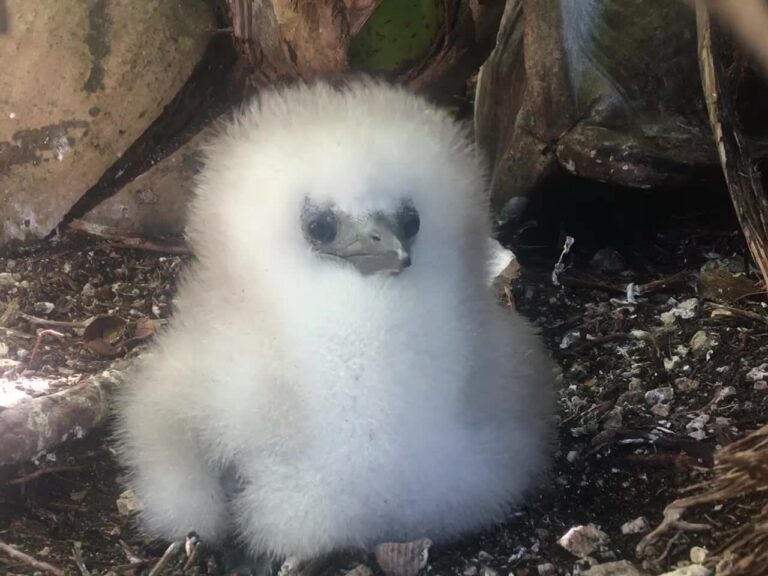
Featured image: licensed image via Wikimedia Commons. Credit: USFWS Pacific. License: Public domain. Used with attribution.
