
Understanding Why Birds Build Different Types of Nests: A Deep Dive into Avian Architecture
Species-Specific Biology
Bird nesting behavior is one of the most observable, intricate, and ultimately crucial aspects of avian life. For birders, backyard birdwatchers, and nature enthusiasts alike, recognizing the sheer diversity of nests can profoundly deepen one’s understanding of bird ecology, behavior, and even aid in species identification. But why do birds, from the smallest hummingbird to the largest eagle, construct such an astonishing array of nest types?
The size of the bird, the number of eggs it lays (clutch size), the duration of incubation, and the developmental stage of the young at hatching (altricial vs. precocial) all influence nest design.
From the seemingly simple scrape on the ground to the elaborately woven pendant nest, every design serves a purpose. These structures are not merely shelters; they are carefully engineered incubators, nurseries, and fortresses, each tailored to the unique challenges and opportunities of a bird’s life.
The Fundamental Purpose of Bird Nests: More Than Just a Home
Social Behavior
Colonial nesters, like many swallows or seabirds, often build nests in close proximity, sometimes sharing resources or benefiting from collective defense against predators. The sheer number of birds in a colony can deter predators, and alarm calls from one bird can alert the entire group.
At their core, nests serve as critical safe havens for eggs and, subsequently, for vulnerable hatchlings. This primary function encompasses several vital roles, all geared towards ensuring the successful propagation of the species.
Protection from Predators
A well-constructed and strategically placed nest can deter or conceal eggs and young from a myriad of predators. These threats include snakes, raccoons, jays, and even other birds.
Identification Cautions and Field Observation Tips for Birders
The design of a nest often reflects the dominant threats in a particular environment. For instance, a nest hidden deep within a thorny bush offers a different kind of protection than one built on a sheer cliff face, each tailored to specific predatory challenges.
Observing nests in the wild is a privilege, but it comes with a significant responsibility. Ethical birding practices are paramount to ensure the well-being of nesting birds.
Shelter from the Elements
Nests shield delicate eggs and featherless chicks from harsh weather conditions. This includes torrential rain, strong winds, scorching sun, and freezing temperatures.
- Maintain Distance: Always observe nests from a respectful distance. Use binoculars or a spotting scope to get a closer look without disturbing the birds. The general rule is if the bird changes its behavior because of your presence (e.g., stops incubating, flies off, gives alarm calls), you are too close. Back away slowly and find a more distant vantage point.
- Avoid Direct Disturbance: Never touch a nest, eggs, or young birds. Human scent can sometimes lead to abandonment, and direct interference can expose them to predators or cause parents to flee. It is illegal to disturb active nests under the Migratory Bird Treaty Act in the United States and similar laws in other countries, emphasizing the legal and ethical responsibility.
- Timing is Key: The breeding season is a sensitive time. Be extra cautious during incubation and the nestling phase. Once young have fledged and left the nest, nests can be examined more closely (if accessible and without damaging the surrounding habitat), but still with care. This ensures minimal impact on the birds’ reproductive cycle.
- Location, Location, Location: Note the exact placement of the nest. Is it high in a canopy, low in a shrub, in a cavity, on the ground, or over water? This is often the primary clue for identification. For example, a nest in a cattail marsh immediately narrows down the possibilities to marsh-dwelling species, providing a strong starting point for identification.
- Materials Matter: What is the nest made of? Coarse twigs, fine grasses, mud, moss, lichen, spider silk, feathers, fur, or even human-made debris? The specific materials used can be a strong indicator of species. For instance, the presence of spider silk is characteristic of hummingbird nests, while mud is a hallmark of robin or swallow nests, offering unique clues.
- Size and Shape: Is it a tiny cup, a massive platform, a deep pouch, or a simple scrape? Measure its approximate dimensions with your eye. A nest the size of a teacup is likely from a small songbird, while one the size of a bushel basket points to a larger species, giving a general idea of the builder.
- Bird Behavior: Observe the adult birds. How do they approach and leave the nest? What do they bring to it (food, nesting material)? Their actions can provide crucial clues to their identity and the nest’s purpose. Watching a parent bird feed its young can be incredibly informative, revealing details about their diet and care.
- Regional Variation: Remember that nest characteristics can vary slightly even within the same species depending on the local environment and available materials. A species might use different materials in an urban setting compared to a rural forest, showcasing their adaptability. This flexibility in material choice is a testament to their resourcefulness.
Thermal Regulation
Especially in cooler climates or during early spring nesting, nests help conserve the precious body heat of incubating parents and developing embryos. Some nests are remarkably efficient at maintaining a stable internal temperature, acting like miniature incubators.
Stable Platform for Incubation and Rearing
A sturdy nest provides a secure base for the parent bird to incubate eggs consistently. Later, it serves as a safe platform to feed and care for their young without risk of them falling or being dislodged.
Territorial Markers and Reproductive Signals
A male Baya Weaver, for example, constructs an elaborate nest to attract a female, who then inspects its quality before mating. The nest becomes a tangible display of the male’s ability to provide and protect.
A Closer Look at the Diverse World of Bird Nests and Their Characteristics
While the variety seems endless, most bird nests can be categorized into several primary types, each with its own advantages and disadvantages. Understanding these categories is a great first step in identifying nests and appreciating the ingenuity of their builders.
1. Open Cup Nests: The Classic Bowl
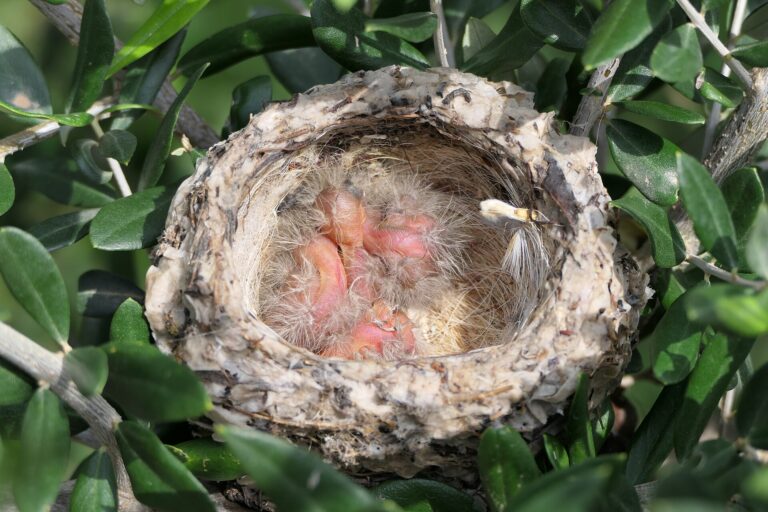
This is arguably the most recognizable and common nest type, characterized by a bowl-shaped depression designed to hold eggs securely. Open cup nests are typically constructed from a variety of pliable materials.
Many familiar songbirds, including American Robins, Chipping Sparrows, and many warblers, build open cup nests. These nests are typically placed in the forks of trees, on horizontal branches, in shrubs, or sometimes on man-made structures like window ledges or eaves.
Their open design allows for easy access for feeding and incubation but also exposes eggs and young to predators and the elements. The size and depth vary greatly; a tiny hummingbird’s cup nest might be barely an inch across, while a robin’s can be several inches in diameter and quite robust.
2. Platform Nests: Sturdy Foundations
Platform nests are generally large, relatively flat, or slightly convex structures. They are built on substantial supports such as large tree branches, cliff ledges, or even on man-made structures like utility poles or navigation buoys.
They are typically made from large sticks, branches, and sometimes sod, often reinforced and reused year after year, growing larger with each breeding season. These nests are designed to support heavy eggs or multiple large chicks and to withstand significant environmental pressures such as high winds or the weight of large adult birds.
3. Cavity Nests: Hidden Sanctuaries
Many species prefer the security of nesting inside enclosed spaces, known as cavity nests. These can be natural tree cavities (formed by decay or broken branches), old woodpecker holes, rock crevices, or even man-made structures like nest boxes or holes in buildings.
4. Burrow Nests: Subterranean Shelters
A specialized form of cavity nesting, burrow nests involve birds digging tunnels into the ground, sandbanks, or soft earth. Species like Bank Swallows, Kingfishers, Burrowing Owls, and many seabirds (e.g., puffins) utilize this method.
Building a burrow requires specific skills, strong claws or beaks, and suitable soil conditions, making this nesting style quite specialized and often colonial. The length and complexity of burrows vary by species; some are short tunnels leading to a simple chamber, while others can be several feet long with multiple turns.
5. Suspended, Pendant, or Woven Nests: Architectural Marvels
These are perhaps the most intricate and visually stunning nests. Suspended nests hang from branches, often woven intricately from flexible plant fibers. Pendant nests are a type of suspended nest that forms a deep, often pouch-like structure.
The weaving techniques can be incredibly complex, involving knots and intricate interlacings of fibers, sometimes incorporating spider silk for elasticity and strength. The sheer effort and skill involved in constructing these nests are remarkable.
6. Scrape Nests: Simplicity on the Ground
The simplest of all nest types, a scrape nest is little more than a shallow depression in the ground, often unlined or sparsely lined with a few pebbles, shell fragments, or bits of vegetation. Many shorebirds (like Killdeer), terns, gulls, and some ground-nesting game birds (like pheasants) use scrape nests.
These birds often rely heavily on camouflage and deception rather than structural protection. The eggs are often cryptically colored to blend in with the surroundings, making them incredibly difficult to spot.
7. Adherent Nests: Glued to the Surface
These nests are literally glued or cemented to a vertical surface, such as a cliff face, cave wall, or building. Swifts and some swallows (like Cliff Swallows) are masters of adherent nesting.
Environmental and Evolutionary Influences on Nest Construction
The choice of nest type, its materials, and its placement are not arbitrary; they are the result of millions of years of evolutionary fine-tuning. Every aspect of nest building is a strategy honed by natural selection to maximize reproductive success.
Predator Pressure
This is perhaps the most significant influence. In areas with high predator densities, birds will favor more concealed, inaccessible, or fortified nests (e.g., cavity, burrow, suspended nests).
Climate and Weather
Birds in colder regions often build well-insulated nests, sometimes with thick walls or in protected cavities, to conserve heat. In hot climates, nests might be designed for ventilation or placed in shaded areas to prevent overheating.
Availability of Nesting Materials
Birds are opportunistic architects. The materials at hand in their specific habitat dictate what they can use. A bird in a forest will use twigs and leaves, while one near a marsh might use reeds and mud.
Availability of Nesting Sites
The physical structure of the habitat (e.g., dense forest, open grassland, rocky cliffs, urban environments) determines where a bird can safely build. A lack of suitable tree cavities, for instance, can limit populations of cavity-nesting birds, highlighting the importance of preserving diverse habitats.
