
Introduction: The Enigmatic Stillness of Herons
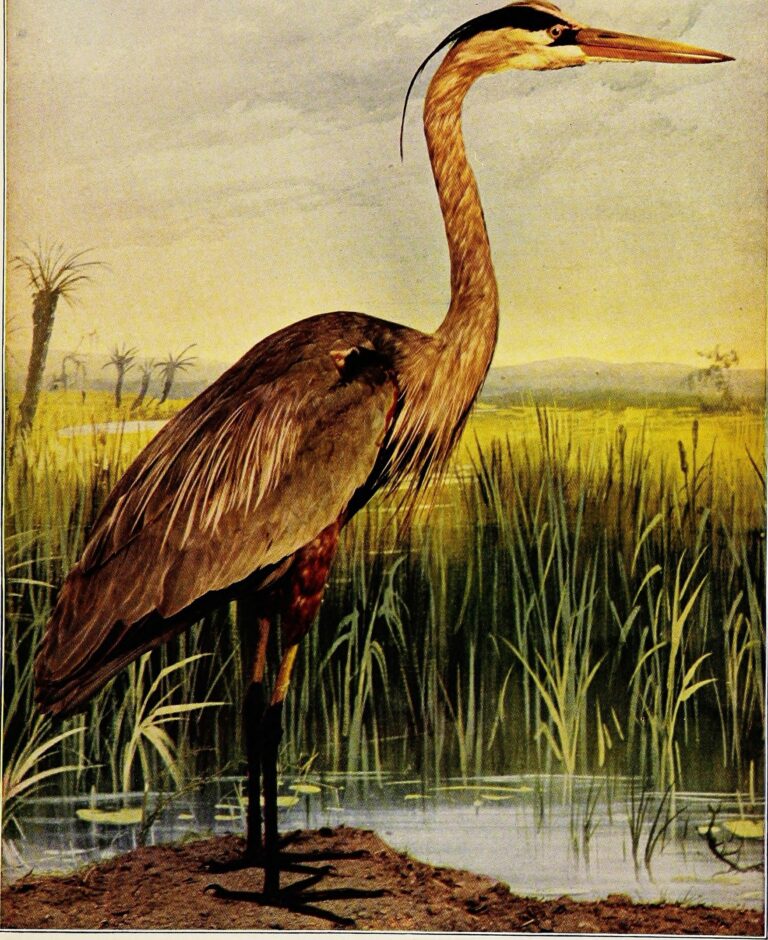
Herons, with their elegant, often statuesque forms, are among the most recognizable and captivating residents of wetlands, marshes, and coastal areas across the globe. From the majestic Great Blue Heron of North America to the widespread Grey Heron of Eurasia and Africa, these long-legged, long-necked wading birds share a common and often perplexing behavior: their tendency to stand motionless for extended periods, sometimes appearing as if frozen in time.
This characteristic pose, whether in shallow water, amidst reeds, or along a muddy bank, naturally sparks curiosity in anyone observing them. Why do herons remain so still for so long? This seemingly simple question unlocks a wealth of understanding about their sophisticated hunting strategies, remarkable physiological adaptations, and their crucial ecological role within aquatic environments.
For both seasoned birdwatchers and curious beginners, deciphering the purpose behind this stillness offers a profound insight into the intricate world of avian predation. It’s not merely a passive act; it’s a finely tuned, energy-efficient, and highly effective method of securing sustenance.
In this comprehensive guide, we will delve deep into the science and strategy behind the heron’s patient stance, exploring the evolutionary pressures that shaped this behavior, the specific techniques they employ, and practical advice for observing these fascinating birds in their natural habitat without disturbance.
The Art of Stillness: A Heron’s Masterclass in Predation
Minimizing Detection: The Ultimate Camouflage
At the heart of the heron’s prolonged stillness lies the principle of minimizing detection. Aquatic environments, while rich in food, are also fraught with challenges for a visual predator. Fish, amphibians, and aquatic invertebrates are often highly sensitive to movement and vibrations in the water. By remaining perfectly still, a heron effectively disappears into its surroundings. Its vertical posture, especially when standing amidst reeds or reflections on the water’s surface, helps it blend seamlessly.
This lack of movement reduces its visual footprint, making it incredibly difficult for potential prey to perceive it as a threat. Imagine a fish swimming past; a moving shadow or a sudden ripple would send it darting away, but a motionless heron becomes just another part of the natural landscape, a silent, unmoving sentinel.
This strategy is particularly crucial in clear, shallow waters where prey has ample opportunity to spot a predator. The heron’s ability to hold its position for minutes, sometimes even half an hour or more, ensures that it remains undetected until the perfect moment for a strike. It’s a testament to evolutionary refinement, where patience is not just a virtue, but a vital survival tool.
This ‘invisibility cloak’ allows the heron to wait for prey to approach within an optimal striking distance, rather than expending energy in pursuit. For instance, a Great Blue Heron standing perfectly still at the edge of a pond might be indistinguishable from a weathered tree stump to a passing minnow, until it’s too late.
Energy Conservation: The Efficiency of Waiting
Hunting is an energetically demanding activity. Chasing prey, flying between locations, and engaging in active pursuit all burn calories. For a heron, which may spend many hours a day foraging, conserving energy is paramount. Standing still is a remarkably energy-efficient hunting method. Rather than expending energy in constant motion, the heron allows its prey to come to it.
This ‘sit-and-wait’ or ‘ambush’ predation style minimizes metabolic output, allowing the bird to sustain long foraging bouts without quickly depleting its reserves. This is particularly important in environments where prey might be scarce or widely dispersed, making active pursuit less rewarding. By conserving energy through stillness, the heron maximizes its net energy gain from each successful capture.
Consider a heron that successfully catches a fish every 15 minutes by waiting, versus one that spends 5 minutes actively chasing and only catches a fish every 30 minutes. The waiting heron is far more efficient in its energy budget.
Optimizing Strike Opportunity: The Element of Surprise
The heron’s stillness isn’t just about hiding; it’s about setting the stage for an explosive, precise strike. When a heron stands motionless, its muscles are primed, and its eyes are locked onto the water. As a fish or frog ventures within striking range, unaware of the danger, the heron can unleash a lightning-fast attack.
The sudden, rapid extension of its neck and bill, often described as a ‘javelin strike,’ gives the prey almost no time to react. If the heron were constantly moving, prey would be on high alert, making such a surprise attack far less effective. The stillness builds anticipation, allowing the heron to choose the optimal moment and angle for a successful capture, often impaling or grasping its prey with remarkable accuracy.
This element of surprise is critical for securing fast-moving aquatic prey. A fish that senses a predator’s movement will often dart away, but a heron’s sudden, unexpected lunge from a seemingly inert position leaves little chance for escape.
Physiological and Behavioral Adaptations for Stillness
Exceptional Vision: Eyes on the Prize
Herons possess highly specialized vision, crucial for their hunting style. Their eyes are positioned to provide excellent binocular vision, allowing for precise depth perception, which is essential for accurately judging the distance to prey in the water. They can detect subtle movements and disturbances in the water, even from a distance. This acute eyesight enables them to spot prey while remaining perfectly still, often tracking a fish’s movement for several seconds before deciding to strike.
Some species, like the Great Blue Heron, are known to have excellent vision even in low light conditions, extending their hunting opportunities into dawn and dusk. This visual acuity is further enhanced by their ability to compensate for the refraction of light in water, allowing them to accurately target prey that appears to be in a slightly different position due to the bending of light rays.
Flexible Necks and Powerful Strike Muscles
The heron’s long, S-shaped neck is a marvel of avian anatomy. While it can be held retracted and coiled to maintain a low profile during stillness, it can extend with incredible speed and force during a strike. This is facilitated by specialized neck vertebrae and powerful muscles that allow for rapid extension and retraction. The ‘S’ curve acts like a spring, storing potential energy that is released in an instant.
This combination of flexibility and power is what makes their strike so effective, allowing them to spear or grasp prey with their sharp, dagger-like bills. The ability to quickly extend and retract the neck also minimizes the time the heron is off-balance during a strike, allowing for rapid recovery or a second attempt if the first misses. This anatomical feature is a prime example of evolutionary adaptation for a specific hunting technique.
Balance and Stability: The Wading Master
Herons are expert waders. Their long legs and broad feet distribute their weight effectively, allowing them to stand stably on uneven or soft substrates without sinking or losing balance. This stability is critical for maintaining perfect stillness, especially when standing in moving water or on slippery surfaces. Their ability to shift weight subtly without creating ripples is a testament to their refined motor control and balance.
The structure of their feet, with long, spreading toes, provides a large surface area for support, preventing them from sinking into soft mud. Furthermore, the rough texture of their leg scales provides additional grip on slippery rocks or submerged branches, ensuring a steady platform for their patient vigil.
Patience as a Behavioral Trait
Beyond physical adaptations, patience is a deeply ingrained behavioral trait in herons. This isn’t just a learned behavior; it’s an evolutionary strategy that has proven highly successful. Individual herons that exhibit greater patience are likely to have higher hunting success rates, leading to better survival and reproductive outcomes. This reinforces the behavior across generations. Observing a heron’s unwavering focus and prolonged stillness offers a glimpse into this innate, highly adaptive patience.
It’s a behavioral ‘muscle’ that is constantly exercised and refined, allowing them to wait out even the most wary prey. This patience is often a source of fascination for human observers, who might struggle to remain still for even a fraction of the time a heron does.
How Herons Use Their Stillness to Capture Prey: A Step-by-Step Scenario
Let’s visualize the process, imagining a Great Blue Heron on a calm morning:
- Positioning: The heron wades slowly and deliberately into shallow water, perhaps at the edge of a reed bed or near submerged vegetation where fish are likely to congregate. It surveys the area, its head swiveling slowly, perhaps adjusting its position slightly to optimize its view or to position itself against the sun to reduce glare on the water. It might choose a spot where a slight current brings prey past, or where shadows offer concealment.
- The Freeze: Once a promising spot is identified, the heron stops. Its body becomes rigid, its neck often retracted into an ‘S’ shape, and its bill points slightly downward, ready for action. It might stand on one leg to conserve heat or simply as a resting posture, but its focus remains unwavering. Its eyes are fixed on the water, scanning for any sign of movement. The heron might remain in this posture for 10, 20, or even 30 minutes without a single twitch.
- Observation: For minutes, or even longer, the heron remains perfectly still. Its keen eyes scan the water below, detecting the slightest movement – a flicker of a fish’s fin, the ripple of an insect, or the subtle shift of a frog. It tracks the prey’s trajectory, calculating its speed, depth, and direction. It might even subtly adjust its head angle, almost imperceptibly, to maintain optimal visual contact with a potential meal.
- The Strike: When the prey is within optimal striking distance, and the heron has assessed the perfect moment, its coiled neck extends with astonishing speed. The sharp bill, like a spear, plunges into the water, impaling or grasping the unsuspecting creature. This entire strike can happen in a fraction of a second, often too fast for the human eye to fully register. The force of the strike is considerable, often creating a small splash as the bill enters the water.
- Consumption: With the prey secured, the heron retracts its neck, often adjusting the prey in its bill before swallowing it whole, headfirst. This ensures that scales, fins, or limbs don’t get caught in its throat. For larger prey, the heron might shake it vigorously to subdue it before swallowing. The elasticity of its throat allows it to consume surprisingly large fish.
- Repositioning or Repeat: After a successful catch, the heron might remain in the same spot, hoping for another opportunity, or it might slowly wade to a new location to repeat the process. If prey is abundant, it might make several strikes in quick succession. If unsuccessful after a long wait, it will often move to a new foraging patch.
Comparing Herons with Other Wading Birds
While stillness is a hallmark of heron hunting, it’s important to note variations among similar species and other long-legged birds:
- Egrets: Many egret species (which are essentially white herons) also employ the ‘stand and wait’ strategy. However, some, like the Snowy Egret, are known for more active foraging, stirring the water with their bright yellow feet to flush out prey, or even running through shallow water with their wings spread to create shade and attract fish. The Reddish Egret is famous for its ‘canopy feeding’ where it uses its wings to create a shadow over the water, reducing glare and attracting fish, often accompanied by a peculiar, almost dance-like movement. This demonstrates behavioral plasticity within the heron family.
- Bitterns: Bitterns, close relatives of herons, take stillness to an extreme. They are masters of camouflage, often standing perfectly still with their bills pointed skyward, blending seamlessly with vertical reeds. Their cryptic plumage and posture make them incredibly difficult to spot, even when close by. This ‘reed-swaying’ behavior, where they sway gently with the reeds in the wind, further enhances their disguise, making them almost invisible to both prey and predators. Their hunting often involves a slow, deliberate stalk followed by a quick strike.
- Storks and Cranes: While also long-legged wading birds, storks and cranes generally employ different foraging strategies. Storks, such as the Wood Stork, often walk slowly through wetlands, probing the mud with their bills or snatching prey from the surface. Some storks engage in ‘foot-stirring’ to flush out prey. Cranes are more omnivorous, foraging for seeds, grains, and insects in fields as well as wetlands, often with a more active, head-down walking pattern. Their hunting behavior is less characterized by prolonged, motionless waiting, and more by active searching and probing. Their diets are also generally broader than the primarily piscivorous herons.
- Ibises and Spoonbills: These birds have highly specialized bills for foraging. Ibises use their long, downcurved bills to probe deep into mud for invertebrates, while spoonbills sweep their spatulate bills side-to-side in shallow water to filter out small aquatic organisms. Their feeding methods are active and continuous, relying on tactile sensation rather than visual ambush, a stark contrast to the heron’s patient stillness.
Practical Birding Tips for Observing Herons’ Stillness
Observing a heron’s hunting behavior is a rewarding experience, but it requires patience and respect for wildlife. Here’s how to maximize your chances:
Choosing the Right Habitat and Time
- Habitat: Focus on shallow wetlands, marshes, slow-moving rivers, lake edges, and even coastal estuaries. Look for areas with a mix of open water and emergent vegetation (reeds, cattails), which provide both hunting grounds and cover. Herons often prefer areas with calm water where they can easily spot prey and where there is minimal disturbance.
- Timing: Early mornings (shortly after sunrise) and late afternoons (an hour or two before sunset) are often the most productive. Herons are typically more active during these cooler periods, and prey might also be more visible. Overcast days can also be good, as they reduce glare on the water, making it easier for both the heron and the observer to see. Avoid the harsh midday sun if possible, as it can create difficult viewing conditions.
Essential Gear and Techniques
- Optics are Key: High-quality binoculars (e.g., 8×42 or 10×42) are indispensable. They allow you to observe intricate details of the heron’s behavior from a respectful distance without disturbing it. For serious observation or photography, a spotting scope or a camera with a telephoto lens (300mm or more) is highly recommended. These tools bring the action closer without requiring you to physically approach the bird.
- Patience is Paramount: A heron’s stillness can be truly prolonged. Be prepared to wait. Find a comfortable spot, settle in, and observe. Don’t expect instant action. The reward for your patience might be witnessing a spectacular strike. Bring a portable stool or cushion if you plan to stay for an extended period.
- Move Slowly and Quietly: Herons are wary birds. Approach your observation spot slowly, avoid sudden movements, and keep noise to a minimum. Even a slight disturbance, like a loud voice or a quick step, can cause a heron to fly off, ending your observation opportunity. Think of yourself as part of the landscape.
- Use Natural Cover: If available, use trees, bushes, or elevated terrain to conceal yourself. This allows you to get closer (optically, not physically) without being detected, enabling more intimate observations. A blind or camouflage clothing can also be beneficial, especially for photography.
- Observe from a Distance: The golden rule of wildlife observation is to never disturb the animal. If a heron shows any signs of agitation (e.g., constantly looking at you, shifting its weight nervously, or preparing to take flight), you are too close. Back away slowly and quietly. A disturbed bird wastes valuable energy and may miss a meal.
Field Identification Cautions
When observing herons, it’s easy to confuse similar-looking species, especially from a distance or in challenging light. Always pay attention to:
- Size: Great Blue Herons are significantly larger than Little Blue Herons or Green Herons. Size can be deceptive without a reference, so try to compare it to known objects or other birds if possible.
- Coloration: Note the overall plumage color, leg color, and bill color. For example, juvenile Little Blue Herons are white, often leading to confusion with Snowy Egrets, but their leg color differs (Snowy Egrets have black legs with yellow feet, while juvenile Little Blue Herons have duller, often greenish legs). Adult Little Blue Herons are dark blue.
- Crests and Plumes: Breeding adults often develop elaborate plumes or crests that can aid identification. For instance, the Great Egret develops long, delicate plumes on its back during breeding season.
- Habitat and Behavior: While many herons share the ‘stillness’ behavior, subtle differences in preferred habitat or foraging style can be clues. For instance, Green Herons often hunt from low perches over water, rather than wading extensively, and are smaller and more compact.
Always consult a reliable field guide for your region to confirm identifications. Avoid confusing herons with other long-legged birds like cranes (which have a different body shape, often fly with necks extended, and are typically less associated with water, often found in open fields) or storks (which are generally larger, have heavier bills, and different flight patterns, often soaring on thermals).
Environmental Factors Influencing Stillness
While stillness is a core strategy, its duration and frequency can be influenced by environmental conditions, demonstrating the heron’s adaptability:
- Prey Abundance: In areas with abundant prey, a heron might not need to wait as long between strikes, leading to shorter periods of stillness or more active foraging. Conversely, in areas of low prey density, patience becomes even more critical, and herons may wait for much longer periods to ensure a successful catch.
- Water Clarity: Clear water allows herons to spot prey more easily, potentially reducing the need for extremely long waits. Turbid or murky water might necessitate longer periods of stillness as the heron waits for prey to come closer or for the water to settle, or it might move to clearer patches.
- Weather Conditions: Wind can create ripples on the water, making it harder to spot prey. Herons might adjust their stance, seek more sheltered locations, or even switch to a more active foraging method on windy days. Extreme cold can also influence their behavior, leading to more frequent single-leg standing for thermoregulation, or seeking warmer, deeper waters. Heavy rain can also obscure vision and reduce foraging success.
- Time of Day: As mentioned, dawn and dusk are often peak hunting times for many heron species due to lower light and potentially more active prey. Midday heat might lead to more resting or less active foraging.
- Predator Presence: If a heron perceives a threat (e.g., a raptor overhead, a human too close, or a terrestrial predator like a fox), its stillness might be interrupted as it becomes more alert, adopts a defensive posture, or decides to fly away. Safety always takes precedence over hunting.
- Water Depth and Flow: Herons prefer shallow, slow-moving water where prey is concentrated and easily accessible. Very deep or fast-flowing water is generally avoided for still-hunting, though they might fish from perches overlooking such areas.
Conclusion: A Symphony of Adaptations
The heron’s prolonged periods of stillness are far from passive; they are a sophisticated, multi-faceted adaptation that underpins its success as a wetland predator. This behavior is a testament to the power of natural selection, combining physiological prowess with behavioral mastery. By minimizing detection, conserving energy, and optimizing the element of surprise, herons have perfected a hunting strategy that is both elegant and devastatingly effective.
Their S-shaped neck, keen eyesight, stable stance, and innate patience all work in concert, creating a highly specialized and successful predator.
For birders and nature enthusiasts, understanding and appreciating this stillness transforms a simple observation into a profound insight into the natural world. It encourages us to slow down, to observe with patience, and to marvel at the intricate survival strategies that unfold daily in our wetlands.
The next time you encounter a heron standing motionless, remember that you are witnessing a master predator at work, a living sculpture of patience and precision, perfectly adapted to its aquatic realm. It’s a reminder that sometimes, the most effective action is no action at all, a lesson in strategic waiting that has served these magnificent birds for millennia.
FAQs: Deepening Your Understanding of Heron Behavior
Why do herons sometimes stand on one leg?
Standing on one leg, often referred to as ‘roosting’ or ‘resting’ posture, serves multiple purposes. Primarily, it’s a thermoregulatory strategy, especially in cooler conditions. By tucking one leg into their warm feathers, herons reduce heat loss from their unfeathered limbs, which can be significant in cold water or air. It also allows them to rest one leg’s muscles while remaining alert on the other.
In some cases, it might even reduce their visual profile to prey, making them appear less like a full bird and more like a slender reed. It’s a common behavior among many wading birds, not just herons, for these energy-saving and comfort reasons.
How long can a heron stand still while hunting?
The duration of a heron’s stillness can vary significantly based on environmental factors and prey availability. While they might stand motionless for just a few minutes between strikes in areas of high prey density, it’s not uncommon for them to remain in the same spot for 15, 30, or even 45 minutes, patiently waiting for the opportune moment. Some observations have even recorded herons remaining still for over an hour.
Environmental factors like water clarity, prey availability, perceived threats, and even the heron’s hunger level can influence this duration. True patience is a key to their hunting success.
Are herons always still when hunting, or do they move?
While stillness is a primary and highly effective hunting strategy, herons are not always static. They employ a range of foraging behaviors, demonstrating behavioral plasticity. They will often wade slowly and deliberately, taking careful, measured steps, often pausing after each step to scan the water before moving again. Some species, like the Green Heron, frequently hunt from low perches overhanging water, dropping down to snatch prey rather than wading extensively.
Others, like the Snowy Egret, are known for more active foraging, stirring the water with their feet to flush out prey, or even running through shallow water. The Reddish Egret engages in particularly active, almost dance-like movements, spreading its wings to create shade or shuffling its feet to disorient and attract fish. However, the ‘stand and wait’ method remains a cornerstone of their hunting repertoire and is widely observed across many heron species.
What practical tips can help me observe herons more effectively and without disturbance?
To observe herons effectively and ethically: 1) Choose the right habitat: Focus on shallow wetlands, marshes, and quiet lake edges where they are likely to forage. 2) Go at the right time: Early mornings and late afternoons are generally best for activity. 3) Use optics: Binoculars or a spotting scope are essential for viewing from a distance, allowing you to see details without getting too close. 4) Be patient: Settle in for a long wait; don’t expect immediate action.
Herons teach patience! 5) Move slowly and quietly: Avoid sudden movements or loud noises that could alarm the bird. 6) Maintain distance: If the heron shows any signs of agitation (e.g., constantly looking at you, shifting its weight nervously, or preparing to take flight), you are too close. Back away slowly. 7) Use natural cover: Blend into your surroundings if possible to minimize your presence.
Always prioritize the bird’s well-being over getting a closer view or a perfect photograph.
Are herons at risk or protected? What are their conservation statuses?
The conservation status of herons varies significantly by species and region. Many heron species are protected under national and international laws, such as the Migratory Bird Treaty Act in the US, which makes it illegal to harm them or disturb their nests. While some species, like the Great Blue Heron and Great Egret, are widespread and relatively common, others face significant threats.
Habitat loss and degradation (especially the draining, pollution, and alteration of wetlands), climate change, and disturbance at nesting colonies are major concerns for many heron populations. For example, some island-dwelling or highly specialized species may have very restricted ranges and be more vulnerable. Supporting wetland conservation efforts, reducing pollution, advocating for protected areas, and minimizing human disturbance are crucial steps in ensuring healthy heron populations globally.
Always check local conservation guidelines and regulations for specific species in your area.
Do herons hunt at night?
While many heron species are primarily diurnal (active during the day), some, particularly those with excellent night vision like the Black-crowned Night-Heron and Yellow-crowned Night-Heron, are indeed crepuscular (active at dawn and dusk) or nocturnal hunters. These species are specially adapted to forage in low light conditions, often targeting prey that is more active after dusk, such as certain fish, frogs, or crustaceans.
Their larger eyes and specialized retinal structures allow them to see effectively in dim light. Even some diurnal species may extend their foraging into twilight hours if conditions are favorable, prey is abundant, or competition from other predators is reduced.
How do herons deal with large or difficult-to-swallow prey?
Herons are remarkably adept at handling their catch. For larger fish, they will often manipulate the prey in their bill, shaking it vigorously to stun it or ensure it’s oriented headfirst to ensure it slides down smoothly. Their throats and esophagus are highly elastic and distensible, allowing them to swallow surprisingly large items relative to their head size.
If prey is too large to swallow whole, they may attempt to break it apart by shaking or hitting it against a hard surface, or they may simply abandon it. They also have specialized stomach acids to digest bones and scales. Occasionally, a heron might be seen struggling with a particularly spiny fish or a feisty crab, but their success rate in subduing and consuming prey is generally very high due to these adaptations.
What is the difference between a heron and an egret?
Biologically, there is no strict distinction between a heron and an egret; ‘egret’ is simply a common name given to several species of herons, typically those with white plumage and often with decorative plumes (aigrettes) during breeding season. All egrets are herons, but not all herons are egrets. For example, the Great Egret is a heron, as is the Snowy Egret.
The Great Blue Heron, however, is not typically called an egret due to its blue-grey plumage. The terms are largely based on historical common usage rather than distinct taxonomic differences.
Do herons use tools or bait when hunting?
While not widespread, some heron species have been observed exhibiting remarkable ingenuity, including the use of ‘tools’ or ‘bait.’ The Green Heron, for instance, is famously known for dropping small objects like feathers, insects, or berries onto the surface of the water to attract small fish, which it then ambushes. This behavior is considered one of the few documented cases of tool use in birds.
This demonstrates a higher level of cognitive ability and problem-solving than might be expected from their typical ‘stand and wait’ strategy, highlighting the diverse intelligence within the heron family.
Sources and Further Reading
- Cornell Lab of Ornithology – Great Blue Heron
- eBird – Bird observation data and species information
- Audubon Society – Herons and Egrets
- RSPB – Heron
- National Geographic – Heron Facts
- Field guides such as The Sibley Guide to Birds, National Geographic Field Guide to the Birds of North America, or regional guides specific to your location provide detailed descriptions, range maps, and identification tips.
- Scientific journals focusing on ornithology and behavioral ecology often publish studies on avian foraging strategies.
Featured image: licensed image via Wikimedia Commons. Credit: Ross. License: CC BY-SA 2.0. Used with attribution.
