
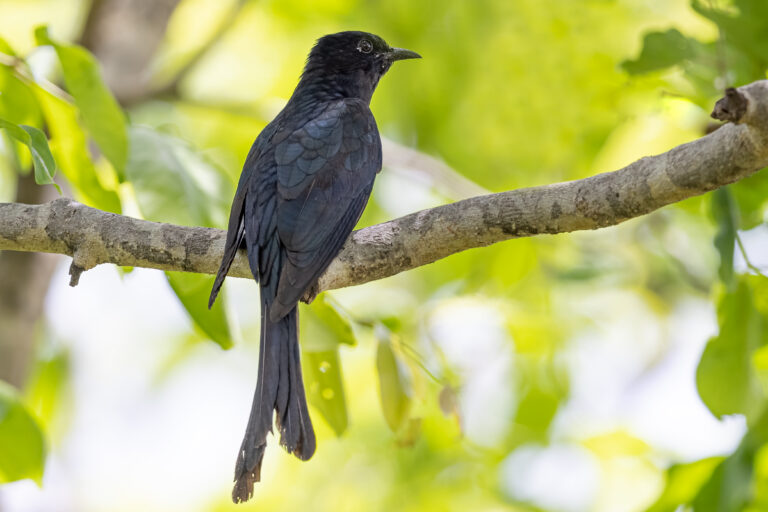
Introduction: Unveiling the Hidden World of Forest Birds
Identifying birds in dense forest environments presents a unique and often exhilarating challenge for bird enthusiasts. Unlike open habitats where visual identification is often straightforward, the intricate layers of a woodland or rainforest canopy demand a more holistic approach. Here, birds are frequently heard long before they are seen, and their fleeting movements provide crucial clues to their identity.
This comprehensive guide will equip you with the knowledge and practical strategies to confidently identify forest birds by honing your listening skills, interpreting their movement patterns, and understanding the subtle cues offered by their habitat. We will look at the nuances of avian vocalizations, explore the diagnostic features of flight and foraging behaviors, and learn how to leverage the ecological context of the forest itself for more accurate identifications.
Whether you’re a novice birder embarking on your first woodland adventure or an experienced observer seeking to refine your techniques, mastering these skills will not only enhance your birding experience but also deepen your appreciation for the complex ecosystems these creatures inhabit. We will also touch upon ethical birding practices, ensuring that our pursuit of knowledge respects the delicate balance of these natural environments.
Understanding Forest Bird Habitats: A Layered World
Forests and rainforests are not uniform entities; they are complex, multi-layered environments, each stratum supporting a distinct community of bird species. Recognizing these habitat layers is fundamental to effective forest bird identification. Birds often specialize in particular niches, from the sun-drenched canopy to the shaded understory and the leaf-littered forest floor.
For instance, large, fruit-eating birds like toucans, hornbills, and some parrots are typically canopy dwellers, often visible only as silhouettes or flashes of color against the sky, their presence more frequently revealed by their distinctive calls. These species are adapted to navigating the upper reaches, where fruits and flowers are abundant. Their strong beaks are often specialized for cracking nuts or tearing open tough fruits.
Conversely, ground-foraging species such as thrushes, antbirds, or certain ovenbirds, while sometimes visible, are often identified by their characteristic movements through leaf litter or their specific vocalizations from the lower strata. These birds have evolved to exploit the rich insect and invertebrate life found on the forest floor, often employing specific foraging techniques like leaf-tossing or probing.
Understanding which species prefer which layers—canopy, sub-canopy, understory, or forest floor—can significantly narrow down your identification possibilities and guide your observation efforts. For example, if you hear a soft rustling on the forest floor, you might immediately think of a ground-dwelling species like a Rufous-backed Robin or a Spotted Towhee, rather than scanning the treetops for a raptor.
Similarly, a high-pitched trill from the very top of a tall tree is more likely to be a warbler or a vireo than a ground-dwelling sparrow.
Furthermore, consider the type of forest itself. A boreal forest, dominated by conifers, will host a different suite of species than a temperate deciduous forest or a tropical rainforest. Factors like elevation, proximity to water, and the presence of specific plant species (e.g., berry bushes, old-growth trees) all influence which birds you might encounter. Always consult your regional field guide’s habitat descriptions, as these provide crucial context for identification.
The Indispensable Role of Bird Sounds in Forest Identification
Vocalizations as Diagnostic Tools: The Forest’s Hidden Language
In the dense confines of a forest, a bird’s voice is often its most reliable identifier. Many species possess unique vocal signatures – songs, calls, and alarm notes – that are as distinctive as their plumage. Learning these vocalizations is paramount for forest birding. It’s not just about recognizing a sound, but understanding its context and variation.
A bird’s song, typically a longer, more complex series of notes, is often used for territorial defense or mate attraction, particularly during breeding season. These songs are usually species-specific and can be quite elaborate. Calls, on the other hand, are shorter, simpler vocalizations used for communication within a flock, alarm signals, contact notes, or to indicate food sources.
For example, the loud, resonant hoot of an owl from the deep woods or the rapid, chattering call of a kingfisher near a forest stream can instantly betray their presence, even when they remain completely hidden from view.
Birders should actively strive to familiarize themselves with the common sounds of their region. Excellent resources like the Cornell Lab of Ornithology’s Macaulay Library and eBird offer extensive audio libraries that allow you to listen to and compare vocalizations, often with detailed descriptions of their context and variations. These platforms often include multiple recordings of the same species, showcasing individual and regional differences, which is vital for comprehensive learning.
Practical Tips for Listening and Recording: Sharpening Your Auditory Senses
Effective listening is a skill that improves with practice. Here are some strategies to enhance your auditory birding:
- Focus and Isolate: In a chorus of bird sounds, try to isolate individual voices. Close your eyes for a moment to reduce visual distractions and concentrate solely on the auditory landscape. This helps your brain filter out background noise and focus on distinct patterns. Try to pinpoint the direction and distance of the sound.
- Learn Patterns: Pay attention to the rhythm, tempo, pitch, and repetition of calls and songs. Is it a rapid, staccato burst or a slow, deliberate whistle? Does the pitch rise or fall? Is there a distinct pattern of phrases? For instance, a ‘chick-a-dee-dee-dee’ call of a Black-capped Chickadee is instantly recognizable, but variations in the number of ‘dee’ notes can even indicate species or alarm levels. The difference between a simple ‘chip’ call and a complex, multi-phrased song is also a key distinction.
- Use Technology: Many excellent birding apps (e.g., Merlin Bird ID by Cornell Lab, BirdNET) offer sound identification features that can analyze recordings and suggest species. While not infallible, they can be invaluable learning tools, especially for beginners. They provide instant feedback and help you associate sounds with species. Carry a portable audio recorder (even a smartphone can work) to capture unfamiliar calls for later analysis or comparison with field guides and online databases. This is particularly useful in areas with high bird diversity or when you’re unsure about an identification, allowing you to review and confirm at home.
- Practice with Mnemonics: Many bird songs have been translated into human-understandable phrases or mnemonics. For example, the American Robin’s song is often described as “cheerily, cheer up, cheerio.” The Olive-sided Flycatcher’s call sounds like “Quick, three beers!” While not always perfect or universally agreed upon, these can be helpful starting points for remembering complex songs and associating them with a species. They provide a memorable hook for learning new sounds.
- Listen to Recordings Regularly: Before heading into the field, spend time listening to recordings of birds you expect to encounter in your target habitat. This pre-exposure will prime your ears and make in-field identification much easier.
Common Forest Bird Calls to Know: A Glimpse into the Forest Orchestra
While regional variations are immense, here are some general examples of vocalizations you might encounter and how to approach their identification:
- Wood Warblers: Often characterized by high-pitched, buzzy, or trilling songs, frequently delivered in rapid series. Their calls can be deceptively similar, requiring careful attention to subtle differences in speed and emphasis. For example, the Ovenbird’s loud, emphatic “teacher-teacher-teacher” song is distinct and easily recognizable, while many other warblers have more delicate, lisping calls or rapid, insect-like trills. Listen for the overall quality – is it sharp, sweet, buzzy, or dry?
- Hornbills and Toucans: These larger, often canopy-dwelling birds have surprisingly varied vocalizations. Hornbills might produce deep, resonant ‘whooshing’ sounds, grunts, or even cackles, often with a somewhat mechanical or guttural quality. Toucans are known for their distinctive croaks, yelps, or sharp, buzzy calls that can carry long distances through the forest. The Keel-billed Toucan’s call, for instance, sounds like a series of frog-like croaks, while the Collared Aracari might have a sharp, squealing call. Their calls often have a unique, almost primitive quality.
- Thrushes: Renowned for their melodious, fluting songs with a clear, musical, often ethereal quality. Species like the Hermit Thrush or Wood Thrush have complex, spiraling songs that are a hallmark of temperate forests, often described as hauntingly beautiful. Their calls, however, can be simpler, often a sharp ‘chuck’ or ‘whit’ used for alarm or contact. Listen for the rich, resonant tone and often a distinct echo-like quality in their songs.
- Woodpeckers: Beyond their characteristic drumming (which itself can be species-specific in rhythm and duration), many woodpeckers have distinct vocal calls. The Pileated Woodpecker’s loud, ringing “cuk-cuk-cuk-cuk” call, often described as a maniacal laugh, is unmistakable and carries far. Smaller species might have softer ‘pik’ or ‘chip’ notes, or even short, sharp rattles. The Red-bellied Woodpecker, for example, has a distinctive ‘churr-churr’ call.
- Cuckoos: Often heard but rarely seen, cuckoos typically have repetitive, often mournful or guttural calls. The Common Cuckoo’s iconic ‘cuck-oo’ call is a classic example. In North America, the Yellow-billed Cuckoo has a distinctive, accelerating ‘kow-kow-kow-kowp-kowp-kowp’ call, while the Black-billed Cuckoo offers a more rapid, less guttural ‘cu-cu-cu’. Their calls are often a reliable way to detect their presence in dense foliage.
- Vireos: Many vireos have deliberate, often questioning or emphatic songs, with distinct pauses between phrases. For example, the Red-eyed Vireo’s song is a continuous, repetitive series of short, whistled phrases, often described as “Here I am, where are you?” or “Look up, here I am.” Their songs are less complex than thrushes but more structured than many warblers.
Movement and Flight Patterns as Identification Clues: The Dance of the Forest
Observing Flight Styles: More Than Just Moving Air
Even a fleeting glimpse of a bird’s flight can provide critical identification data. Birds have evolved diverse flight styles adapted to their specific foraging and habitat needs. Observing these patterns requires patience and a quick eye.
For instance, a swift, direct flight with rapid wingbeats, often accompanied by sudden changes in direction, is characteristic of many flycatchers as they sally forth from a perch to catch insects in mid-air, returning to the same or a nearby perch. This ‘sallying’ behavior is a strong clue.
In contrast, a slow, deliberate, often undulating flight (a series of dips and rises) might suggest a larger, heavier bird like a pigeon or a cuckoo. Woodpeckers also exhibit an undulating flight pattern, often appearing to ‘bounce’ through the air. Raptors, such as hawks and eagles, often exhibit soaring or gliding flight, utilizing thermals to conserve energy, sometimes circling high above the canopy with minimal wingbeats.
Their broad wings are designed for efficiency in the open sky above the forest.
Forest owls, on the other hand, typically have silent, buoyant flight, allowing them to ambush prey undetected. Their soft, fringed feathers muffle sound, making their flight almost imperceptible. Small passerines, like warblers, often have a rapid, fluttering flight, darting quickly between branches. Even the way a bird lands—whether it dives into foliage or perches delicately on a branch—can be a clue.
A large bird crashing clumsily into a tree might be a different species than one that gracefully alights on a slender twig.
Canopy Movement and Perching Habits: Where and How They Live
Beyond flight, how a bird moves within the forest structure and where it chooses to perch offers valuable insights. Many canopy-dwelling species, like some tanagers or orioles, tend to move with deliberate hops and short flights between branches, often remaining high up. Their movements might be slow and methodical as they glean insects from leaves or inspect flowers for nectar. They often forage by slowly moving through the foliage, picking off insects.
Understory species, such as wrens or certain warblers, might hop and flit rapidly through dense thickets, often staying low to the ground, constantly searching for insects. Their quick, nervous movements are characteristic. Ground-foraging birds, like some thrushes or juncos, will often be seen scratching through leaf litter with their feet, a characteristic behavior known as ‘double-scratching,’ to uncover hidden food.
Antbirds in tropical forests are famous for following army ant swarms, picking off insects flushed by the ants.
Woodpeckers are identified not just by their drumming but by their distinctive climbing pattern, often spiraling up tree trunks, bracing themselves with their stiff tail feathers. They use their strong claws and tail as a tripod to cling vertically to bark. Nuthatches, uniquely, can climb headfirst down tree trunks, a behavior rarely seen in other species, allowing them to inspect bark crevices from a different angle.
Creepers, by contrast, typically climb upwards in a spiral, then fly to the base of another tree to start again.
Observing whether a bird perches openly on an exposed branch or prefers to hide deep within foliage can also be a helpful clue. For example, a large, dark bird perched silently and upright on a high, dead branch might suggest a raptor or an owl, using the vantage point to scan for prey. Conversely, a small, brightly colored bird flitting through a berry bush points to a frugivore or insectivore, actively feeding or seeking cover.
Even the angle at which a bird holds its tail or the way it cocks its head can be diagnostic for certain species.
Canopy Clues and Visual Identification: Peeking Through the Green Veil
Color Patterns and Silhouettes: Making the Most of Fleeting Views
In the dappled light and dense foliage of a forest, a full, clear view of a bird is often a luxury. Therefore, learning to identify birds from partial views, silhouettes, or flashes of color becomes essential. Brightly colored birds like toucans, parrots, or some kingfishers, even when partially obscured, can be identified by their vibrant hues.
A flash of iridescent green or a streak of brilliant red can be enough to narrow down the possibilities significantly. However, many forest species are cryptically colored, blending seamlessly with their surroundings, making visual identification more challenging.
In such cases, focus on the bird’s overall shape, size, and proportions – its silhouette. Is it slender with a long tail (like a cuckoo) or stout with a short tail (like a wren)? Does it have a prominent crest (like a cardinal or a jay)? A long, pointed bill (like a hummingbird) or a heavy, conical bill (like a grosbeak)? Even the way light catches a particular feather patch can be diagnostic.
For instance, a flash of red on the wing of a Red-winged Blackbird (even if in a forest edge) or a distinctive eye-ring on a vireo can be the key identifier. Pay attention to the relative size of the head, body, and tail, and the shape of the bill. These structural features are often visible even in poor light or through dense leaves.
Binoculars are indispensable for picking out these subtle details, allowing you to magnify and clarify what might otherwise be an indistinguishable blur. Learning to quickly focus your binoculars on a moving target is a skill that comes with practice and greatly improves your chances of getting a diagnostic view.
Using Habitat and Vegetation as Guides: The Ecological Context
The type of vegetation a bird is associated with is a powerful identification tool. Certain species have strong preferences for specific tree types, plant communities, or even particular stages of forest succession. For example, some woodpeckers are strongly associated with old-growth forests due to their reliance on large, decaying trees for nesting and foraging, which provide abundant insects and suitable nesting cavities.
Hummingbirds are often found near flowering plants that provide nectar, so spotting a patch of tubular flowers might indicate their presence.
Crossbills, with their specialized beaks designed to extract seeds, are typically found in coniferous forests where they exploit pine, spruce, and fir cones. Learning the typical habitat preferences of the regional species you are likely to encounter significantly enhances your chances of accurate identification.
If you see a bird foraging in a specific type of berry bush, you can immediately narrow down your possibilities to species known to consume those berries, such as certain thrushes or waxwings. Similarly, if you observe a bird nesting in a particular tree cavity, this behavior can be a strong indicator of its identity, especially when combined with other clues like size and vocalizations.
Consider the structure of the forest as well. Is it a dense, closed-canopy forest, or an open woodland with a well-developed understory? Are there clearings, streams, or forest edges nearby? Each of these microhabitats will attract different bird species. For instance, species that prefer forest edges, like Indigo Buntings or Rufous-sided Towhees, are less likely to be found deep within a mature forest.
Understanding these ecological relationships allows you to make educated guesses and prioritize your search efforts.
Practical Field-Identification Strategies: A Holistic Approach
The most effective strategy for identifying forest birds is to adopt a holistic, multi-sensory approach, integrating all the clues available to you. When you first detect a bird, whether by sound or a fleeting movement, don’t rush to a conclusion. Instead, systematically gather as much information as possible. This systematic approach, often called the ‘birding by ear and eye’ method, maximizes your chances of accurate identification:
- Listen First: What does it sound like? Is it a song, a call, or an alarm note? Try to place its location by sound. Is it high-pitched or low? Fast or slow? Repetitive or complex? Note the quality and pattern of the vocalization.
- Locate Visually: Once you’ve heard it, try to pinpoint its location. Use your binoculars to scan the area where the sound originated. Look for movement, even subtle rustling of leaves or a slight twitch of a branch. Be patient; forest birds are masters of camouflage.
- Observe Movement: How does it move? Is it hopping, creeping along a branch, flying directly, or fluttering? Does it stay high in the canopy or low in the understory? Does it cling to tree trunks, or forage on the ground? Note its foraging style – gleaning, probing, sallying, or hawking.
- Note Physical Characteristics: If you get a visual, even partial, note its size (relative to common birds like a robin or sparrow), general shape, prominent colors, and any distinctive markings (e.g., wing bars, eye-rings, crests, tail length, bill shape). Don’t forget its silhouette, which can be seen even against bright light.
- Consider the Habitat: What type of vegetation is it in? What layer of the forest is it occupying (canopy, understory, ground)? Is it near water, a specific tree species, or a particular food source (e.g., berries, insects on bark)? This ecological context is a powerful filter for identification.
- Record Your Observations: Take mental or written notes immediately. Even a quick sketch can help. Describe the sound, movement, and visual cues in as much detail as possible. This helps solidify your memory and allows for later comparison with field guides. Note the date, time, and specific location.
- Consult Your Field Guide: Once you have a collection of clues, consult your regional field guide or a birding app. Look for species that match your combined observations of sound, movement, and visual characteristics within the appropriate habitat. Pay attention to range maps and seasonal presence.
This integrated approach, combining auditory, behavioral, and visual cues, allows you to build a comprehensive profile of the bird, leading to more accurate identifications and a deeper understanding of the forest bird community. Patience is key; sometimes, waiting quietly for a few minutes can yield the crucial second look or a repeat vocalization needed for identification.
Remember that even experienced birders sometimes struggle with forest birds, so embrace the challenge and enjoy the process of discovery.
Supporting Resources and Further Reading: Continuing Your Journey
To further develop your forest bird identification skills, leverage these invaluable resources:
- Audubon Field Guide: A comprehensive online and print resource for North American birds, offering detailed descriptions, range maps, and often audio samples. It’s an excellent starting point for species found in the Americas.
- RSPB Bird Identification Resources: Excellent resources for birders in the UK and Europe, providing guides, articles, and sound libraries specific to European avian fauna.
- Regional Field Guides: Always invest in a high-quality, up-to-date field guide specific to your geographic area. Examples include the Sibley Guide to Birds (North America), National Geographic Field Guide to the Birds of North America, Birds of Europe (Collins Bird Guide), or specific guides for tropical regions like Birds of Costa Rica or Birds of Southeast Asia. These guides are tailored to the local avifauna and often include habitat notes relevant to your region.
- Birding Apps: Apps like Merlin Bird ID (Cornell Lab of Ornithology) or BirdNET can be incredibly useful for in-field sound identification and visual assistance. Merlin’s ‘Sound ID’ feature is particularly revolutionary for beginners in dense habitats.
- Online Birding Communities: Websites like eBird allow you to explore bird sightings in your area, view species lists, and listen to recordings, providing context for what you might expect to find. Platforms like Xeno-canto are also fantastic for global bird sound recordings, often with detailed metadata.
- Local Birding Groups: Joining a local birding club or attending guided walks is an excellent way to learn from experienced birders and practice your skills in the field. Many groups offer beginner-friendly outings and workshops.
- Birding Podcasts and Online Courses: Many educational podcasts and online courses are available that focus on bird identification, bird song, and specific regional birding challenges. These can be great for learning on the go.
Conclusion: Embracing the Art of Forest Birding
Identifying forest birds is a journey that transforms birding into an immersive, multi-sensory experience. It demands patience, keen observation, and a willingness to engage with the environment on a deeper level. By diligently practicing your listening skills, interpreting the subtle language of bird movement, and understanding the ecological context of their habitats, you will unlock a hidden world of avian diversity.
This blend of auditory, behavioral, and visual cues not only enhances your ability to recognize species but also deepens your appreciation for the intricate web of life within these vital ecosystems. Remember to always prioritize the well-being of wildlife, seek out licensed or real photographs and recordings for accurate learning, and respect the natural world by following ethical birding practices such as staying on trails, avoiding excessive playback, and maintaining a respectful distance.
For further guidance, continue to explore regional field guides, utilize the wealth of online resources, and consider joining local birding groups to share insights and experiences with a community of fellow enthusiasts. Each foray into the forest offers a new opportunity for discovery, making forest birding a perpetually rewarding pursuit. The more you immerse yourself, the more the forest will reveal its hidden avian treasures to you.
Featured image: licensed image via Wikimedia Commons. Credit: Hari K Patibanda. License: CC BY 2.0. Used with attribution.
