
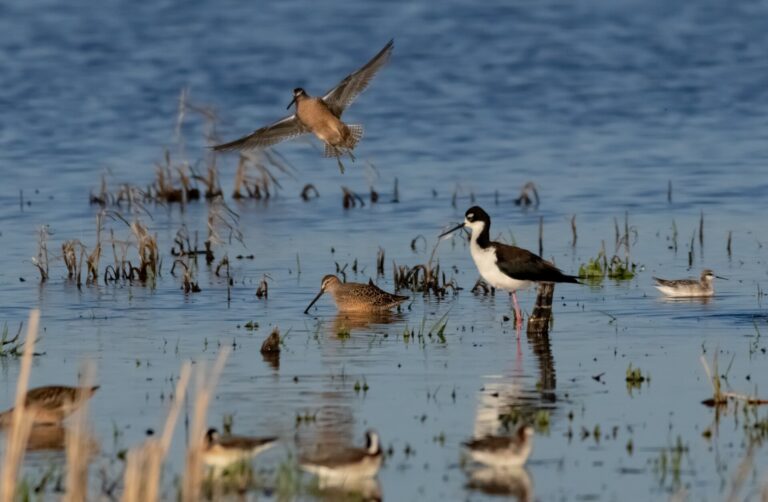
Wetland Bird Watching: A Beginner’s Comprehensive Guide to Waterfowl and Long-Necked Birds
Wetlands are among the most vibrant and diverse habitats for birdwatchers, offering a unique opportunity to observe a specialized array of avian life. For those new to birding, the sheer variety of waterfowl and long-necked birds can initially seem daunting. However, with a systematic approach and an understanding of key identification features, these environments quickly become some of the most rewarding places to explore. This guide provides a practical framework to help beginners observe, identify, and appreciate these fascinating birds.
Understanding the Wetland Ecosystem and Its Avian Inhabitants
Wetlands are transition zones between terrestrial and aquatic systems, encompassing marshes, swamps, bogs, fens, and even the shallow edges of lakes and rivers. These diverse habitats support an incredible array of life, including birds uniquely adapted to exploit their rich resources. Wetland birds encompass a broad group that includes ducks, geese, swans (collectively known as waterfowl), herons, egrets, storks, ibises, cranes, rails, and many other water-associated species.
Many of these birds share common features such as long necks, specialized bills, and adaptations for aquatic life, but also exhibit distinct characteristics that are crucial for identification. Recognizing these features, along with understanding habitat cues, can significantly enhance your birding experience.
Key Features for Identification: Beyond the Obvious
While a bird’s overall appearance is a starting point, a careful observer will look for a combination of specific traits. These ‘field marks’ are your best friends in identification:
- Neck Length and Posture: This is often one of the first things you notice. Long-necked birds like herons, egrets, and swans are immediately distinguishable from the more compact ducks. Herons often fly with their necks tucked into an ‘S’ shape, while storks and cranes fly with their necks extended straight out. Swans, when swimming, often hold their necks in a graceful curve.
- Bill Shape and Size: The bill is a powerful indicator of a bird’s feeding strategy. Beaks vary dramatically: from the broad, flattened bills of dabbling ducks (like Mallards) designed for sifting through water, to the slender, pointed, dagger-like bills of herons and egrets used for spearing fish. Spoonbills have uniquely shaped bills for sifting, while ibises have long, downward-curved bills for probing mud.
- Body Size and Shape: Swans are generally the largest and most robust waterfowl. Geese are typically medium-to-large, while ducks tend to be smaller and more compact. Herons and egrets are tall and slender. Observing the overall silhouette can quickly narrow down possibilities.
- Leg Position and Color: Leg length and coloration are vital, especially when birds are wading or standing. For example, the bright yellow feet of a Snowy Egret are a classic field mark. Observe if the legs are dark, light, or brightly colored.
- Plumage Coloration and Patterns: While some birds are uniformly colored (like the pure white Great Egret), many have intricate patterns. Look for patches of color, streaks, bars, or iridescent sheens. Male ducks, in particular, often exhibit striking plumage patterns during breeding season. Note differences between sexes and age groups.
- Behavior and Posture: How a bird acts provides critical clues. Herons often stand motionless, patiently stalking prey. ‘Dabbling’ ducks feed by tipping forward to graze on submerged vegetation, while ‘diving’ ducks disappear completely underwater to pursue food. Observing flight patterns can also aid identification.
Practical Field-Identification Tips for Beginners
For beginners, the sheer volume of information can be overwhelming. Focusing on a few key features and adopting a systematic approach can make identification more manageable and enjoyable. Always observe birds in their natural habitat and consider multiple characteristics before confidently identifying a species.
Essential Gear for Wetland Birding
- Binoculars: Absolutely indispensable. A good pair of 8×42 or 10×42 binoculars will bring distant birds into clear view without disturbing them.
- Field Guide: A regional field guide specific to your area is crucial. Choose one with clear illustrations or photographs, range maps, and concise descriptions. Apps like Merlin Bird ID can also be incredibly helpful.
- Notebook and Pencil: For jotting down observations, sketches, and questions. This helps solidify your memory and can be reviewed later.
- Appropriate Clothing: Wetlands can be muddy and buggy. Wear waterproof footwear, layered clothing, and consider insect repellent.
- Spotting Scope (Optional but Recommended): For observing distant waterfowl or shorebirds in detail, a spotting scope offers superior magnification.
Habitat Cues: Where to Look and What to Expect
Different wetland birds prefer specific environments within the broader wetland ecosystem:
- Shallow Edges and Marshes: This is prime territory for wading birds like herons, egrets, and ibises, which stalk prey in the shallows. Rails and bitterns, often secretive, also favor dense marsh vegetation.
- Open Water: Ducks, geese, and swans are frequently found here. Dabbling ducks prefer shallower open water where they can reach the bottom, while diving ducks venture into deeper areas.
- Mudflats: Exposed mudflats, especially during low tide or dry spells, attract a variety of shorebirds and some wading birds that probe for invertebrates.
- Overhanging Branches/Perches: Some wetland birds, like certain kingfishers or even some herons, will perch above the water to hunt.
Behavioral Observations: Unlocking Identification Clues
Beyond static features, a bird’s actions provide a wealth of information:
- Foraging Style: Is it dabbling, diving, probing, stalking, or aerial feeding? A Great Blue Heron’s slow, deliberate stalk is very different from a Mallard’s head-down dabbling.
- Flight Patterns: Observe how the bird takes off, flies, and lands. Does it fly with rapid wingbeats or a slow, graceful glide? Does it form V-formations (geese) or fly singly?
- Vocalizations: Learning bird calls and songs is an advanced but incredibly useful tool. Many wetland birds have distinctive calls, from the honking of geese to the guttural croaks of herons.
- Social Behavior: Are the birds solitary, in pairs, or in large flocks? Some species are highly gregarious, while others are territorial.
Regional Variations and Common Species: What to Expect Locally
While this guide emphasizes general features, regional differences mean that species availability varies significantly. A bird common in Florida might be a rare vagrant in Oregon. Consulting local field guides or regional birding resources is crucial to clarify which species are most likely to be encountered in your area and during different seasons.
Example Species for North America (Illustrative, not exhaustive):
- Great Blue Heron: Tallest and most widespread heron in North America. Gray-blue plumage, long neck and legs, often stands motionless in shallow water spearing fish. Flies with a slow, deep wingbeat and neck tucked.
- Great Egret: Large, all-white heron with a long, S-curved neck, long black legs, and a bright yellow bill. Elegant and graceful, often seen wading or flying with slow wingbeats.
- Snowy Egret: Smaller than the Great Egret, also all-white, but with a black bill and distinctive bright yellow feet (often called ‘golden slippers’). Very active hunter, often stirring the water with its feet to flush prey.
- Mallard: Perhaps the most recognizable duck. Males have an iridescent green head, white neck ring, chestnut breast, and gray body. Females are mottled brown. A classic ‘dabbling’ duck, often found in parks and ponds.
- Wood Duck: Arguably one of the most beautiful ducks. Males have iridescent green, blue, and purple plumage, striking white markings, and a distinctive crest. Often found in wooded swamps and ponds, perching on branches.
- Canada Goose: Large, common goose with a black head and neck, white ‘chinstrap,’ and brown body. Known for its distinctive honking call and V-formation flight.
- Mute Swan: Large, all-white swan with a distinctive orange bill featuring a black knob at the base. Often seen with its neck gracefully curved. Introduced in many areas, can be aggressive.
- American Coot: A duck-like bird, but actually a rail. Dark gray body, white bill with a black shield, and lobed toes. Often seen swimming or ‘head-bobbing.’
Photographing and Documenting Birds: Enhancing Your Learning
Photographs can be invaluable for later identification, especially for beginners. A clear, in-focus image that captures key features can be compared with field guides or shared with experienced birders for confirmation. Even a photo taken with a smartphone through binoculars (digiscoping) can be useful.
- Focus on Key Features: Try to capture the bill shape, leg color, plumage patterns, and overall body shape.
- Multiple Angles: If possible, get shots from different angles to show various features.
- Note the Context: Record the date, time, location, habitat, and any observed behaviors. This information is crucial for accurate identification.
- Respect Wildlife: Always maintain a respectful distance. Use your camera’s zoom, not your feet, to get closer. Avoid disturbing nesting birds or causing birds to flush.
Ethical Birding: A Cornerstone of Responsible Observation
Birding is a privilege, and with it comes the responsibility to protect the birds and their habitats. Adhering to ethical guidelines ensures that your passion doesn’t inadvertently harm the wildlife you admire.
- Observe from a Distance: Use binoculars and scopes to get close-up views without approaching too closely. If a bird changes its behavior because of your presence, you are too close.
- Avoid Disturbing Birds: Never flush birds intentionally. Be especially cautious around nests, roosting sites, and feeding areas.
- Stay on Designated Paths: Wandering off-trail can damage sensitive habitats and disturb ground-nesting birds.
- Minimize Use of Playback: Using recorded bird calls to attract birds can disrupt their natural behavior. Use it sparingly, if at all, and never during nesting season.
- Leave No Trace: Pack out everything you pack in. Do not litter.
- Respect Private Property: Always obtain permission before entering private land.
Additional Resources for Aspiring Birders
The journey of birding is continuous, and there are many excellent resources to support your learning:
- Regional Bird Guides: Invest in a good quality field guide specific to your geographic area.
- Online Databases: Websites like the Cornell Lab of Ornithology’s All About Birds and the Audubon Society offer extensive species profiles, range maps, sound recordings, and identification tips.
- Birding Apps: Merlin Bird ID (Cornell Lab) is an excellent free app that can identify birds by photo or sound. eBird (also Cornell Lab) allows you to log your sightings, contribute to citizen science, and find hotspots.
- Local Birding Groups: Joining a local Audubon chapter or birding club is a fantastic way to learn from experienced birders, discover local hotspots, and participate in guided walks.
- Conservation Organizations: Organizations like the RSPB (UK) or the U.S. Fish & Wildlife Service provide valuable information on wetland conservation and bird protection.
Conclusion: Embracing the Wetland Birding Journey
Embarking on wetland birding as a beginner can be both rewarding and profoundly educational. By understanding key identification features, recognizing habitat cues, and adhering to ethical practices, you can rapidly develop your skills and deepen your appreciation for these vital ecosystems. Remember to carry a field guide, respect wildlife, and most importantly, enjoy the continuous process of discovery that birding offers.
