
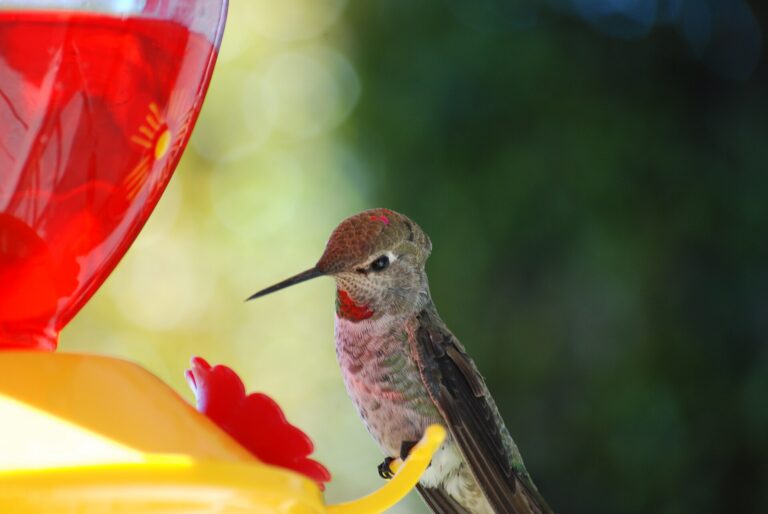
If you have ever stood in the kitchen with a bag of sugar and a measuring cup, wondering exactly how much of each goes into hummingbird nectar, you are not alone. It is the single most common question in backyard birding, and the answer is simpler than most people expect. This guide gives you the exact formula, explains when it is safe to adjust it, and covers the mistakes that quietly send hummingbirds elsewhere.
The standard nectar ratio: 1 part sugar to 4 parts water
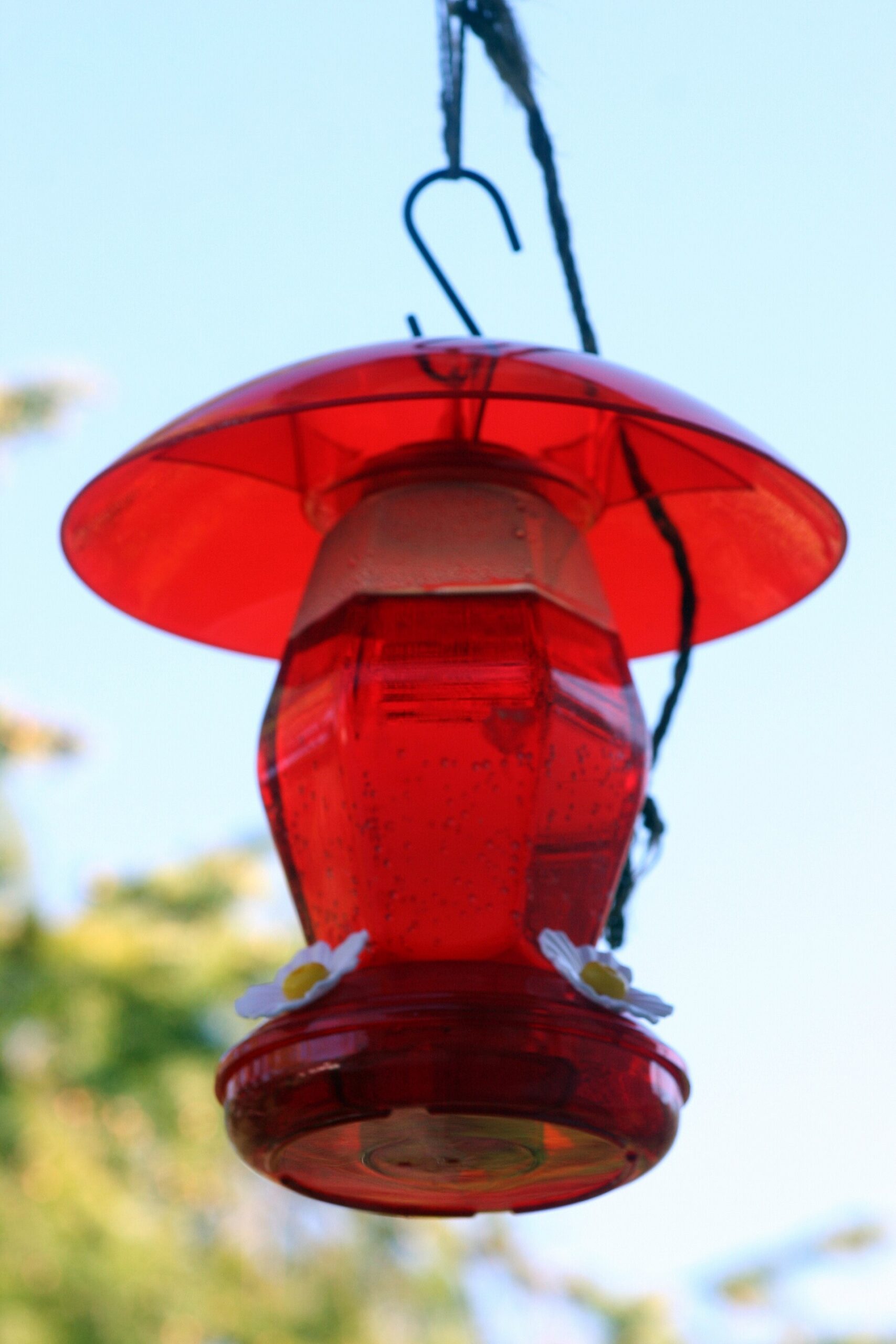
The formula used by Audubon, Cornell Lab of Ornithology, and virtually every hummingbird rehabilitation organization is 1 part refined white sugar dissolved in 4 parts clean water. That is it. Four cups of water, one cup of sugar, stir until dissolved, and you have made nectar that closely matches the sugar concentration of the flower nectar hummingbirds drink naturally.
You do not need to boil the water if you are using clean tap water and will store the nectar in the refrigerator. Boiling simply dissolves the sugar faster and slows fermentation slightly; it is a convenience, not a requirement. What matters is the concentration: roughly 20 percent sugar by volume, which is close to what hummingbirds find in typical wildflowers.
When a slightly stronger mix is safe: hot weather and migration
In very hot weather, or during fall migration when birds are fueling up for long flights, many experienced banders use a 1:3 ratio (1 part sugar to 3 parts water) for a limited time. The closer mix approximates nectar from more concentrated flowers and gives birds more energy per sip. Two cautions come with it:
- Stronger nectar spoils faster in the heat, so change it at least daily when temperatures top 90°F.
- Do not go stronger than 1:3. Concentrations above roughly 33 percent sugar are harder on hummingbird kidneys and liver over time, and they attract more bees and wasps.
Never use a weaker mix as a way to “stretch” nectar. Diluted nectar forces birds to drink more often for the same energy, which matters most in cold snaps when they are fighting to maintain body temperature overnight.
Batch sizes for common feeders
Make only what your feeders actually hold. Most standard bottle feeders hold 16 to 32 ounces, and saucer feeders hold 8 to 16 ounces. Match the batch to the feeder so nothing sits around going stale:
| Feeder capacity | Sugar (1:4 mix) | Water (1:4 mix) |
|---|---|---|
| 8 oz | 2 tbsp | ½ cup |
| 16 oz | ¼ cup | 1 cup |
| 32 oz | ½ cup | 2 cups |
| 48 oz | ¾ cup | 3 cups |
Leftover nectar keeps in a sealed jar in the refrigerator for about one week. Label the jar with the date you made it so nobody has to guess.
If you would rather not do the math at the sink, our hummingbird nectar calculator builds any batch size for you, and our guide on how often to change hummingbird nectar tells you how long each batch stays fresh at different temperatures.
The only sugar you should ever use
Use plain refined white granulated sugar. It is sucrose — the exact sugar hummingbirds are adapted to digest — and it is cheap. Everything else is a downgrade:
- Brown sugar, raw sugar, turbinado: contain iron and molasses residues that can sicken hummingbirds over a season.
- Honey: ferments rapidly in a warm feeder and promotes a fungal infection (hummingbird tongue candidiasis) that can be fatal.
- Artificial sweeteners: have zero calories, so a bird drinking them feels full while starving.
- Commercial red nectar: usually contains preservatives and dye, costs far more, and the dye has no benefit — more on that below.
Powdered sugar contains cornstarch as an anti-caking agent, which can thicken and cloud nectar, so it is out as well. If your pantry only has raw sugar today, wait until you can get white sugar; a day without the feeder will not hurt the birds.
Scaling the mix up or down without guessing
Once you know the 1:4 formula, any container becomes a measuring device. A standard 12-ounce soda can of water takes 3 tablespoons of sugar. A two-liter bottle of water needs just over 2 cups of sugar. If you prefer to work in weight, 1 gram of sugar per 4 milliliters of water lands on the same ratio — useful if you brew with a kitchen scale. Write your feeder’s recipe on a piece of tape on the fridge and the measuring step disappears entirely.
Storing nectar safely
Batches keep up to a week refrigerated in a sealed glass jar, but two habits stretch that fully: pour cooled nectar into the jar within an hour of mixing (a warm, open jar pulls in airborne yeast), and never return unused nectar from the feeder to the storage jar — whatever came out stays out. Label the jar with the mixing date. If nectar ever looks cloudy straight from the jar, discard the whole batch rather than filtering it.
Why there is no red dye in good nectar
Feeder ports are red for a reason: hummingbirds find feeders by sight, and they investigate red readily. The nectar itself does not need color, and studies have never shown a benefit to adding dye. The dye most often used in commercial mixes (Red Dye #40) is simply an unnecessary chemical in the diet of a bird that weighs about as much as a penny. Clear nectar in a red-flagged feeder outsells every colored alternative with the birds themselves.
Cleaning before every refill
Nectar quality is only half the story; feeder hygiene is the other half. Rinse the feeder with hot water at every refill, and scrub with a bottle brush weekly. Black mold spots inside the reservoir mean the feeder needs a soak in a dilute bleach solution (1 part bleach to 9 parts water, 10 minutes), followed by a thorough rinse until you cannot smell bleach at all. Our guide to keeping bees and ants off hummingbird feeders covers the drips and seams where mold and pests usually start.
Where to hang the feeder once it is filled
Placement changes how fast nectar spoils and how easy the feeder is to defend. A spot with morning sun and afternoon shade keeps nectar cool without hiding the feeder, and 4 to 5 feet of distance from windows both protects birds from collisions and gives you the best view. The full reasoning — height, shade, and window distance — is in our hummingbird feeder placement guide.
Quick answers to the questions we hear most
Can I use cold tap water straight from the faucet?
Yes, as long as your tap water is safe to drink. If you are on well water with heavy minerals, use filtered or distilled water instead; mineral scale feeds black mold.
How long does nectar last in the feeder?
It depends on temperature, which is exactly why our nectar calculator pairs with a feeder-cleaning schedule. As a rule: daily changes above 90°F, every 2 days from 80–89°F, every 3–4 days from 70–79°F, and about once a week below 70°F.
Is cloudiness a bad sign?
Yes. Cloudiness, milky streaks, or black spots mean fermentation or mold has started. Empty the feeder, clean it, and start with a fresh batch.
What if the nectar freezes overnight?
Bring feeders in at night during frost, and set them out again in the morning after thaw. Birds need the calories most in the first hour after sunrise.
The formula, one more time
One part white sugar, four parts water — that is the whole recipe. Adjust to 1:3 only in extreme heat or migration season, change nectar before it clouds, keep the feeder clean, and hang it where shade protects the mix. Do those four things and your feeder will hold its own against any flower patch in the neighborhood.
To go deeper, the Smithsonian Migratory Bird Center keeps a thorough fact sheet on hummingbird feeding, and Cornell’s Ruby-throated Hummingbird guide covers what these birds eat across the seasons.
