
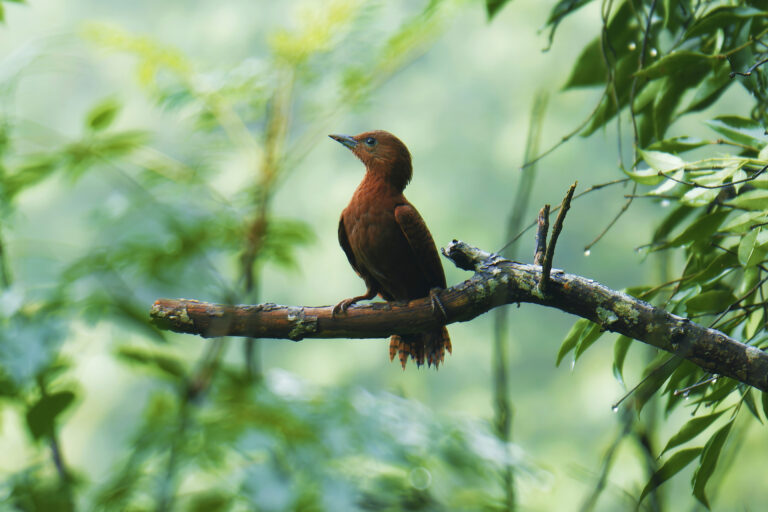
Introduction: The Allure and Peril of Bird Color
For many budding bird enthusiasts, the vibrant and diverse palette of avian plumage is often the first, most captivating aspect that draws them into the world of birding. A flash of brilliant red, a streak of iridescent blue, or a striking pattern of black and white can be an immediate, memorable cue. Indeed, birders frequently turn to color as a primary visual characteristic when attempting to identify a species in the field.
Bright plumage, distinctive markings, and intricate color patterns are undeniably striking and can seem like straightforward indicators. However, relying solely on color, without considering its nuances and variability, is one of the most common pitfalls leading to misidentification. This is especially true for beginners who might be tempted to jump to conclusions based on a single, prominent feature.
This comprehensive guide aims to equip both novice and experienced birders with the knowledge and practical strategies to interpret bird coloration accurately, harnessing its power as an identification tool while skillfully navigating the complexities that can lead to errors. We will explore how to move beyond a superficial glance and develop a more nuanced understanding of avian colors.
Understanding how to properly utilize color in conjunction with other identification features is crucial for developing robust and reliable birding skills. This article will look at the various factors that influence a bird’s appearance, from biological variations to environmental conditions, providing practical examples and field observation tips to enhance your accuracy and confidence.
By the end, you will be better equipped to use color as a powerful, yet carefully considered, tool in your bird identification arsenal.
Understanding Bird Color as a Multifaceted Identification Tool
Color, while prominent, is just one thread in the rich tapestry of features used in bird identification. It must be woven together with observations of a bird’s overall shape, size, specific behaviors, preferred habitat, and distinct vocalizations. When applied judiciously, color can significantly narrow down potential species, but it rarely provides a definitive answer on its own.
For instance, encountering a predominantly yellow bird in a North American backyard might immediately bring to mind species like the American Goldfinch, Yellow Warbler, or even a Western Tanager. However, to move from a general category to a definitive identification, distinguishing features beyond mere color are almost always necessary. Is the yellow uniform or patchy? Are there black wings, or wing bars?
Does it have a conical bill for seeds, or a slender bill for insects? These follow-up questions are critical.
Recognizing that color is not static but can vary considerably within a single species—due to factors such as age, sex, seasonal plumage changes, or even individual genetic variation—is absolutely fundamental for accurate identification. Overlooking these variations is a common source of misidentification, leading birders to believe they’ve seen a rare species when it’s simply a common bird in a different plumage.
The Biological Basis of Bird Colors: Pigments and Structure
Bird colors are primarily produced by two distinct mechanisms: pigments and structural colors. Understanding these mechanisms, even at a basic level, can offer valuable insights into why colors appear as they do and why they might vary.
Pigments: These are chemical compounds found within the feathers themselves. The two main types are:
- Carotenoids: These pigments are responsible for producing vibrant yellows, oranges, and reds. Birds cannot produce carotenoids themselves; they must obtain them through their diet, often from plants, fruits, or insects that have consumed such plants. This dietary dependence explains why a bird’s diet can directly impact the intensity of its yellow or red plumage. For example, a male House Finch’s red plumage can vary from pale yellow-orange to deep brick red depending on the carotenoids available in its food.
- Melanins: These pigments produce blacks, browns, grays, and some dull yellows and reds. Unlike carotenoids, melanins are synthesized by the bird’s body. They are also responsible for feather strength and resistance to wear, which is why flight feathers and tail feathers are often dark-tipped. The intricate patterns of black and brown on many sparrows and thrushes are due to melanin distribution.
Structural Colors: These colors are not due to pigments but rather to the microscopic structure of the feather barbs and barbules, which scatter and refract light. This phenomenon creates iridescent blues, greens, and purples, as well as some non-iridescent blues. The color changes depending on the angle of light and the observer’s perspective.
For instance, the brilliant blue of a male Indigo Bunting is a structural color; if you hold one of its feathers up to the light, it might appear dull brown because the light is passing through it rather than being reflected and scattered by its structure. Similarly, the shimmering greens and purples of a Common Grackle’s head are structural, shifting with every turn of its head.
While you won’t be analyzing feather structure in the field, knowing this distinction helps explain why some colors (like iridescent blues) seem to ‘flash’ or change, while others (like pigmentary reds) remain more constant. It also highlights the dynamic nature of avian coloration and its susceptibility to viewing conditions.
The Critical Role of Plumage Variability
One of the most significant challenges and fascinating aspects of using color for identification is the extensive plumage variability found across avian species. Many bird species exhibit dramatically different plumages depending on several key factors. Ignoring these variations is a fast track to misidentification.
- Age: Juvenile birds often display duller, streaked, or entirely different color patterns compared to adults. These ‘immature’ plumages are typically cryptic, providing camouflage for vulnerable young birds. A juvenile European Robin, for example, is speckled brown and lacks the iconic red breast of its parents. A juvenile American Robin is spotted on its breast, a stark contrast to the uniform brick-red breast of an adult. Misidentifying a juvenile as a different species is a very common mistake for beginners, who often expect to see only the ‘adult’ plumage depicted in field guides.
- Sex: Sexual dimorphism, where males and females of the same species have different plumages, is widespread, particularly in songbirds and waterfowl. The male Northern Cardinal is a brilliant, unmistakable red, while the female is a more subdued reddish-brown with red accents. Similarly, male and female Mallards look distinctly different, with the male sporting an iridescent green head and chestnut breast, while the female is mottled brown. Always consider the possibility of sexual dimorphism when observing a bird whose colors don’t quite match the ‘classic’ image in your guide.
- Season: Many species undergo significant plumage changes between breeding and non-breeding seasons, a process known as molting. The American Goldfinch is a prime example: males are brilliant yellow with black wings in summer (breeding plumage) but become dull olive-brown in winter (non-breeding or basic plumage). Similarly, many shorebirds and waterfowl adopt drabber, less conspicuous ‘basic’ plumage outside the breeding season, making them harder to identify. A birder expecting the vibrant breeding colors might completely overlook or misidentify a bird in its more muted winter attire.
- Individual Variation: Just like humans, individual birds can have slight variations in their coloration. Some birds might be paler or darker than average, or have slightly different patterns. These individual quirks are usually within the normal range for the species but can sometimes cause confusion if a birder is expecting an exact match to a field guide illustration. For instance, some Dark-eyed Juncos might have a slightly paler gray hood than others, or a Red-tailed Hawk might exhibit more rufous on its belly band.
- Aberrant Plumage: Occasionally, birds can exhibit unusual colorations due to genetic mutations. These include leucism (partial loss of melanin, resulting in patches of white or overall pale plumage), albinism (complete lack of all pigments, leading to an entirely white bird with pink eyes), melanism (excess melanin, making the bird unusually dark or black), and xanthochroism (excess yellow pigment). A leucistic bird, for instance, may have patches of white where there should be color, or be entirely pale. These rare individuals can be extremely challenging to identify and should not be used as a primary reference for the species’ typical appearance. If you encounter such a bird, focus on its size, shape, behavior, and vocalizations, and try to get a photograph.
To navigate this complexity, birders must consult reputable regional field guides or online resources like the Cornell Lab of Ornithology’s All About Birds, Audubon, or eBird. These resources typically provide illustrations or photographs of male, female, juvenile, and seasonal plumages, which are invaluable for understanding the full spectrum of a species’ appearance. Always check the date and location of your sighting against the guide’s information to account for seasonal and regional variations.
Beyond Overall Color: The Significance of Color Patterns and Markings
While a bird’s overall dominant color is a useful starting point, paying meticulous attention to specific color patterns, markings, and their precise locations is often far more reliable for accurate identification. These finer details can serve as critical diagnostic features that differentiate closely related species or variations within a species. They are the ‘fine print’ of bird identification.
Consider the following key markings and how they can be diagnostic:
- Wing Bars: These are horizontal stripes of contrasting color on the wing, formed by the tips of coverts. The presence, number (single or double), color, and prominence of wing bars are crucial for identifying many warblers, vireos, and sparrows. For example, the presence of two distinct white wing bars is a key feature for identifying a Red-eyed Vireo, distinguishing it from other vireo species that might lack them or have only one. Similarly, the presence and color of wing bars can help differentiate between various Empidonax flycatchers, a notoriously difficult group to identify.
- Eye Rings and Eye Arcs: A complete circle of contrasting color around the eye (eye ring) or an incomplete arc above and/or below the eye (eye arc) can be highly diagnostic. Many vireos and gnatcatchers are identified by these subtle but consistent features. For instance, the White-eyed Vireo has a distinctive white eye, while the Blue-gray Gnatcatcher has a prominent white eye ring. Even the thickness and completeness of an eye ring can be a clue.
- Supercilium (Eyebrow Stripe): A stripe of contrasting color running above the eye, from the bill to the back of the head. The color, length, and sharpness of the supercilium are vital for identifying many sparrows and warblers. For example, a bold white supercilium is characteristic of a White-throated Sparrow, while a yellow supercilium is a key feature of a Yellow Warbler. Its presence or absence, and its color relative to the surrounding plumage, are important.
- Streaking and Mottling: The presence, pattern, and color of streaks (longitudinal stripes) or mottling (irregular spots) on the breast, flanks, or back are essential for identifying many sparrows, thrushes, and some raptors. Is the streaking fine or coarse? Is it confined to the flanks or does it extend across the breast? The Song Sparrow, for instance, is characterized by heavy streaking on its breast that converges into a central breast spot, a feature absent in many other sparrows. Juvenile thrushes often have spotted breasts that disappear in adulthood.
- Rump Patch: A patch of contrasting color on the lower back, just above the tail. This can be a key field mark, especially in flight or when the bird is preening. The bright yellow rump patch of a Yellow-rumped Warbler is a classic example, visible even on its duller winter plumage. Other species like Northern Flickers have a white rump patch that flashes conspicuously in flight.
- Tail Markings: The presence of white outer tail feathers (e.g., Dark-eyed Junco, Vesper Sparrow, Eastern Meadowlark) or specific tail patterns can be critical, especially when a bird is flying away. The flash of white in the outer tail feathers of a junco as it flies into the undergrowth is often the first and best clue to its identity. The shape and color of the tail itself (e.g., forked, notched, rounded, long, short) are also important.
- Bill and Leg Color: While not plumage, the color of a bird’s bill and legs can also be highly diagnostic, especially when combined with plumage features. For example, the bright orange bill of an American Coot or the yellow legs of a Greater Yellowlegs are unmistakable. The bill color of a Common Tern (red with a black tip) differentiates it from a Forster’s Tern (orange with a black tip). Even subtle differences in leg color (e.g., dark gray vs. yellowish-green) can be important for distinguishing similar species.
- Head Patterns: The arrangement of colors on the head, including crowns, caps, eyelines, and malar stripes (mustache stripes), is often highly distinctive. Think of the black cap and white cheeks of a Black-capped Chickadee, or the intricate head pattern of a White-crowned Sparrow.
Comparing these detailed features in conjunction with overall color can dramatically improve identification accuracy. It forces the birder to look beyond the superficial and engage with the finer points of avian morphology. Developing the habit of systematically scanning a bird for these specific markings will make you a much more proficient birder.
The Deceptive Influence of Lighting Conditions and Environmental Factors
Lighting is perhaps the most underestimated factor influencing how we perceive bird colors in the field, and it can be incredibly deceptive. What appears as one color in bright sunlight can look entirely different under overcast skies or in shadow. Ignoring lighting conditions is a common cause of misidentification, as colors can be washed out, intensified, or even completely obscured.
- Angle of Light: Direct sunlight can make colors appear more vivid and saturated, sometimes even causing iridescence to flash brilliantly. However, backlighting (when the bird is between you and the light source) can turn even the most colorful bird into a dark silhouette, obscuring all plumage details. Imagine trying to identify a hummingbird with the sun directly behind it – its iridescent gorget will likely appear black. Observing a bird with the sun at your back will generally yield the best view of its true colors, as the light illuminates the bird directly.
- Intensity of Light: Bright, clear days enhance color, while overcast conditions or deep shade can dull hues, making vibrant reds appear brownish or bright yellows look pale. A male Northern Cardinal, so brilliant in direct sun, might look a muted brick-red on a cloudy day. A bird seen in the early morning or late afternoon light might appear warmer or more muted than it would at midday due to the lower angle and warmer spectrum of the sun’s rays.
- Distance and Atmospheric Haze: The farther away a bird is, the more atmospheric haze (dust, moisture in the air) can distort its colors, often making them appear bluer or grayer. What looks like a blue bird at a distance might resolve into a gray bird with structural blue highlights upon closer inspection. Distant birds can also appear washed out or less saturated.
- Background and Reflection: The surrounding environment can also subtly influence color perception. A bird perched in lush green foliage might appear slightly different than the same bird against a drab, brown background due to reflected light. For instance, a white bird against a green background might pick up a greenish tint. Water reflections can also alter perceived colors.
- Binocular Quality: The quality of your binoculars or spotting scope can also impact how colors are rendered. Cheaper optics might have chromatic aberration, causing color fringing, or simply transmit less light, making colors appear duller.
Birders should always be mindful of the lighting conditions and try to observe birds from multiple angles if possible. If a color seems ‘off,’ consider the light. If a bird appears uniformly dark, try to reposition yourself to get the sun behind you.
Taking photographs, even with a smartphone (especially digiscoping through binoculars), can be incredibly helpful for later analysis, as the camera often captures colors more consistently than the human eye under variable conditions, and you can zoom in on details later.
Practical Field-Identification Tips for Using Color Effectively
To become proficient at using color for identification, you need to develop a systematic approach and train your eyes to look for specific details, not just general impressions. Here are some practical tips to apply in the field:
1. Embrace the ‘Jizz’ – Combine All Features
Never rely on color alone. Instead, practice combining color observations with every other available clue. This holistic approach is often referred to as understanding a bird’s ‘jizz’ (General Impression, Size, and Shape). For example, a small, slender bird with a bright yellow body and two white wing bars, actively gleaning insects from the leaves of a willow thicket, and singing a distinctive ‘sweet-sweet-sweet, I’m so sweet’ song, is almost certainly a Yellow Warbler.
Each piece of information reinforces the others. If any of these elements contradict, it’s a sign to investigate further. Perhaps the song is wrong, or the shape is bulkier than expected. This ‘jizz’ approach is what experienced birders use intuitively.
2. Be a Detective: Look for Specific Markings
Train your eye to move beyond the dominant color. Instead of just seeing a ‘brown bird,’ ask yourself: Is it uniformly brown? Are there streaks on the breast? What color are its legs? Does it have an eye ring? Are there wing bars? Where are the darkest and lightest parts of the bird? Are there any patches of color on the head, rump, or tail?
These specific questions will guide your observation and help you pinpoint key diagnostic features. Use your binoculars to scrutinize these details. Don’t just look at the bird; actively scan it from head to tail, noting every color and pattern.
3. Anticipate Variability: Know Your Local Species
Familiarize yourself with the common species in your region and their known plumage variations. Consult reputable regional field guides that specifically show male, female, juvenile, and seasonal plumages for local birds. For example, if you’re birding in the eastern US in winter, you should know that American Goldfinches will be duller than their summer counterparts, and many warblers will be in drab ‘confusing fall warbler’ plumages.
If you see a dull, streaky bird near a feeder, consider if it could be a juvenile of a common species rather than an entirely new, rare one. This proactive knowledge will prevent many misidentifications.
4. Document Your Observations Thoroughly
When you’re unsure, or even when you’re confident, take detailed notes. Describe the colors you see, but also the patterns, the bird’s size relative to a known object (like a robin), its shape, its behavior (e.g., hopping, climbing, soaring), and its habitat. If possible, take a photograph or even a short video. These records are invaluable for later verification using field guides or by sharing with more experienced birders.
A photo can often reveal subtle color details or markings that you missed in the moment, or help you remember the exact shade of a particular patch of color. Don’t rely solely on memory, especially for tricky identifications.
5. Understand the Impact of Lighting and Perspective
Always consider how the light might be affecting what you see. If a bird appears uniformly dark, try to reposition yourself to get the sun behind you. If colors seem muted, remember that overcast conditions can do that. If you’re looking up at a bird against a bright sky, its underside might appear much lighter than it actually is, or its true colors might be completely obscured.
Try to observe birds from different angles if they allow it. If you suspect iridescence, try to shift your viewing angle to see the ‘flash’ of color. Be skeptical of colors that seem ‘too bright’ or ‘too dull’ for the species you suspect.
Using Color in Combination with Other Identification Strategies: A Holistic Approach
Effective bird identification is rarely about a single feature; it’s about synthesizing a multitude of clues. Color is a powerful clue, but its power is magnified exponentially when integrated into a holistic approach that considers all aspects of a bird’s appearance and behavior. This prevents the common mistake of fixating solely on a striking color and overlooking contradictory evidence from other features.
- Shape and Size: Before even considering color, get a sense of the bird’s overall silhouette. Is it plump or slender? Long-necked or short-necked? Does it have a long tail or a stubby one? How does its size compare to a common bird like a House Sparrow or American Robin? A small, robin-sized bird with a long, pointed bill will immediately narrow down your options, regardless of its color.
- Behavior: How does the bird move? Does it hop on the ground, climb tree trunks (like a nuthatch, head-first down), or dart through the air (like a flycatcher, sallying out from a perch)? Does it pump its tail (like a phoebe), flick its wings, or hold its wings in a V-shape while soaring (like a Turkey Vulture)? Is it solitary or in a flock? These behavioral cues are often species-specific and can be highly diagnostic, even for birds that are difficult to identify by color alone.
- Habitat: Where are you seeing the bird? Is it in a dense forest, an open field, a marsh, a sandy beach, or a suburban garden? Many birds are habitat specialists, and knowing the typical habitat for a species can quickly narrow down possibilities. For example, finding a brightly colored bird in a cattail marsh immediately suggests different species than finding a similarly colored bird in a pine forest.
- Vocalizations: Learning bird songs and calls is one of the most effective identification tools, often allowing you to identify a bird you can’t even see clearly. Vocalizations can also confirm a visual identification, especially when plumage is variable or obscured. Many field guides and apps include sound recordings, making this easier than ever.
- Flight Pattern: Observe how the bird flies. Does it fly in a straight line, an undulating pattern (like many finches), or does it hover (like a kestrel or hummingbird)? Does it flap continuously or glide frequently? The flight style can be a strong clue, especially for birds seen at a distance.
- Bill Shape: The shape and size of a bird’s bill are directly related to its diet and can be a crucial identification feature. Is it long and thin (for probing flowers or catching insects), short and conical (for cracking seeds), hooked (for tearing prey), or spatulate (for filter-feeding)?
By consciously integrating color observations with these other characteristics, birders develop a much more robust and reliable identification process. This prevents the common mistake of fixating solely on a striking color and overlooking contradictory evidence from other features, leading to more accurate and confident identifications.
Resources for Accurate Color Identification and Beyond
To continually refine your skills in using color for identification, leverage a variety of high-quality resources. The more tools you have at your disposal, the better equipped you’ll be to tackle challenging identifications.
- Regional Field Guides: Invest in a good field guide specific to your geographic area. Guides like the Sibley Guide to Birds, Peterson Field Guide to Birds of Eastern/Western North America, or the National Geographic Field Guide to the Birds of North America are excellent choices. Look for guides that clearly illustrate different plumages (male, female, juvenile, seasonal) and highlight key field marks with arrows or text. Pay attention to the range maps to ensure the bird you’re seeing is expected in your area.
- Online Databases and Apps: Websites like All About Birds (Cornell Lab of Ornithology), eBird, and Audubon offer extensive photo galleries, range maps, vocalizations, and detailed descriptions for nearly every species. Many excellent bird identification apps are also available for smartphones, often including features like sound identification, photo recognition, and customizable checklists. These are invaluable for quick look-ups in the field.
- Local Birding Groups and Mentors: Join a local Audubon chapter or birding club. Experienced birders can offer invaluable guidance, share local knowledge about plumage variations, and help you confirm tricky identifications in the field. Birding with others allows you to learn from their experience and benefit from multiple sets of eyes and ears. Many groups also offer guided bird walks, which are excellent learning opportunities.
- High-Quality Photography: Study high-resolution photographs of birds from various angles and lighting conditions. Websites like Flickr, Macaulay Library (part of Cornell Lab of Ornithology), or specialized bird photography sites can be excellent for this, but always cross-reference with reputable sources to ensure accuracy. Pay attention to the subtle variations in plumage, bill color, and leg color that might not be immediately obvious in a field guide illustration.
- Birding Journals and Checklists: Keeping a birding journal helps you practice detailed observation and record your sightings. Using local checklists can also help you anticipate what species you might encounter in a particular habitat or season, making identification easier.
When using any resource, always compare multiple images or descriptions. If a bird in your field guide looks slightly different from a photo online, consider if it’s a difference in age, sex, season, or even a regional subspecies. The more you expose yourself to the diversity of avian appearances, the better you will become at discerning subtle differences and making accurate identifications.
Conclusion: Mastering the Art of Color-Based Identification
Using bird color effectively in identification is an art that combines careful observation with a deep understanding of avian biology and environmental factors. It requires moving beyond the initial visual appeal of a bird’s plumage and delving into its nuances. For beginners, this means resisting the urge to jump to conclusions based on a single striking color and instead adopting a more methodical approach.
By paying meticulous attention to specific patterns and markings, by understanding the profound impact of age, sex, and seasonal variations, and by recognizing how lighting conditions can deceive the eye, birders can significantly enhance their accuracy and confidence. Remember, a truly confident identification is built upon a foundation of multiple converging clues—color being a vital, but not solitary, component.
Embrace the practice of taking detailed notes and photographs; these are invaluable tools for verification and continuous learning. The journey of bird identification is one of perpetual discovery and refinement. By approaching bird coloration with an informed and critical eye, you will unlock a deeper appreciation for the intricate beauty of the avian world and become a more skilled and reliable birder.
The more you observe, the more you learn, and the more rewarding your birding experiences will become.
For further reading and to deepen your birding expertise, explore our articles on bird identification techniques, seasonal plumage changes, and bird behavior cues, as well as guides on field guides and resources and habitat and range maps.
Featured image: licensed image via Wikimedia Commons. Credit: Kati Fleming. License: CC BY-SA 3.0. Used with attribution.
