
Introduction: The Dynamic Canvas of Avian Color
For birders, the vibrant tapestry of avian colors is often the first and most captivating clue to a bird’s identity. From the fiery scarlet of a Summer Tanager to the iridescent greens of a hummingbird, these hues are central to our appreciation and understanding of birds. However, the seemingly straightforward task of identifying a bird by its color can be surprisingly complex.
The very light that illuminates these feathered jewels also dictates how we perceive their colors. What appears as a brilliant blue in one moment might seem dull gray in another, all due to the subtle or dramatic shifts in lighting conditions.
This comprehensive guide delves into the fascinating interplay between light and bird coloration, offering insights crucial for both field observation and photographic documentation. We’ll explore the scientific principles behind bird color, dissect how various lighting scenarios — from the golden glow of dawn to the harsh glare of midday — transform a bird’s appearance, and provide practical strategies to navigate these visual challenges.
By understanding these dynamics, birders can enhance their identification accuracy, refine their observation skills, and gain a deeper appreciation for the nuanced beauty of the avian world.
The Science of Bird Color and Light: More Than Meets the Eye
To truly grasp how lighting affects bird colors, it’s essential to understand the biological mechanisms that produce these colors in the first place. Bird coloration isn’t just a simple coat of paint; it’s a sophisticated biological marvel, a product of evolution shaped by factors like camouflage, mate attraction, and species recognition.
How Birds Display Color: Pigments vs. Structure
Bird colors arise from two primary mechanisms, often working in concert:
- Pigmentary Colors: These colors are produced by chemical compounds called pigments, which absorb certain wavelengths of light and reflect others. The reflected wavelengths are what we perceive as color. Pigmentary colors tend to be more stable across different lighting conditions, though their perceived vibrancy can still vary. The main types of pigments in birds include:
- Melanins: These are the most common pigments, producing a range of earthy tones, from black and gray to brown and rufous. Melanins are synthesized by the bird’s body and are also responsible for feather strength and resistance to wear. Think of the deep black of a Common Raven, the intricate brown patterns of a Northern Flicker, or the subtle grays of a California Gnatcatcher.
- Carotenoids: Obtained through diet (often from plants, fungi, or invertebrates), carotenoids produce bright reds, oranges, and yellows. Birds cannot synthesize these pigments themselves, making their presence an indicator of dietary health and foraging success. The vibrant plumage of a Northern Cardinal, an American Goldfinch, or a Baltimore Oriole is due to carotenoids. The intensity of these colors can often signal fitness to potential mates.
- Porphyrins: Less common and often unstable in sunlight, porphyrins can produce magenta, brown, and green hues, particularly in owls, some pigeons (like the Common Ground Dove), and turacos. These pigments can fade over time with exposure to light.
- Structural Colors: These colors are not due to pigments but rather to the microscopic structure of the feather barbs and barbules, which interact with light. When light hits these intricate structures, it is scattered, refracted, or interfered with in specific ways, producing brilliant, often iridescent, colors. Structural colors are highly dependent on the angle of light and the observer’s perspective, making them particularly susceptible to lighting changes.
- Iridescence: This is the most striking form of structural coloration, where colors appear to shift and shimmer as the bird moves or as the light changes angle. Hummingbirds are the quintessential example, their gorgets flashing with emerald, ruby, or sapphire depending on the angle. Other examples include the head and neck of a Mallard duck, the glossy plumage of a European Starling, or the metallic sheen on a Common Grackle. The effect is similar to how an oil slick on water or a soap bubble displays a rainbow of colors.
- Non-iridescent Structural Colors: These include many blues and some greens. Unlike iridescent colors, these hues don’t dramatically shift with angle, but their intensity and saturation can still be heavily influenced by light. The blue of a Blue Jay’s wing is a classic example; there is no blue pigment in their feathers. Instead, the blue is produced by the way light interacts with tiny air pockets and keratin structures within the feathers, scattering blue light while absorbing other wavelengths. Similarly, many green birds, like parrots, achieve their green through a combination of structural blue and yellow carotenoid pigments.
Light and Its Properties: The Illuminator of Color
Light itself is a form of electromagnetic radiation, and what we perceive as ‘white light’ is actually a spectrum of colors, each with a different wavelength. The way these wavelengths interact with a bird’s feathers, and subsequently with our eyes, determines the perceived color. Key properties of light that influence color perception include:
- Intensity: How bright or dim the light is. Very bright light can wash out colors, making them appear paler or less saturated, while dim light can make them appear muted, darker, and harder to distinguish.
- Angle: The direction from which light strikes the bird. This is especially critical for structural colors, which are highly angle-dependent. A slight shift in the bird’s position or the observer’s viewpoint can dramatically alter the perceived color of an iridescent patch.
- Quality/Color Temperature: The ‘color’ of the light itself, measured in Kelvin (K). Natural light varies from the warm, reddish-orange tones of sunrise (around 2,000K-3,000K) to the cool, bluish tones of midday (around 5,500K-6,500K). Overcast conditions produce a neutral, slightly cool light (around 6,500K-7,500K). These color temperatures can impart a subtle cast to all colors, making warm colors appear more vibrant in warm light and cool colors more prominent in cool light.
- Diffusion: Whether the light is direct (creating harsh shadows and bright highlights) or diffused (softening shadows and spreading light evenly). Diffused light, such as on an overcast day or in open shade, tends to reveal more accurate and saturated colors because it reduces extreme contrasts.
Lighting Conditions and Their Transformative Effects on Bird Color
Understanding the science is one thing; applying it in the field or when reviewing photos is another. Let’s explore specific lighting scenarios and their impact on bird coloration.
Natural Light: The Ever-Changing Palette
Natural sunlight is the most common light source for bird observations, but it’s far from constant. Its quality changes dramatically throughout the day and with weather conditions, profoundly affecting how we perceive bird plumage:
- Morning and Late Afternoon (The ‘Golden Hours’): This period, roughly an hour or two after sunrise and before sunset, is often considered ideal for photography and observation. The sun is low in the sky, casting long, soft shadows. The light is warmer, with a higher proportion of red and yellow wavelengths. This warm, diffuse light enhances reds, oranges, and yellows, making these colors appear more vibrant and saturated. For a Scarlet Tanager, its red will be exceptionally rich; for an American Goldfinch, its yellow will glow with an almost luminous quality. Blues and greens might appear slightly muted or warmer than their true tone. However, iridescent colors might not ‘pop’ as much as they would under direct, high-angle light, as the lower angle of the sun may not hit the feather structures optimally.
- Midday Sun: When the sun is high in the sky, especially around noon, the light is intense, direct, and often very bright. It has a cooler, bluer color temperature compared to the golden hours. This bright, direct sunlight can cause colors to appear washed out or overly bright, sometimes obscuring subtle hues and reducing contrast. Deep shadows can also be harsh, hiding details. For instance, a dark bird like a Common Grackle might appear as a featureless silhouette if it’s in shadow, losing its subtle iridescent sheen. A bright yellow warbler, like a Yellow Warbler, might look almost white or pale yellow in direct overhead sun, making species-specific markings like faint streaking on the breast hard to discern. The strong light can also create glare, making observation uncomfortable.
- Overcast Days: A cloudy sky acts like a giant natural diffuser, scattering sunlight evenly. This results in soft, shadowless light with a neutral color temperature. On overcast days, colors tend to appear more subdued but also more true to their natural tones, with excellent color accuracy and saturation. Details are often clearer, and subtle patterns are easier to discern because there are no harsh highlights or deep shadows. A Blue Jay’s blue will be a consistent, rich blue, and the intricate patterns on a thrush’s breast will be clearly visible without being obscured by glare or shadow. This light is often preferred by bird photographers for its ability to render accurate colors and fine details.
- Backlighting: When the sun is behind the bird, facing you, the bird becomes a silhouette. While this can create dramatic photographic effects, it makes color identification nearly impossible. The bird appears as a dark shape, and all plumage details are lost. If you encounter a bird under these conditions, try to reposition yourself so the light is coming from behind you or to the side of the bird. If the bird is perched high against a bright sky, its underside may be illuminated by reflected light from below, but its back and head will remain dark.
- Frontlighting: When the sun is directly behind you, illuminating the bird fully. This is generally the best condition for observing and photographing true colors, as the light falls evenly on the bird, revealing its plumage in detail and minimizing shadows. However, be mindful of your own shadow falling on the bird if you get too close.
Artificial Light and Camera Flash: Unnatural Interpretations
While most birding occurs under natural light, artificial light sources, particularly camera flashes, can dramatically alter the appearance of bird colors, especially in photography. These sources often have a very different color temperature and quality than natural light.
- Camera Flash: Flashes tend to produce harsh, cool-toned light (often around 5,500K-6,000K, similar to midday sun but much more intense and localized). While they can illuminate a subject in low-light conditions, they often create unnatural reflections, harsh shadows, and can make colors appear stark or overly saturated. Iridescent colors might ‘flash’ unnaturally, appearing as stark white highlights, or be completely washed out, losing their subtle shifts. For example, the subtle green iridescence on a European Starling might appear as a stark white highlight under a direct flash, rather than its true metallic sheen. Direct flash can also cause ‘red-eye’ in birds, though less commonly than in mammals, and can be startling to the bird.
- Indoor/Artificial Lights: Observing birds indoors (e.g., in an aviary, a bird blind with artificial lighting, or even a bird visiting a porch light at night) or under streetlights can introduce strong color casts. Incandescent bulbs emit warm, yellowish light (around 2,700K-3,000K), making blues appear greener and reds more intense. Fluorescent lights often have a greenish or bluish cast (varying widely from 2,700K to 6,500K depending on the type), which can shift all colors accordingly. These artificial light sources rarely render a bird’s true colors accurately and can make identification difficult without prior knowledge of the species.
Shadow and Shade: The Obscuring Veil
Shadows are an inherent part of any outdoor scene and can significantly impact color perception. A bird partially or fully in shadow will appear darker, and its colors will be less saturated and often cooler in tone due to the influence of ambient blue light from the sky. This can make identification challenging, as key field marks might be obscured.
For instance, the subtle yellow on the belly of a vireo might be completely invisible in deep shade, making it harder to distinguish from a similar species like a Ruby-crowned Kinglet, which also has a yellowish wash. Conversely, shaded areas often display cooler, less saturated colors, which might be mistaken for different plumage states or even different species if one is not careful.
Always consider the light conditions of the specific part of the bird you are observing. Even a bird in dappled sunlight can present challenges, with bright patches and deep shadows creating a confusing mosaic of color.
Practical Field Identification Tips: Mastering the Art of Observation
Given the dynamic nature of light, how can birders ensure accurate identification? It requires a combination of careful observation, strategic positioning, and an understanding of how light interacts with avian plumage.
1. Observe Under Different Lighting Conditions
This is perhaps the most crucial tip. If possible, don’t make a definitive identification based on a single, fleeting glimpse in challenging light. Try to observe the bird from different angles, and if it remains in the area, return at a different time of day or under different weather conditions.
A bird that looked like a plain brown sparrow in deep shadow might reveal a distinctive streaked breast or a subtle eye-ring in diffused light, helping you narrow down its identity. For species with iridescent plumage, like hummingbirds or grackles, observing them as they move and catch the light from various angles is essential to appreciating and identifying their full range of colors. Patience is a birder’s best friend in these situations.
2. Understand the Effect of Angle, Especially for Iridescence
For birds with structural colors, the angle of observation relative to the light source is paramount. A male Ruby-throated Hummingbird’s gorget, for example, will only flash its brilliant ruby red when the light hits it at a very specific angle. From other angles, it might appear dull black, making it easy to mistake for a female or a different species if you’re not aware of this phenomenon.
When observing such birds, try to move around them (without disturbing them) or wait for them to shift position to catch the light. This understanding helps prevent misidentification where a dull-looking iridescent patch is mistaken for a non-iridescent feature. Similarly, the blue on a Blue Jay’s wing might appear duller or less vibrant if viewed from an angle that doesn’t optimally scatter the blue light.
3. Use Your Eyes Critically, Not Just Photos
While photographs are invaluable tools for documentation and later review, relying solely on images can be misleading if you don’t account for the lighting conditions under which they were taken. A photo taken with a strong flash might show colors that are exaggerated or distorted compared to what you would see in natural light. Always consider how lighting might have affected the coloration in photos, and supplement with direct observation whenever possible.
Many field guides now include notes on how colors might appear under different lighting, or feature illustrations that capture the ‘feel’ of a bird in various light conditions, which can be very helpful. Remember that your eyes and brain are incredibly sophisticated at adapting to light changes, often more so than a camera sensor.
4. Pay Attention to Context and Behavior
Color can sometimes be ambiguous, especially in poor lighting. When colors seem inconsistent or difficult to discern, rely on other identification features. These include:
- Shape and Size: The overall silhouette and relative size are often consistent regardless of light. Is it plump or slender? Long-tailed or short-tailed?
- Behavior: How the bird moves, forages, flies, or interacts with its environment can be highly diagnostic. Does it hop on the ground, creep up tree trunks (like a nuthatch), dart through the air (like a flycatcher), or wag its tail constantly (like a phoebe)?
- Habitat: Where you find the bird can narrow down possibilities significantly. Is it in a dense coniferous forest, open grassland, a freshwater marsh, or a coastal beach? Knowing typical habitats helps exclude unlikely species.
- Vocalizations: Learning bird songs and calls is an incredibly powerful identification tool that is unaffected by light. Often, you’ll hear a bird before you see it, and its voice can confirm its identity even in the densest foliage or dimmest light.
For example, if you see a medium-sized, dark bird in deep shade that might be a crow or a raven, observe its flight pattern (ravens soar more, crows flap more), listen for its call (crows caw with a distinct ‘caw-caw’, ravens have a deeper ‘cronk’ or ‘gronk’), and note its bill size (ravens have a noticeably heavier bill). These non-color cues can be definitive.
5. Utilize Proper Photography Techniques for Accurate Color Representation
For bird photographers, capturing accurate colors is a constant pursuit. To achieve this:
- Prioritize Diffused Natural Light: Overcast days or open shade are often ideal. The soft, even light minimizes harsh shadows and highlights, allowing for truer color rendition. Early morning or late afternoon light can also be excellent, but be mindful of the warm color cast.
- Avoid Harsh Midday Sun: As discussed, this light can wash out colors and create unflattering contrasts. If you must shoot in midday sun, try to find birds in partial shade or wait for a cloud to diffuse the light.
- Be Judicious with Flash: If using flash, consider a diffused fill-flash rather than a direct, full-power burst. A fill-flash can gently lighten shadows and add a catchlight to the bird’s eye without overpowering natural light. Many professional bird photographers avoid flash entirely due to its artificial look and potential disturbance to birds. If using flash, ensure your camera’s white balance is set appropriately for flash.
- Shoot in RAW Format: This preserves the maximum amount of image data from your camera’s sensor, giving you much greater flexibility in post-processing to correct white balance, adjust exposure, and fine-tune colors to more accurately reflect what you saw in the field. JPEGs apply compression and in-camera processing that can limit these adjustments.
- Adjust White Balance: Your camera’s white balance setting attempts to neutralize color casts from different light sources. Learning to adjust this (either by using presets like ‘cloudy’ or ‘shade’, or by manually setting it to a specific Kelvin temperature) can significantly improve color accuracy in your photos. If shooting RAW, you can often correct white balance perfectly in post-processing.
- Use a Lens Hood: A lens hood helps prevent stray light from entering the lens and causing flare, which can reduce contrast and wash out colors in your images.
Interpreting Color Variations in Photos: A Critical Eye
When reviewing bird photos, whether your own or those online, cultivate a critical eye regarding color. Photos can be edited, and even unedited ones are subject to the camera’s interpretation of light and its own internal processing. For example, a photo of a Great Blue Heron taken at sunset might show its plumage with a warm, reddish cast, which isn’t its true color.
Conversely, a photo taken under deep shade might appear overly cool and blue. Compare images of the same species taken under different conditions to build a mental library of how their colors vary. Look for multiple photos of the same species to get a comprehensive understanding of its plumage under various lighting.
If a bird’s color in a photo seems unusually vibrant, dull, or strangely tinted, consider the possibility of lighting effects or post-processing. Many online bird identification forums are filled with discussions where lighting is the key to understanding perceived color discrepancies. For species with iridescent or structural colors, viewing the bird in person, or watching high-quality video that captures movement and light interaction, remains the most reliable method for understanding their full color spectrum.
A static image can only capture one moment’s interaction with light, while the live bird offers a dynamic display.
Advanced Considerations: Beyond Basic Lighting
While the primary factors of light intensity, angle, quality, and diffusion are paramount, several other subtle elements can influence how we perceive bird colors.
Atmospheric Conditions
Beyond the time of day, other atmospheric conditions can subtly alter light. Haze, fog, or even smoke from distant wildfires can filter light, often giving it a warmer, more diffuse quality and reducing overall contrast. Rain can darken plumage, making colors appear richer or duller depending on the feather structure. Wet feathers can also clump, altering the way light interacts with structural colors and sometimes making pigmentary colors appear more saturated.
Snow on the ground can act as a giant reflector, bouncing light upwards and illuminating the underside of birds, which might otherwise be in shadow.
Observer’s Vision and Equipment
It’s also worth noting that human color perception can vary. Some individuals have color vision deficiencies that might affect their ability to distinguish certain hues. Furthermore, the quality of your optics (binoculars or scope) can influence how colors are rendered. High-quality optics with good light transmission, anti-reflective coatings, and excellent color fidelity will generally provide a more accurate and vibrant view of a bird’s colors than lower-quality equipment.
Chromatic aberration, a common optical distortion, can also introduce false color fringes around subjects, particularly in high-contrast situations.
Environmental Color Casts
The surrounding environment can also impart a subtle color cast onto a bird. A bird perched among bright green leaves might pick up a slight greenish tint from reflected light, especially if it’s in shade. Similarly, a bird against a red rock face might appear slightly warmer in tone.
This phenomenon, known as reflected light or ambient color, is usually subtle but can occasionally contribute to confusion, especially for birds with already muted or camouflaged plumage.
Conclusion: A Deeper Appreciation for Avian Hues
Understanding how lighting influences bird coloration is not just a technicality; it’s a fundamental aspect of becoming a more skilled and observant birder. By being mindful of the quality, intensity, and angle of light during observation and photography, birders can better interpret the colors they see, leading to more reliable identifications and a richer, more nuanced appreciation for the stunning diversity of avian plumage.
Every shift in light offers a new perspective, transforming familiar birds into dynamic canvases of ever-changing beauty. Embrace the challenge, learn to ‘read’ the light, and unlock a deeper understanding of the vibrant world of birds. This knowledge empowers you to look beyond the superficial appearance and look at the fascinating science and artistry of avian color.
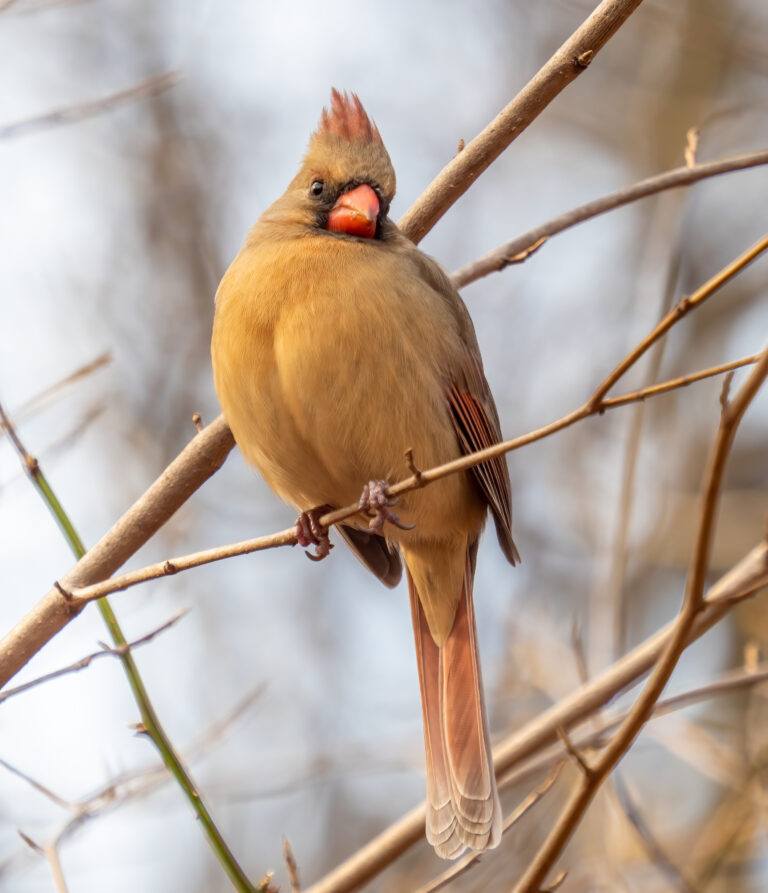
Featured image: licensed image via Wikimedia Commons. Credit: Rhododendrites. License: CC BY-SA 4.0. Used with attribution.
