
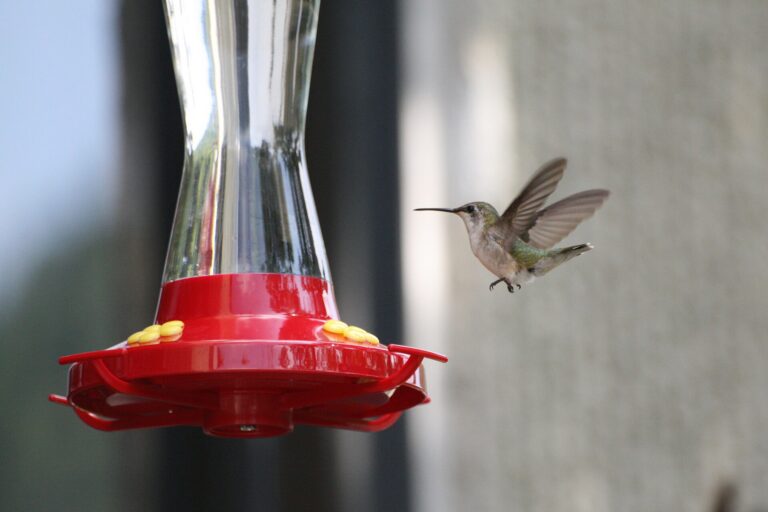
Fresh nectar is the difference between a feeder hummingbirds visit all day and one they learn to avoid. Sugar water is food for microbes too, and in warm weather fermentation starts within a day. This guide gives you a simple temperature-based schedule, the spoilage signs to check at every refill, and the adjustments that keep nectar safe through summer heat and winter cold snaps.
The schedule in one table
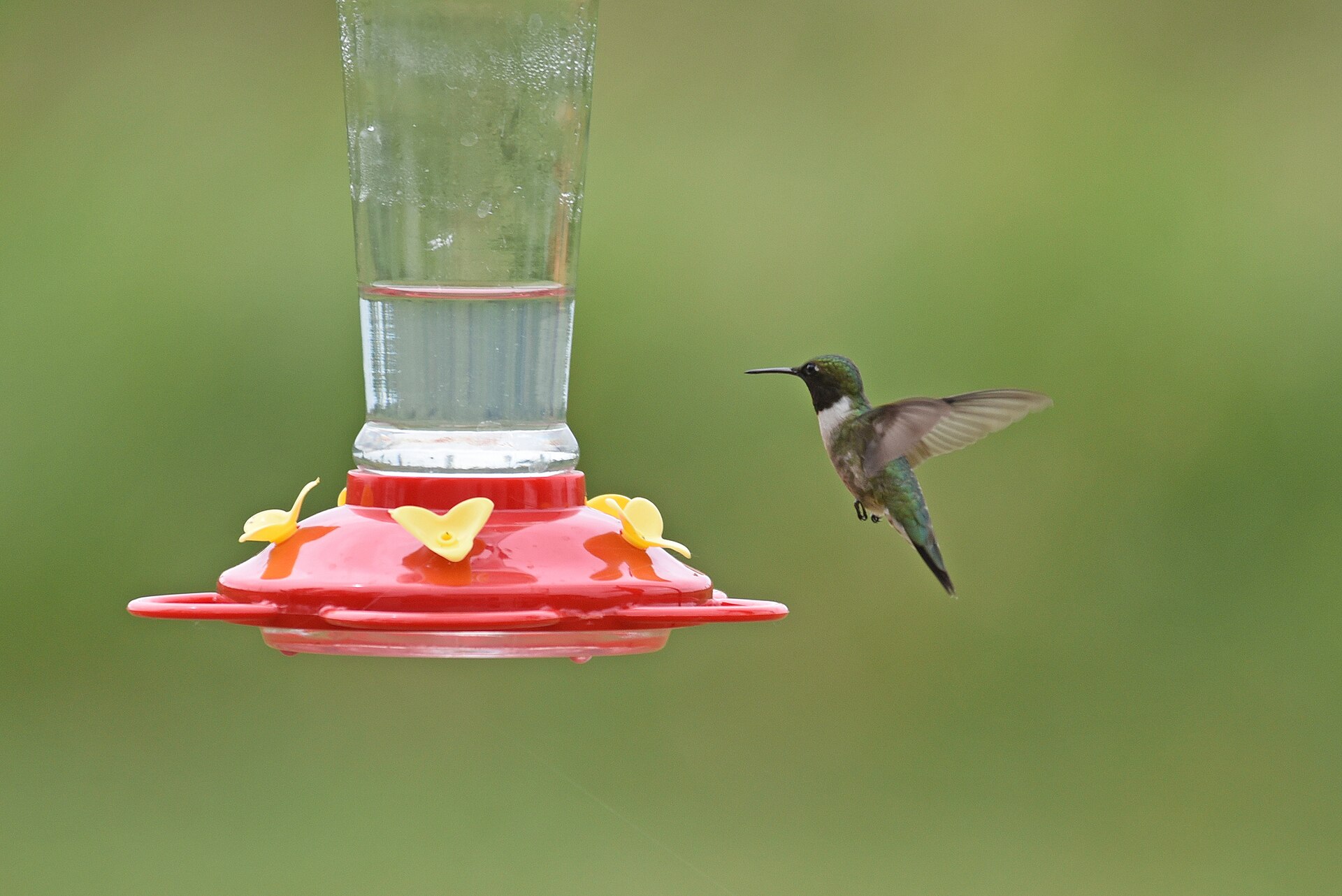
Change nectar on this schedule, keyed to the day’s high temperature rather than the calendar:
| Daily high temperature | Change nectar every |
|---|---|
| Above 90°F (32°C) | Daily |
| 80–89°F (27–31°C) | Every 2 days |
| 70–79°F (21–26°C) | Every 3–4 days |
| Below 70°F (21°C) | Every 5–7 days |
These intervals assume a clean feeder and a shade placement. Direct afternoon sun can roughly halve them — another reason our placement guide pushes shade.
Why heat changes everything
Nectar spoils because yeasts and bacteria consume the sugar. Their growth rate roughly doubles with every 10°F rise in temperature, which is why a batch that lasts a week in March can cloud over in a single afternoon in July. Fermented nectar tastes of alcohol and eventually vinegar; hummingbirds can taste the difference and will abandon a feeder long before most people notice anything wrong.
There is also a health angle: mold growing inside the reservoir — the fuzzy black spots you see at the seam of the base — can cause a fatal tongue infection in hummingbirds. When nectar is changed on schedule, the feeder stays rinsed and that mold never gets a foothold.
Spoilage signs to check at every refill
Make the check part of the refill routine; it takes ten seconds:
- Cloudiness: the nectar looks milky instead of clear.
- Streaks or strings: slimy threads inside the reservoir or across ports.
- Black, pink, or orange spots: mold colonies on seams, ports, or walls.
- Sour or alcoholic smell: anything beyond plain sweet sugar-water smell.
- Trapped insects: drowned bees or ants inside the reservoir feed the fermentation.
Any one of these means the batch goes out now, not tomorrow. If spots keep returning between changes, step down one interval — every 2 days instead of 3 — until they stop.
The cleaning step people skip
Every refill gets at least a hot-water rinse. Once a week, add a real scrub with a bottle brush: hot water and a drop of unscented dish soap, a full rinse, then a two-minute vinegar bath (1 part white vinegar to 2 parts water) to cut mineral scale. Save the deep bleach soak for visible mold — 1 part bleach to 9 parts water for 10 minutes, then rinse until the smell is completely gone.
Never run a feeder through the dishwasher unless the manufacturer says it is dishwasher-safe; high heat warps the perches and loosens the seals on most bottle feeders.
Summer: small batches beat big reservoirs
In midsummer, the smartest move is to fill feeders only half full. A 32-ounce feeder half-filled still holds days of supply for a typical backyard’s worth of hummingbirds, but you waste less when the heat forces a change, and the birds cannot tell the difference. Mix a fresh batch every couple of days using the formula in our nectar ratio guide — or let our nectar calculator size the batch for you.
This is also peak bee-and-ant season, since spoiled and dripping nectar attracts them first. Our guide to keeping bees and ants off feeders covers the fixes; changing nectar before it ferments is the first one.
Winter and migration: when to keep feeding
In fall, two questions come up at once: do hummingbirds still need the feeder, and how often does the nectar need changing when days cool down? A few rules keep it simple:
- Keep feeders up until two weeks after your last sighting. A healthy hummingbird departs on its own schedule; a late migrant — often a juvenile or an adult off its normal route — will thank you for the fuel. Feeding does not delay migration; daylight does.
- Cooler days stretch the schedule. Once highs sit below 70°F, a weekly change is plenty. Our state-by-state hummingbird departure calendar tells you when to expect your area’s last birds.
- In freezing weather, bring feeders in overnight and put them out at first light. The first hour after sunrise is when birds most need calories to recover from the night.
If you live where Anna’s Hummingbirds overwinter, winter feeding is not optional courtesy — it is the difference between easy calories and a cold-search for food. Change nectar weekly, check ports for ice each morning, and keep two feeders so one can thaw indoors while the other hangs.
Does rain or a storm change the schedule?
Indirectly, yes. Heavy rain dilutes nectar through open ports and cools the reservoir, which slows fermentation — but it also washes dust and pollen into the sugar water. After a strong storm, give the nectar a quick look: if it appears watery or has debris floating in it, change it regardless of where you are in the interval. A light shower that never reaches the ports changes nothing.
What happens when someone forgets
Everyone misses a change now and then. The recovery matters more than the miss:
- Empty the feeder completely — do not top off.
- Rinse with hot water and check the seams for spots.
- If you see mold, do the bleach soak before refilling.
- Refill with a fresh batch, and note the date so the next interval starts clean.
A feeder that went cloudy for a day is a small setback; birds return within days once fresh nectar is steady again. A feeder with mold that keeps being topped off can sicken birds for the whole season.
Freezing weather: the overnight routine
Where nectar freezes, the routine is simple: bring feeders in at dusk, set them out at first light, and check the ports for ice before hanging. If nectar freezes solid in the feeder anyway, thaw it fully indoors and pour it out — refreezing separates the sugar and leaves watery nectar at the ports. A 60-watt incandescent bulb near the feeder (safe distance, nothing touching plastic) keeps small feeders liquid through most frosts, and rotating two feeders means one is always ready at dawn.
Quick answers
Can I change nectar less often if I add more sugar?
No. A stronger mix spoils faster in heat, not slower. Stick with 1:4 in mild weather and 1:3 only in extreme heat or migration, as covered in the ratio guide.
Does refrigerated nectar really last a week?
Yes — sealed and refrigerated, a clean batch is good for 5–7 days. Warm, in the feeder, is another story; that is what the table above governs.
Is it okay to just top off the feeder?
Only if the existing nectar is still inside its interval. Topping off old nectar with new hides spoilage and skips the rinse. When in doubt, dump, rinse, refill.
How do I keep ants from fouling the nectar between changes?
An ant moat (a cup of water hanging above the feeder) stops most climbing ants, and a thin film of food-safe grease on the hanging wire handles the rest. Full fixes are in the pests guide.
The habit that keeps it all simple
Pick a refill rhythm and anchor it to something you already do — morning coffee, evening watering. Check the day’s high, glance for cloudiness and spots, rinse, refill, done. Hummingbirds forgive an imperfect schedule; they do not forgive sour nectar. Keep the batch fresh and the feeder clean, and your yard will hold its regulars all season.
For the birds’ side of the equation — what they eat besides feeder nectar, and how they use it — see Cornell Lab’s Ruby-throated Hummingbird species guide, and the Smithsonian Migratory Bird Center’s feeding fact sheet.
